
Author: Dr. Anshuman Karol | 04-Feb-2026
India’s Gram Panchayats today govern at a time of profound transition. Climate change is intensifying floods, droughts, and heat stress, public health risks such as water-borne diseases are becoming more frequent, rural youth migration is hollowing out local economies and digital systems are expanding faster than local capacities to use them meaningfully. Panchayats are constitutionally empowered to plan and implement development across the 29 subjects of the Eleventh Schedule, yet the complexity of these challenges increasingly demands knowledge, data, and technical capabilities that Panchayats often do not possess internally.
This is where the question arises, not from universities, but from Panchayats themselves: why should we engage with Higher Educational Institutions (HEIs), and how does such engagement strengthen our ability to govern and deliver?
Under frameworks such as Unnat Bharat Abhiyan (UBA) 2.0 and the UGC guidelines on Fostering Social Responsibility and Community Engagement, HEIs are already mandated to work with communities. What is missing, however, is a clear articulation from the Panchayat side- a demand-driven agenda that positions Panchayats not as beneficiaries, but as strategic partners and co-educators.
Governing in an Age of Climate Uncertainty
Climate change has made local governance significantly more complex. Changes in rainfall patterns affect agriculture and drinking water sources, rising temperatures exacerbate health risks and extreme events damage local infrastructure. Panchayats are often the first responders, yet planning for climate resilience requires scientific data, risk mapping, and long-term scenario thinking.
By engaging with HEIs, Panchayats can strengthen their capacity to understand and respond to climate risks. Universities can support Panchayats in analysing local climate vulnerabilities, documenting changes in water bodies, cropping patterns, and disease incidence, and linking these insights to Panchayat Development Plans. Such engagement enables Panchayats to move from reactive responses to anticipatory and resilience-oriented governance.
For Panchayats, the motivation is clear, engaging with HEIs is not about academic exercises, but about protecting livelihoods, ecosystems, and lives in an era of increasing uncertainty.
Panchayats as Knowledge-Seeking Institutions, Not Just Implementers
Traditionally, Panchayats are seen primarily as implementing agencies for government schemes. This perception limits their ability to function as knowledge-driven institutions. One of the most important reasons Panchayats should engage with HEIs is to reposition themselves as centres of local knowledge production.
Reliable, disaggregated data remains a major gap in Panchayat planning. Many decisions are made based on fragmented records or external templates that do not reflect ground realities. HEIs can support Panchayats in systematically aggregating and analysing data across sectors such as water, health, education, livelihoods, and social protection, particularly across the 29 subjects listed in the Eleventh Schedule and the subjects devolved to Panchayats.
This data, when owned and used by Panchayats, becomes a powerful tool for evidence-based planning, monitoring service delivery, and negotiating with higher tiers of government. It also enables Panchayats to localise the Sustainable Development Goals (SDGs), translating global and national targets into village-level priorities and indicators. From a Panchayat perspective, engagement with HEIs thus becomes a pathway to greater autonomy, credibility, and bargaining power.
Digital Governance and the Risk of Exclusion
Digitalisation is rapidly reshaping local governance through platforms for planning, accounting, and service delivery. While these systems promise transparency and efficiency, they also risk deepening exclusion if Panchayats lack the capacity to use them effectively.
Many elected representatives, particularly first-time members and women representatives struggle with digital tools that have become central to governance. Panchayats have a strong reason to engage HEIs as partners in digital empowerment, not merely training providers. Universities can support Panchayats in understanding digital systems, interpreting data, and using technology as a tool for citizen engagement rather than administrative compliance alone.
From the Panchayat’s point of view, this engagement is essential to ensure that digital governance strengthens, rather than weakens, grassroots democracy.
Strengthening Leadership in a Changing Governance Landscape
Each Panchayat election brings new leadership, often without adequate preparation for the complexity of governance today. This challenge is compounded by climate risks, converging schemes, and heightened public expectations. Women elected representatives and first-time members, in particular, face structural and social barriers that limit their participation.
Panchayats should see engagement with HEIs as an opportunity to invest in leadership development. Universities can co-design learning spaces where elected representatives reflect on their roles, constitutional mandates, and leadership challenges. Such engagements are not about formal training alone, but about building confidence, communication skills, critical thinking, and collective problem-solving capacities.
For Panchayats, stronger leadership directly translates into more effective decision-making, better conflict resolution, and improved accountability to citizens.
Responding to Youth Migration and Livelihood Stress
One of the most pressing governance concerns at the Panchayat level is the outmigration of youth due to limited local opportunities. Climate stress, declining farm incomes, and lack of skills exacerbate this trend, weakening the social and economic fabric of villages.
Engagement with HEIs allows Panchayats to explore locally rooted skilling and entrepreneurship pathways. Universities can support Panchayats in identifying local resources, emerging livelihood opportunities, and market linkages. This collaboration helps Panchayats shift from being scheme managers to local economic facilitators, responding to youth aspirations while strengthening village economies.
For Panchayats, the incentive is clear, retaining youth, diversifying livelihoods, and building resilience against economic shocks.
Health, Water, and Everyday Governance Challenges
Public health and water security remain central to Panchayat responsibilities, especially in the context of climate change. Rising temperatures and erratic rainfall increase the risk of water contamination and disease outbreaks. Yet Panchayats often lack access to technical expertise for monitoring and preventive action.
By engaging HEIs, Panchayats can access low-cost technical support such as water quality testing, disease mapping, and health awareness initiatives grounded in local data. This strengthens the Panchayat’s ability to act proactively, rather than responding only when crises emerge.
Such engagement reinforces the Panchayat’s role as the first line of defense for community well-being.
How Panchayats Can Initiate Engagement: Asking the Right Questions
The starting point for Panchayat engagement with HEIs is not sites for visit, but a question- what knowledge, skills, or capacities do we need to govern better? When Panchayats articulate their needs clearly, HEI engagement becomes more relevant and respectful.
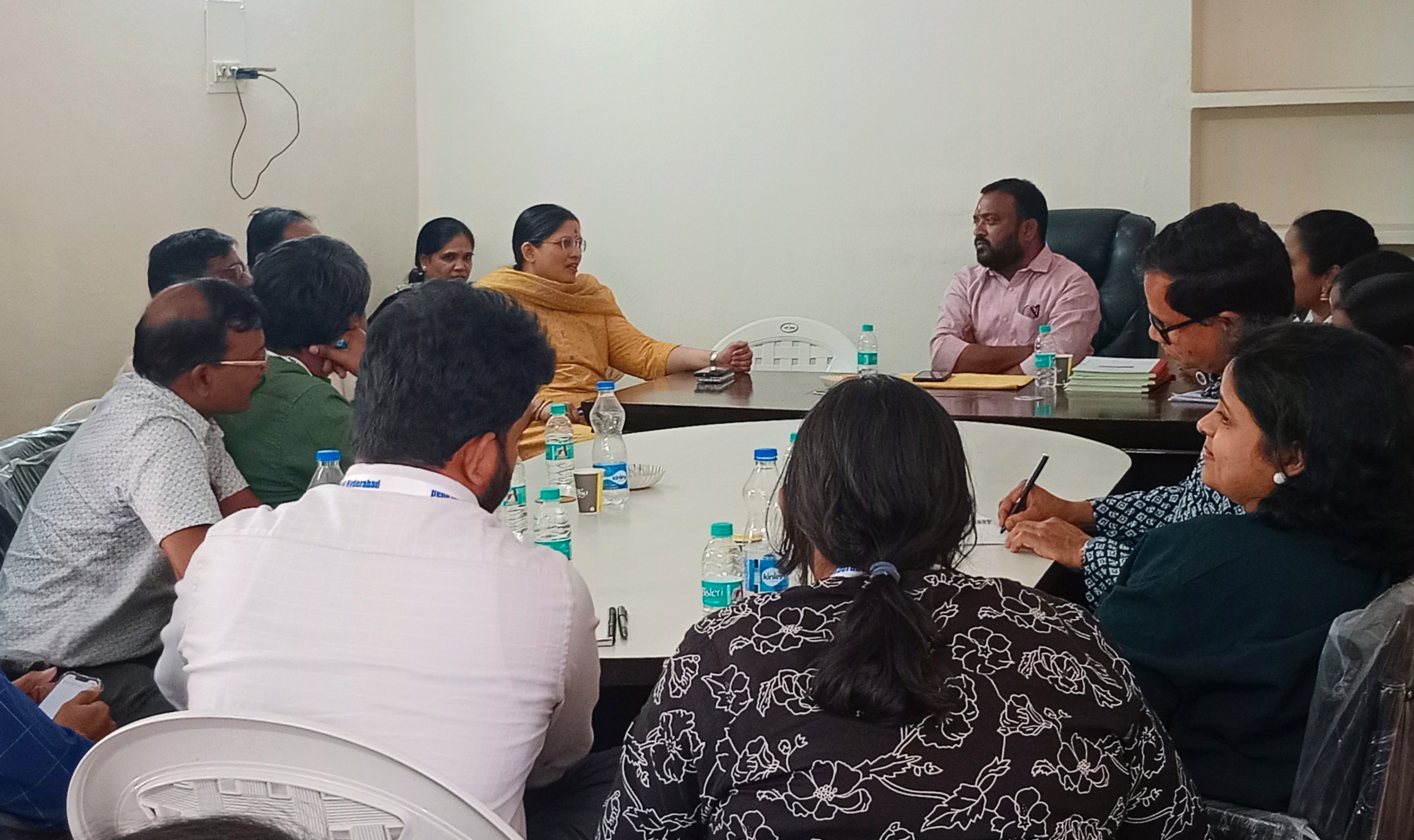
One powerful entry point is for Panchayats to invite elected representatives, frontline workers, and community leaders to orient students and faculty before any field engagement begins. This reverses traditional power dynamics and establishes Panchayats as co-educators. It also helps dismantle the ‘ivory tower’ mindset that often undermines honest community engagement.
Panchayats can further strengthen engagement by insisting on joint planning, shared ownership of outputs, and continuity beyond short-term visits. Memorandums of understanding, annual engagement calendars, and alignment with Panchayat planning cycles help institutionalise partnerships.
From Passive Recipients to Strategic Partners
At a time when local governance faces unprecedented challenges, Gram Panchayats cannot afford to work in isolation. Engaging with HEIs is not about inviting external expertise to fix local problems, it is about co-producing knowledge, strengthening governance, and reclaiming democratic space.
The central question Panchayats must ask is not whether universities want to engage, but why and how such engagement serves their own constitutional mandate and community aspirations. When Panchayats lead this conversation, HEI partnerships under UBA 2.0 and UGC guidelines can move from compliance-driven outreach to genuinely transformative collaboration.
In doing so, Gram Panchayats reaffirm their role not only as units of administration, but as institutions of learning, leadership, and local resilience.
Looking Beyond the Usual- Ideas for Panchayat–HEI Engagement
If Gram Panchayats are to truly benefit from engaging with HEIs, the partnership must move beyond routine meetings, surveys, and reports. The real potential lies in reimagining democratic spaces, especially the Gram Sabha, as sites of learning, dialogue, and collective problem-solving.
One promising idea is to transform the Gram Sabha into a knowledge-enabled forum rather than a procedural meeting. With support from HEIs, Panchayats can experiment with presenting simple, visual, and locally relevant data during Gram Sabha meetings on water quality, nutrition, climate risks, or scheme utilisation. When citizens see evidence drawn from their own village, participation becomes more meaningful and deliberative rather than symbolic.
Another way is to treat the Gram Sabha as a living classroom. Students and faculty, after appropriate orientation by Panchayat members and community leaders, can attend Gram Sabhas as silent observers, documenting governance processes and learning from real-time democratic practice. This reverses conventional learning hierarchies and reinforces the authority of the Gram Sabha as the highest decision-making body.
Panchayats can also experiment with thematic Gram Sabhas, focusing on pressing challenges such as climate resilience, water security, women’s safety, or youth livelihoods. HEIs can support these thematic discussions by helping translate technical issues into accessible language, enabling informed participation without dominating the space.
To enhance participation of women, youth, and marginalised groups, Panchayats may consider pre–Gram Sabha engagement spaces, small group dialogues facilitated by trained students or community resource persons. These spaces allow voices that are often silenced in large meetings to crystallise their concerns and enter the Gram Sabha with greater confidence.
Digital innovation offers another unconventional pathway. Panchayats, with HEI support, can pilot hybrid Gram Sabhas, combining physical meetings with digital feedback mechanisms such as short audio messages, SMS-based inputs, or community WhatsApp groups moderated by Panchayat representatives. This is particularly useful for migrant households, persons with disabilities, and working women who find it difficult to attend meetings physically.
A further idea is to institutionalise a ‘Gram Sabha Reflection Note’, jointly prepared by Panchayat members and HEI partners after major meetings. Rather than minutes alone, this note can capture what worked, whose voices were missing, and what needs follow-up. Over time, such reflections can strengthen democratic practice and accountability.
Finally, Panchayats can position themselves as ethical gatekeepers of community engagement. By clearly articulating norms for student and faculty engagement, respect, reciprocity, feedback to the community, and shared ownership of knowledge, panchayats can ensure that partnerships do not become extractive. This also sets a powerful precedent for future collaborations beyond UBA and UGC frameworks.
Ultimately, Gram Panchayats consciously asking why they should engage, on what terms, and to whose benefit. When Panchayats ask this question collectively through the Gram Sabha, they shift from being passive recipients of academic attention to active shapers of knowledge partnerships. Such Panchayat-led engagement with HEIs can help renew not only development practice, but the very spirit of local self-governance.
A tribute to Comrade Damodar Thankappan, reflecting on over four decades of friendship, solidarity, and shared work with PRIA. From textile workers’ struggles and occupational health to construction workers’ rights and workers’ cooperatives, the blog celebrates his lifelong commitment to workers’ dignity, leadership, and collective action.
In this blog, Dr. Bandyopadhyay reflects on rethinking monitoring and evaluation in development practice. Drawing on his experience with participatory networks, he explores how organisations can move beyond compliance-driven reporting towards listening, collective learning, adaptation, accountability, and cultures that enable honest reflection.
This blog, by Dr. Anshuman Karol, explores why the future of higher education depends on community-engaged research, global collaboration, and knowledge democracy. It highlights how Community-Based Participatory Research enables universities and communities to co-create solutions for today's interconnected social and environmental challenges.
.png)
.png)