
Author: Yedukrishnan V. | 26-Feb-2026
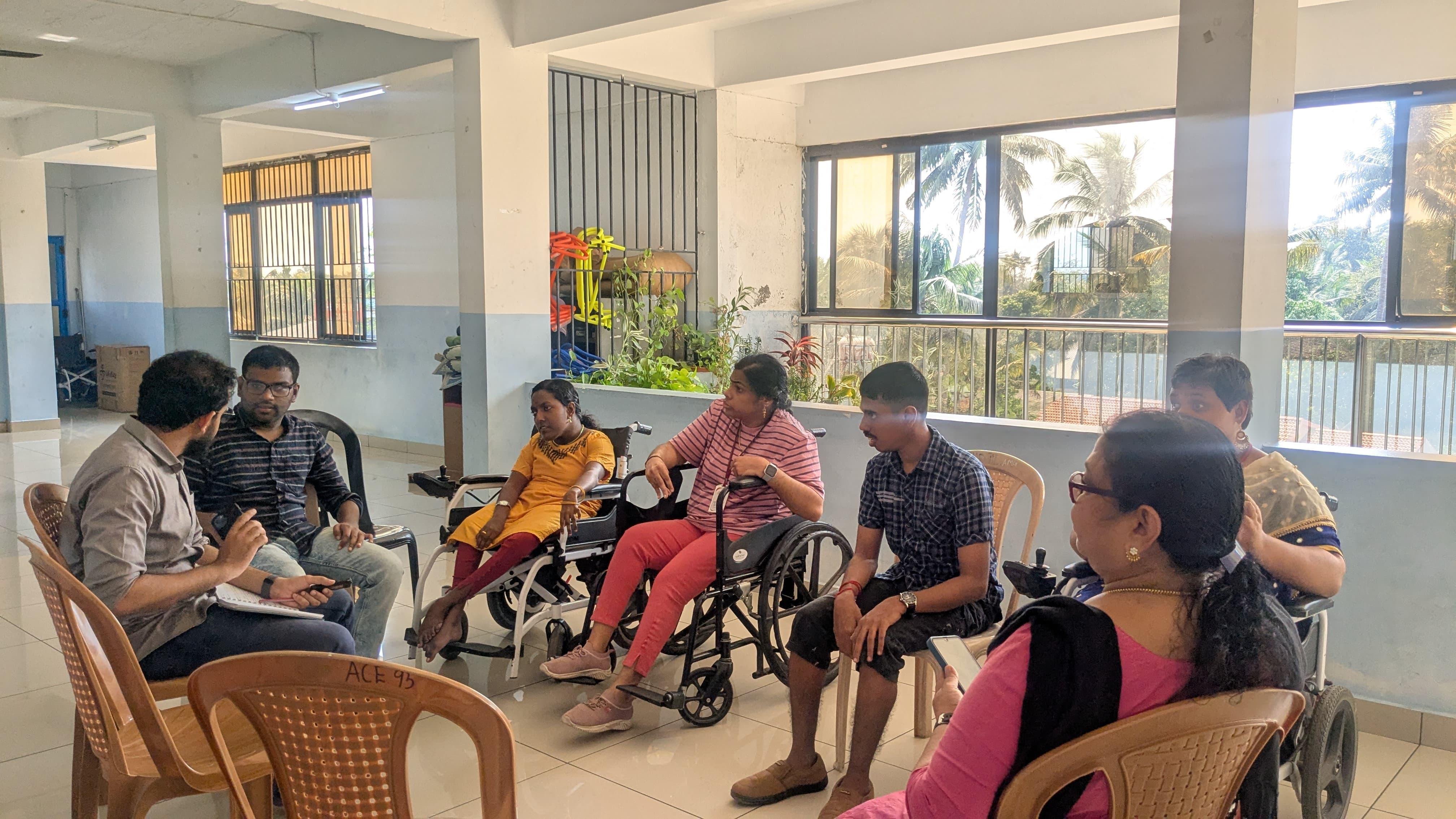
For most Indian cities, accessibility to transport for people with disabilities is still understood as a checklist: build a ramp, reserve a seat, add a wheelchair symbol. While these are indispensable features, they barely scratch the surface of what people with disabilities need to move safely and with dignity. Insights from participatory research across Kochi, Bengaluru, and Ahmedabad reveal that disability-inclusive mobility demands far more than infrastructure compliance. It requires recognising the diversity of disabilities, the intersecting barriers of gender and class, and the wisdom that communities hold in identifying practical solutions.
Beyond the Visible: The Realities of Invisible Disabilities
Conversations in Kochi uncovered the stories of several children who have one or the other disability, calling for interventions beyond bus seat reservation and ramps built at public spaces. The mother of a child with Angelman Syndrome, a rare neurogenetic disorder, reported that the loud music played in some buses overstimulates him, causing significant distress and anxiety. At times, his heightened reactions also lead to discomfort among fellow passengers, which in turn makes her reluctant to use public transport again, fearing both his distress and the social awkwardness and stigma it may create. This experience reflects a crucial truth that not all disabilities are visible, and mobility systems must account for sensory, cognitive, intellectual, and psychosocial needs in addition to physical accessibility.
Similarly, women caregivers in Ahmedabad reported the anxiety of navigating broken footpaths and unsafe crossings with children who require constant supervision and predictable environments. For them, mobility is not merely about getting from one place to another; it is about ensuring sensory comfort, emotional safety, and a sense of predictability. In Bengaluru, an interview with a person with a physical disability described how accessible features often exist on paper but disappear in practice, such as the removal of PWD parking at Cantonment station, poor signage for people with low literacy, and metro stations where stairways are lit but surrounding areas remain dangerously dark. These experiences highlight the gap between technical compliance and meaningful accessibility.
When Gender, Class, and Disability Intersect
Mobility barriers deepen when disability intersects with gender and poverty. Women with disabilities in Ahmedabad and Kochi shared that their mobility is also shaped by financial constraints: metro fares can be prohibitive, and accessible autos or taxis are often too costly to use regularly. They expressed heightened safety concerns such as poor lighting, inaccessible bus steps, harassment risks, and unreliable last-mile connectivity that, in turn, limit when and where they can travel for work. This often pushes them into the same vicious cycle of poverty.
For low-income caregivers, predominantly mothers, elderly women and domestic workers, mobility also becomes a matter of juggling responsibilities. Multi-stop, caregiving-heavy routines require predictable, safe connections between schools, hospitals, markets, and workplaces. But irregular buses, unsafe walking routes, and auto fare exploitation mean that the most vulnerable commuters end up paying the highest mobility costs, both financially and emotionally.
Moving Beyond Tokenistic Inclusion
If inclusion meant only ramps and reserved seats, Indian cities would have solved accessibility long ago. Instead, communities across all three cities repeatedly pointed to deeper structural issues. While bus steps are too high for elderly or disabled commuters, the urban planners and transport designers' ecosystem has very little representation of marginalised voices. The issue of broken or narrow footpaths is compounded by encroachments that demand a larger call for civic education among commuters.
Poor lighting and open drains make walking unsafe, particularly for women who constitute the majority of pedestrians across cities. Last-mile gaps force them walk longer or take up expensive auto rides. Commercial app-based taxis are not affordable to all, and women who travel at night are forced to pay more for the sake of ensuring a safe commute. Loud noise, overcrowding, and chaotic movement create sensory stress for those with intellectual or sensory disabilities. These gaps reveal that accessibility is not purely a design challenge, but it is a governance, empathy, and responsiveness challenge.
Why Community-Based Planning Is No Longer Optional
The strongest message across Kochi, Bengaluru, and Ahmedabad is clear: communities know what works. When adolescent girls map unsafe spaces, when people with disabilities explain the difference between ramps that work and ramps that don’t, when caregivers describe how sensory discomfort shapes travel choices of children with disabilities, they offer insights that no transport engineer can produce in isolation.
Community-led participatory research through Focus Group Discussions, safety mapping, and mobility mapping exercises demonstrates that lived experience is the most important data. It is expertise. And it must guide the planning process. An inclusive mobility system recognises diverse disabilities: physical, sensory, cognitive, intellectual, psychosocial, while centering the voices of women, caregivers, older persons, and low-income commuters whose daily travel remains most constrained. It prioritises safe, accessible walking routes and everyday public transport as much as high-end metro projects, and it institutionalises community participation through ward sabhas, committees, and citizen-led audits.
Accessibility cannot be an add-on. It must be the foundation of mobility planning: A foundation shaped with communities, not for them. Only when cities design transport through the realities of those who struggle the most to move, will mobility become a right rather than a privilege.
A tribute to Comrade Damodar Thankappan, reflecting on over four decades of friendship, solidarity, and shared work with PRIA. From textile workers’ struggles and occupational health to construction workers’ rights and workers’ cooperatives, the blog celebrates his lifelong commitment to workers’ dignity, leadership, and collective action.
In this blog, Dr. Bandyopadhyay reflects on rethinking monitoring and evaluation in development practice. Drawing on his experience with participatory networks, he explores how organisations can move beyond compliance-driven reporting towards listening, collective learning, adaptation, accountability, and cultures that enable honest reflection.
This blog, by Dr. Anshuman Karol, explores why the future of higher education depends on community-engaged research, global collaboration, and knowledge democracy. It highlights how Community-Based Participatory Research enables universities and communities to co-create solutions for today's interconnected social and environmental challenges.
.png)
.png)