
Author: Meghna Sandhir | 15-Apr-2025
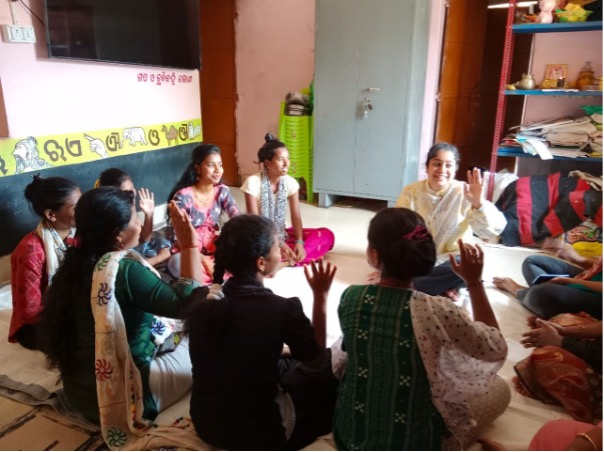
During our community sharing and validation sessions, a statement from one woman particularly stood out:
“Main 25 saal se shaadi mein hoon, mera pati mujhe tab bhi vishwas nahi karta tha, toh phone par bharosa karega, yeh toh door ki baat hai.”
This remark struck a deep chord and reinforced an important realisation, trust, or the lack of it, is not confined to the digital sphere alone but is deeply rooted in personal and societal relationships. If a woman’s integrity is questioned within her household, how can she be expected to navigate digital spaces with confidence and freedom? These insights highlighted how digital trust is an extension of social trust, making it a critical factor in participatory research approaches that seek to address gendered barriers to digital access.
Community Insights on the Reflection of Social Trust in Digital Trust
Through our discussions, it became evident that trust is not built in isolation. It is cultivated through lived experiences, shaped by familial relationships, societal norms, and gender roles. Women, especially in traditional households, are under constant scrutiny, whether it is about whom they talk to, where they go, or what they wear. The same scepticism follows them into the digital world. The idea that a woman’s online presence needs regulation by husbands, fathers, or brothers stems from the same deep-seated beliefs that govern her offline life.
Taboos That Extend Beyond Reality
Women in our sessions shared how they are often discouraged from expressing their thoughts freely in public spaces, and the digital world mirrors these restrictions. Their stories revealed recurring patterns:
These discussions made me realise how participatory research goes beyond just collecting data, it actively engages communities in reflecting on their own realities, uncovering the structural barriers that shape their experiences.
Digital Trust and the Cycle of Mobility
Another key insight that emerged was the direct link between a woman’s ability to navigate the digital world and her physical mobility. Just as stepping out of the house comes with layers of rules and restrictions, so does the freedom to use a phone. Many women take their first digital steps cautiously, perhaps through a shared device or guided by a trusted friend. They gain confidence, much like learning to move freely in public spaces. But just as a discouraging remark from a relative or a societal restriction can make her hesitate to step outside, a small digital roadblock, be it a complicated mobile function, a suspicious gaze, or a comment about her online presence can push her back into hesitation.
One of the most striking analogies that emerged from the discussions was that of snakes and ladders; each small success, such as buying a first phone, joining an online community, or using digital payments, is met with new obstacles: self-doubt, societal restrictions, family expectations, or caregiving roles. However, behind each success story were other women acting as cheerleaders, supporting and inspiring one another. This insight reinforced the importance of creating spaces where women can share, validate, and uplift each other’s digital journeys.
The Fear of Judgment and Repercussions
The consequences of breaking these unspoken rules can be severe. Many women feared being judged, accused of engaging in inappropriate behaviour or even facing digital violence. This fear prevents them from exploring the internet's opportunities, whether it is financial literacy, networking, or simply the joy of connecting with like-minded individuals.
As we reflected on these fears during our validation sessions, it became clear that participatory research must go beyond identifying barriers, it must also serve as a platform for collective problem-solving. Women’s experiences, when voiced and acknowledged in a shared space, not only validate their concerns but also offer pathways for overcoming them.
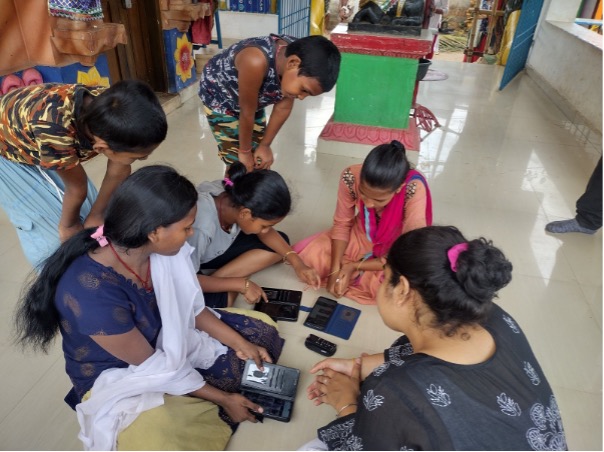
Reimagining Trust in Digital Spaces: Practical Steps Forward
The community discussions pointed towards actionable strategies that could help foster trust and inclusion in digital spaces:
- Enhancing Digital Literacy - Empowering women with digital skills is foundational. Initiatives like Internet Saathi, a collaboration between Google India, Intel, and Tata Trusts, have trained women in rural India to use the Internet, enabling them to educate others in their communities. By 2017, this program had reached 17 million women across 170,000 villages. Such programs not only impart technical skills but also build confidence to navigate digital spaces independently.
- Designing User-Friendly Interfaces - Technology should be intuitive and accessible. Designing straightforward user interfaces makes the technology less intimidating, encouraging more women to engage with digital platforms. For instance, e-commerce platforms can incorporate features like vernacular search formats and image-based search options, making them user-friendly for low-literate women. Interactive guides or small animations to explain functionalities can also help users learn independently and build trust in digital tools.
- Participatory Research as a Tool for Change - One of the most valuable takeaways from this community sharing was the realisation that participatory research is not just about gathering insights but co-creating solutions. When women share their stories, validate each other’s experiences, and collectively explore ways to navigate digital spaces, they are not just participants they become agents of change.
If we want to build safer, more inclusive digital spaces for women, we must first address the societal structures that govern their everyday lives. Trust in digital engagement cannot be separated from trust in personal relationships. Encouraging digital literacy, fostering open conversations about autonomy, and challenging restrictive norms can help women claim their rightful space online.
The question isn’t just about whether women can trust digital spaces; it’s about whether society can trust women to navigate them on their terms. And perhaps, when women are trusted in their everyday lives, trust in their digital presence will follow naturally.
A tribute to Comrade Damodar Thankappan, reflecting on over four decades of friendship, solidarity, and shared work with PRIA. From textile workers’ struggles and occupational health to construction workers’ rights and workers’ cooperatives, the blog celebrates his lifelong commitment to workers’ dignity, leadership, and collective action.
In this blog, Dr. Bandyopadhyay reflects on rethinking monitoring and evaluation in development practice. Drawing on his experience with participatory networks, he explores how organisations can move beyond compliance-driven reporting towards listening, collective learning, adaptation, accountability, and cultures that enable honest reflection.
This blog, by Dr. Anshuman Karol, explores why the future of higher education depends on community-engaged research, global collaboration, and knowledge democracy. It highlights how Community-Based Participatory Research enables universities and communities to co-create solutions for today's interconnected social and environmental challenges.
.png)
.png)