
Author: Nandita Bhatt
 Commuters take the escalator at a Metro Station in New Delhi. Image for representation only. Image credit: Wikimedia Commons.[/caption]
Phoolo was 35 years old (though she looked much older) when I met her. She had left her two children with her mother before coming to the city. She told me she loves her village but there are many problems. The water sources are drying up, fields are barren, and animals are dying. Even the children had begun to die. There was a lot of disease and sickness in her village. That year, a few months before I met her at the station, her husband left for the big city in search of work and she had not heard from him since. She did not know where he went or if he is dead or alive. Desperate to save her children from the impending threat of illness and death, she agreed to leave for the big city when two ‘recruiters’ arrived in her village.
Since then, Phoolo had cried herself to sleep on an empty stomach every night and has never heard from the ‘recruiters’ again. On the day I met her, she had been beaten, abused, and tortured—she was running away from the big city in the same condition she had arrived, only this time she was humiliated and heartbroken as well.
Commuters take the escalator at a Metro Station in New Delhi. Image for representation only. Image credit: Wikimedia Commons.[/caption]
Phoolo was 35 years old (though she looked much older) when I met her. She had left her two children with her mother before coming to the city. She told me she loves her village but there are many problems. The water sources are drying up, fields are barren, and animals are dying. Even the children had begun to die. There was a lot of disease and sickness in her village. That year, a few months before I met her at the station, her husband left for the big city in search of work and she had not heard from him since. She did not know where he went or if he is dead or alive. Desperate to save her children from the impending threat of illness and death, she agreed to leave for the big city when two ‘recruiters’ arrived in her village.
Since then, Phoolo had cried herself to sleep on an empty stomach every night and has never heard from the ‘recruiters’ again. On the day I met her, she had been beaten, abused, and tortured—she was running away from the big city in the same condition she had arrived, only this time she was humiliated and heartbroken as well.
 A tradition well and pulley system from Kerala. Image for representation only. Image credit: Wikimedia Commons.[/caption]
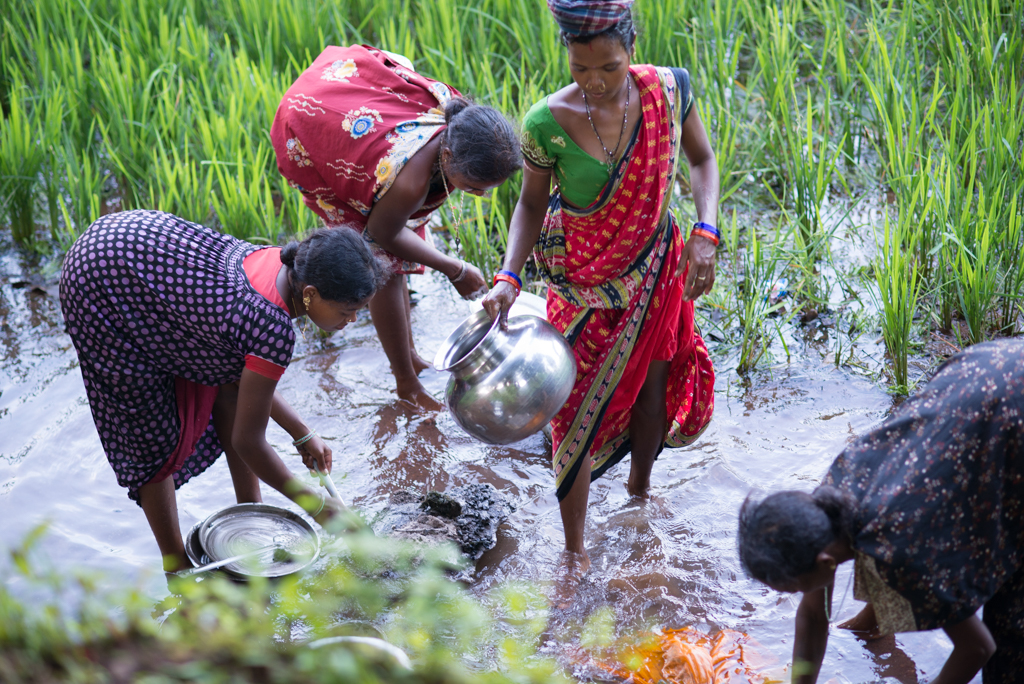
Water security plans have been made in six gram panchayats. Sriram Chowki Santhali village is one of three female-headed gram panchayats among these. It is headed by Anita Devi. In this village, the intervention is led by an all-woman team made up of a Jal Sahiya (appointed by the government), PRIA’s own animator and Anita Devi. After being trained to test water, this team has gone ahead and trained the others in their village, particularly its women, to test the water sources in the village. Anita Devi has called several special gram sabhas on the issue of water to discuss the finding of the tests. When the water security plan was being made, this team ensured that a women’s sabha was first organised in order to include women’s perspectives in the plan.
Phoolo is from Odisha, which is experiencing drought. Before Phoolo left home, she would often picture happy days with her family when she returned–and there was always water.
A tradition well and pulley system from Kerala. Image for representation only. Image credit: Wikimedia Commons.[/caption]
Water security plans have been made in six gram panchayats. Sriram Chowki Santhali village is one of three female-headed gram panchayats among these. It is headed by Anita Devi. In this village, the intervention is led by an all-woman team made up of a Jal Sahiya (appointed by the government), PRIA’s own animator and Anita Devi. After being trained to test water, this team has gone ahead and trained the others in their village, particularly its women, to test the water sources in the village. Anita Devi has called several special gram sabhas on the issue of water to discuss the finding of the tests. When the water security plan was being made, this team ensured that a women’s sabha was first organised in order to include women’s perspectives in the plan.
Phoolo is from Odisha, which is experiencing drought. Before Phoolo left home, she would often picture happy days with her family when she returned–and there was always water.
A tribute to Comrade Damodar Thankappan, reflecting on over four decades of friendship, solidarity, and shared work with PRIA. From textile workers’ struggles and occupational health to construction workers’ rights and workers’ cooperatives, the blog celebrates his lifelong commitment to workers’ dignity, leadership, and collective action.
In this blog, Dr. Bandyopadhyay reflects on rethinking monitoring and evaluation in development practice. Drawing on his experience with participatory networks, he explores how organisations can move beyond compliance-driven reporting towards listening, collective learning, adaptation, accountability, and cultures that enable honest reflection.
This blog, by Dr. Anshuman Karol, explores why the future of higher education depends on community-engaged research, global collaboration, and knowledge democracy. It highlights how Community-Based Participatory Research enables universities and communities to co-create solutions for today's interconnected social and environmental challenges.
.png)
.png)