
Author: Shruti Priya | 06-Sep-2024
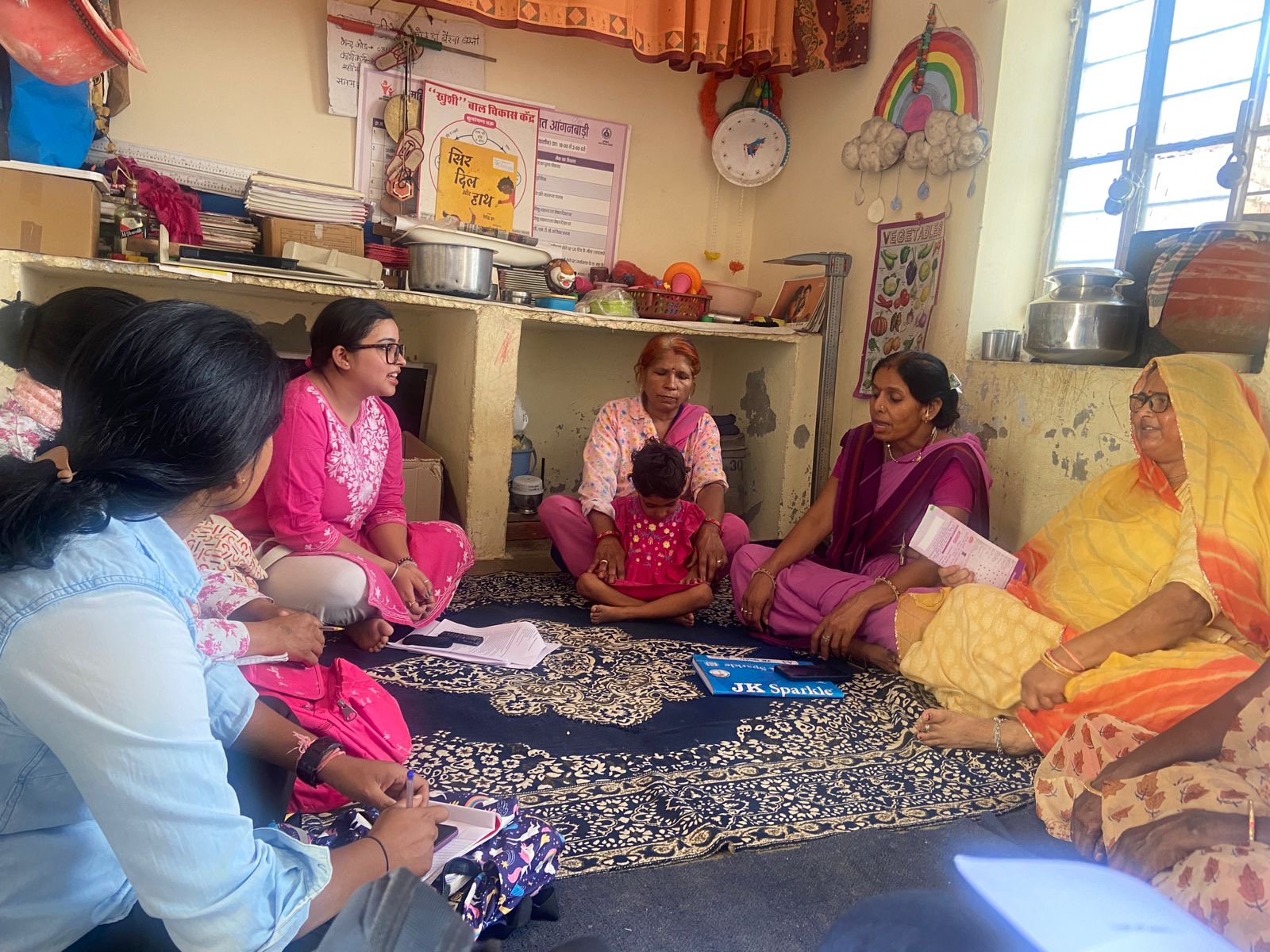
In the scorching heat of Ajmer and Delhi, a silent crisis looms over the informal settlements scattered across these cities. Climate change, often discussed in broad strokes and global terms, is taking a toll on these communities in deeply personal ways. For them, climate change is not just a distant concept; it's a harsh reality that seeps into their daily lives, severely impacting those who have done the least to cause it. Among them, women bear an especially heavy burden. Their stories highlight how deeply environmental challenges are intertwined with gender inequality.
In Berwa Basti, an informal settlement in Ajmer, water scarcity dictates the rhythm of life. Water is supplied only once every 4 to 5 days, turning this necessity into a precious commodity. For the women here, who are mostly domestic workers, this adds a heavy burden to their already demanding lives. Each day, they work tirelessly in others' homes from morning to evening, and on days when water is not supplied, the little time they have left is spent fetching water from distant handpumps. This relentless cycle of labor and struggle leaves them with no respite. Health implications, such as chronic pain from overwork, further magnifies their plight.
Moreover, the water supply is unpredictable and does not follow a fixed schedule, which restricts women's mobility as they must stay home, fearing they might miss the opportunity to store water.
The closely situated houses and limited air circulation in the area only serve to worsen their already challenging circumstances. During the scorching heat, it is common for women in the communities to resort to wearing wet blouses and sarees throughout the day to get relief from the hot temperatures. However, this practice results in uncomfortable rashes, particularly in sensitive areas. The rashes are communicable and often spread to their husbands, the women shared. Medical professionals strongly advise against allowing clothing to remain wet for prolonged periods, as it provides an ideal environment for germs and bacteria to thrive. During monsoons, the challenges multiply, with rashes, skin infections, and vector-borne diseases spreading rapidly through densely populated settlements.
Community health professionals often downplay the changing climate's impact, suggesting that Ajmer has always faced water scarcity and difficult summers. However, the women's experiences tell a different story. They report longer queues at hospitals each year, a tangible indicator of worsening health conditions.
In Delhi, the narrative of struggle continues, now compounded by extreme heat. In a workshop organised by the Martha Farrell Foundation with domestic workers from various parts of Delhi, the women shared their poignant experiences, highlighting the severe and often overlooked consequences of climate change on their lives and work.
They shared that their employers own multiple air conditioners and cars, and contribute significantly to climate change, while the women themselves endure the heat without adequate relief. They travel on scorching roads, work without air conditioning or fans, all while their employers are shielded from these hardships. It is a painful irony. When these workers seek a brief respite after toiling in their employer’s home by sitting under a fan, they are often met with scorn from their employers, who demand, “Kaam karne aai ho ya aaram karne?” (Have you come here to sit or work?) This simple act of finding respite during peak summers is deemed unacceptable; even the small mercy of a fan is often denied
The health implications of heat exposure are severe. Women reported increasing instances of dehydration, low blood pressure, exhaustion, and persistent body pain. The heat not only affects their physical well-being but also their emotional state, with many noting increased irritability and anger. Nights offer little respite; erratic electricity supply leads to sleepless hours, yet the demand for punctuality at work remains unyielding.
Perhaps most disheartening are the social stigmas that compound these physical hardships. Some employers, viewing sweat as a mark of uncleanliness rather than a sign of honest labor, forego their humanity in the name of ‘hygiene.’ “Vo kehte hain ‘humse dur raho.’” (They ask me to stay away from them). “Paseena aana koi galat baat nahi Hai, mehnat karte hain isiliye paseena aata Hai.” (Sweating is not bad; we sweat because we work hard).
The silent struggle of women in India's urban informal settlements is a powerful reminder of the human face of climate change. The experiences of these women in Ajmer and Delhi reemphasize how climate change is not just an environmental issue, but a profound social justice challenge. Their stories demand our attention and action. Addressing it effectively requires amplifying the voices of those most affected and ensuring that policies and interventions are informed by their realities and needs. It underscores the urgent need for a gender-sensitive approach to climate resilience.
Only through genuine dialogue, empathy, and a commitment to justice can we hope to build a more resilient and equitable future for all. As we confront the global challenge of climate change, let us not forget that its solutions must begin with addressing the needs of those most vulnerable, one community, one woman at a time.
A tribute to Comrade Damodar Thankappan, reflecting on over four decades of friendship, solidarity, and shared work with PRIA. From textile workers’ struggles and occupational health to construction workers’ rights and workers’ cooperatives, the blog celebrates his lifelong commitment to workers’ dignity, leadership, and collective action.
In this blog, Dr. Bandyopadhyay reflects on rethinking monitoring and evaluation in development practice. Drawing on his experience with participatory networks, he explores how organisations can move beyond compliance-driven reporting towards listening, collective learning, adaptation, accountability, and cultures that enable honest reflection.
This blog, by Dr. Anshuman Karol, explores why the future of higher education depends on community-engaged research, global collaboration, and knowledge democracy. It highlights how Community-Based Participatory Research enables universities and communities to co-create solutions for today's interconnected social and environmental challenges.
.png)
.png)