
Author: Anshuman Karol | 05-Jun-2017
 Sanitation workers in Muzaffarpur[/caption]
The criteria for ranking of cities in the Swachh Survekshan is based on three components – 45 per cent marks for cities becoming open defecation free, solid waste management (including sweeping, collection, transportation and processing of garbage), education and capacity building; 25 per cent marks for field inspection; and 30 per cent for citizen feedback. Looking at the marks obtained by cities under the citizen feedback criteria, Indore scored 497 (out of 600), whereas last year’s cleanest city, Mysuru, scored 449. Cities like Gonda which lag far behind also score poorly on citizen feedback (Gonda scored only 191).
Why does the Survey give a lower weightage for the opinion of a city resident, about her own city? It looks like her opinion doesn’t carry “weight”. Active and vigilant citizenship helps in building demand from citizens for a clean city, influencing those criteria (like garbage collection) which happen to carry more weightage. The question is: how can such active citizenship be triggered and facilitated? It cannot happen as a result of a series of advertisements just a week or two before the survey begins. It requires concerted and sustained interaction and building of capacities to engage – both with city residents as well as service providers.
[caption id="attachment_3182" align="aligncenter" width="300"]
Sanitation workers in Muzaffarpur[/caption]
The criteria for ranking of cities in the Swachh Survekshan is based on three components – 45 per cent marks for cities becoming open defecation free, solid waste management (including sweeping, collection, transportation and processing of garbage), education and capacity building; 25 per cent marks for field inspection; and 30 per cent for citizen feedback. Looking at the marks obtained by cities under the citizen feedback criteria, Indore scored 497 (out of 600), whereas last year’s cleanest city, Mysuru, scored 449. Cities like Gonda which lag far behind also score poorly on citizen feedback (Gonda scored only 191).
Why does the Survey give a lower weightage for the opinion of a city resident, about her own city? It looks like her opinion doesn’t carry “weight”. Active and vigilant citizenship helps in building demand from citizens for a clean city, influencing those criteria (like garbage collection) which happen to carry more weightage. The question is: how can such active citizenship be triggered and facilitated? It cannot happen as a result of a series of advertisements just a week or two before the survey begins. It requires concerted and sustained interaction and building of capacities to engage – both with city residents as well as service providers.
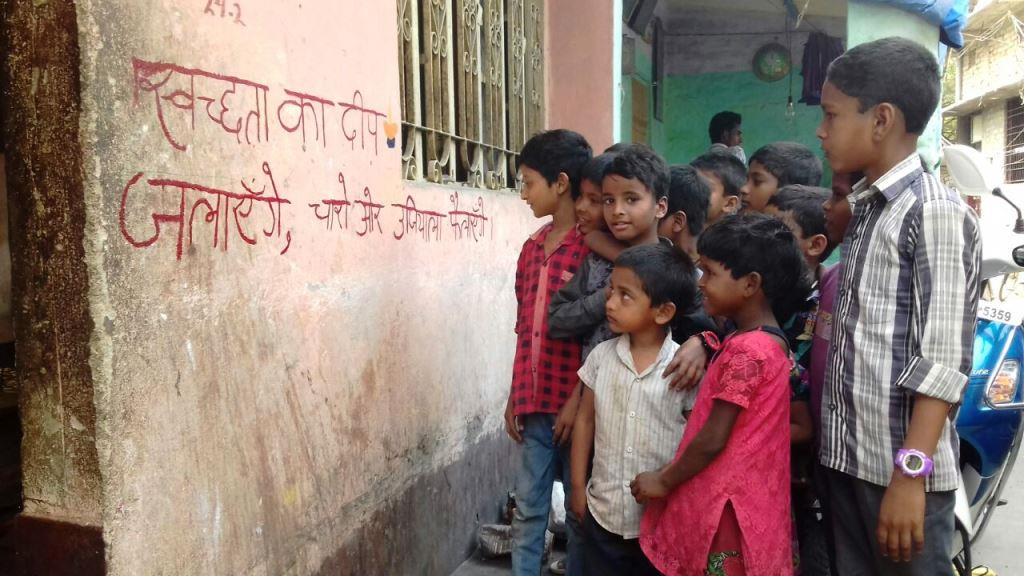
[caption id="attachment_3182" align="aligncenter" width="300"] Citizens need to be included in their city's development and governance[/caption]
Citizen engagement in city development and governance processes is evident in three cities – Jhansi, Ajmer and Muzaffarpur – where PRIA has been working for the past 14 months to build capacities of those living in informal settlements to demand services. The municipalities too seem to be responding. Though these cities rank 166, 226 and 304 in this year’s Swachh Survekshan, Jhansi ranked 269 in 2014 and Ajmer 401 in 2014. Jhansi is recognised as the 4th fastest moving city in the north zone in 2-10 lakh population category. The informal settlements in these cities are building a cadre of citizen leaders to take up issues of development, with special focus on sanitation. These citizen groups, called settlement improvement committees (SICs), have managed to change the situation in their settlements, which have persisted for the past 20-30 years.
Residents of over 100 informal settlements in Ajmer, Muzaffarpur and Jhansi are witnessing the importance of citizen participation in getting basic services at their doorstep. Sustained engagement efforts by these citizens have proved catalytic in ensuring individual household and community toilets, cleaning and construction of drains, regular sweeping and collection of waste by their municipalities. It is important to keep up these efforts for sustainability.
Active citizenship can be sustained if it gets due value in terms of results and outcomes. Enhancing the weightage of citizen feedback in such surveys so that service providers will become more accountable to cities and citizens will be welcomed. Most importantly, if citizen feedback mechanisms are applied regularly with assured accountability of service providers, ‘swachhta competitions’ will be more meaningful and participatory.
Photos courtesy Mr Satyanshu, PRIA Field Animator, Muzaffarpur
Citizens need to be included in their city's development and governance[/caption]
Citizen engagement in city development and governance processes is evident in three cities – Jhansi, Ajmer and Muzaffarpur – where PRIA has been working for the past 14 months to build capacities of those living in informal settlements to demand services. The municipalities too seem to be responding. Though these cities rank 166, 226 and 304 in this year’s Swachh Survekshan, Jhansi ranked 269 in 2014 and Ajmer 401 in 2014. Jhansi is recognised as the 4th fastest moving city in the north zone in 2-10 lakh population category. The informal settlements in these cities are building a cadre of citizen leaders to take up issues of development, with special focus on sanitation. These citizen groups, called settlement improvement committees (SICs), have managed to change the situation in their settlements, which have persisted for the past 20-30 years.
Residents of over 100 informal settlements in Ajmer, Muzaffarpur and Jhansi are witnessing the importance of citizen participation in getting basic services at their doorstep. Sustained engagement efforts by these citizens have proved catalytic in ensuring individual household and community toilets, cleaning and construction of drains, regular sweeping and collection of waste by their municipalities. It is important to keep up these efforts for sustainability.
Active citizenship can be sustained if it gets due value in terms of results and outcomes. Enhancing the weightage of citizen feedback in such surveys so that service providers will become more accountable to cities and citizens will be welcomed. Most importantly, if citizen feedback mechanisms are applied regularly with assured accountability of service providers, ‘swachhta competitions’ will be more meaningful and participatory.
Photos courtesy Mr Satyanshu, PRIA Field Animator, Muzaffarpur
A tribute to Comrade Damodar Thankappan, reflecting on over four decades of friendship, solidarity, and shared work with PRIA. From textile workers’ struggles and occupational health to construction workers’ rights and workers’ cooperatives, the blog celebrates his lifelong commitment to workers’ dignity, leadership, and collective action.
In this blog, Dr. Bandyopadhyay reflects on rethinking monitoring and evaluation in development practice. Drawing on his experience with participatory networks, he explores how organisations can move beyond compliance-driven reporting towards listening, collective learning, adaptation, accountability, and cultures that enable honest reflection.
This blog, by Dr. Anshuman Karol, explores why the future of higher education depends on community-engaged research, global collaboration, and knowledge democracy. It highlights how Community-Based Participatory Research enables universities and communities to co-create solutions for today's interconnected social and environmental challenges.
.png)
.png)