
Author: Dr. Rajesh Tandon | 07-Sep-2026
.png)
I first met Damodar Thankappan briefly in a trade union leadership development program organised by the Indian Institute of Management Calcutta in April 1974. He was representing Kamani Employees Union, along with some others. When I visited Kanpur after the Swadeshi Textile Mills firing on workers on December 6, 1977, I met my friend Ganesh Pandey to learn about the situation (as then Industries Minister (late) George Fernandes had asked us to do a field study). There, I met Comrade Thankappan again. He had taken two months off from his job in Kamani to support the struggles of striking textile workers in Kanpur. Over those two days in mid December 1977, I learnt about his thoughtful approach to understand the situation, keeping the interests of workers at the centre.
As I got busy in getting PRIA off the ground in 1982, the Bombay Textile Workers’ Strike, under the leadership of Dr Datta Samant, began. Over the next few months, I saw Thankappan support the cause of textile workers, despite his disagreements with Dr. Samant. It takes a large heart and deep commitment to do so.
As programming in PRIA began, it was decided to conduct some training programs for worker organisers, especially in the unorganised sector. Comrade DT readily valued this and supported such workshops with his marvelous inputs. (Click here to read the manual). He became especially interested in engaging with such efforts where organising and awareness-raising efforts were taking place with informal labour (like agriculture, brick-kilns, forest produce pickers, etc.).
In February 1984, PRIA convened a consultation with worker activists, technical experts and community organisers in Mumbai for a first such conversation on occupational health & safety. Comrade DT readily agreed to participate and then continued to support that work, including advocacy with government institutions like CLI and ESIC. His friendship with such experts at NIOH (Ahmedabad) & ITRC (Lucknow) is a testament to his openness to new ideas and approaches that can improve the lives of workers holistically.
.png)
D Thankappan at PRIA Evaluation, 1989
When PRIA got actively involved in the impacts and relief after the Bhopal Gas Disaster in December 1984, Comrade DT accompanied a delegation of worker activists to build solidarity with workers of the Union Carbide plant manufacturing MIC in Institute, West Virginia. We learnt about the double standards of safety being practiced by the company, which Thankappan vigorously advocated against in the Indian corporate chambers.
This led him to engage forcefully with construction workers, for whom no legal provisions for benefits existed then. Thankappan involved PRIA to undertake systematic documentation of these issues and facilitate learning workshops for emerging leaders amongst construction workers (Kahin ki Eenth, Kahin ka Rhoda). Under his dynamic leadership and support to construction workers’ unions, the new Act (Building & Other Construction Workers Employment Regulation) was finally passed in 1996.
Once, I happened to visit him in Mumbai when workers were protesting the lockdown of Kamani Tubes Limited (KTL). Comrade DT was discussing with his union colleagues some ideas about workers’ takeover of KTL when I reached; he promptly invited me in and asked my opinion about this strategy. Over the next two years, DT pursued a nationwide campaign, with support from bankers, lawyers and politicians, to win the rights of workers to own their company as a cooperative. PRIA supported some research towards this end, building on the vision of Comrade DT, and documented the story of ‘Takeover’.
The success of this initiative, unique in India, encouraged him to support other such efforts. To do so effectively, he set up the Centre for Workers’ Management in 1991 (and invited me to serve on the founding Board). He also agreed to join PRIA’s Governing Board after the term of Ganesh Pandey ended in 1994 (PRIA Board always included a worker leader/organiser).
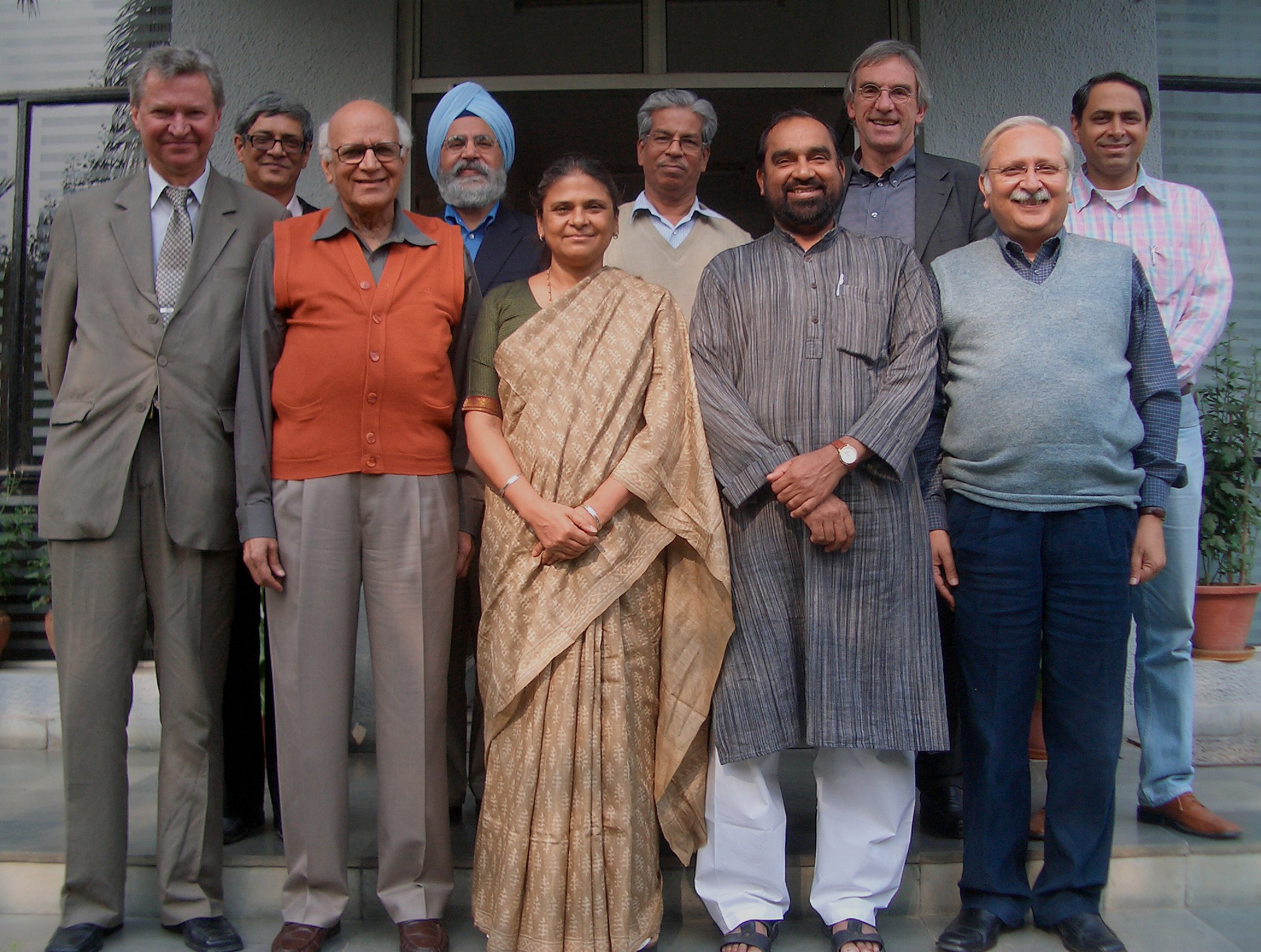
PRIA Governing Board Members, 2007
He engaged a new generation of trade unionists about such health matters affecting workers’ lives and made it an integral part of the agenda when he catalysed the National Coalition of Labour in 1995. With the vision to unify workers’ organisations in both the formal and the informal sectors, he provided leadership in the founding of the New Trade Union Initiative (NTUI) in 2006.
When PRIA started working on issues of sexual harassment in the workplace in early 2000 under the leadership of Martha, he took great interest in this aspect of workplace safety for women workers.
Over the years, we developed great affection between our families after they moved to Delhi. His deep insights and wisdom supported us when Martha was killed in Kabul. He encouraged us to carry forward her legacy as the Martha Farrell Foundation.
As a trade unionist, educator, leader of struggles for rights and dignity, Comrade Thankappan was unique. With more than six decades of active public leadership, he was one-of-a-kind indeed.
Most importantly, we will miss his comraderie and affection for us all, his energy and passion, his vision and inspiration.
In this blog, Dr. Bandyopadhyay reflects on rethinking monitoring and evaluation in development practice. Drawing on his experience with participatory networks, he explores how organisations can move beyond compliance-driven reporting towards listening, collective learning, adaptation, accountability, and cultures that enable honest reflection.
This blog, by Dr. Anshuman Karol, explores why the future of higher education depends on community-engaged research, global collaboration, and knowledge democracy. It highlights how Community-Based Participatory Research enables universities and communities to co-create solutions for today's interconnected social and environmental challenges.
EpiNet: Education, Epistemic Justice and the Knowledge Commons
.png)
.png)