
Author: Dr. Anshuman Karol | 21-Jul-2026
.png)
"Knowledge grows when it is shared. It transforms societies when it is co-created"
The world today faces an unprecedented convergence of crises- climate change, public health emergencies, social inequality, democratic decline, food insecurity, and digital exclusion. These are not merely technical problems; they are deeply social challenges that demand collaborative, context-sensitive and inclusive solutions. No university, government or community can address them in isolation.
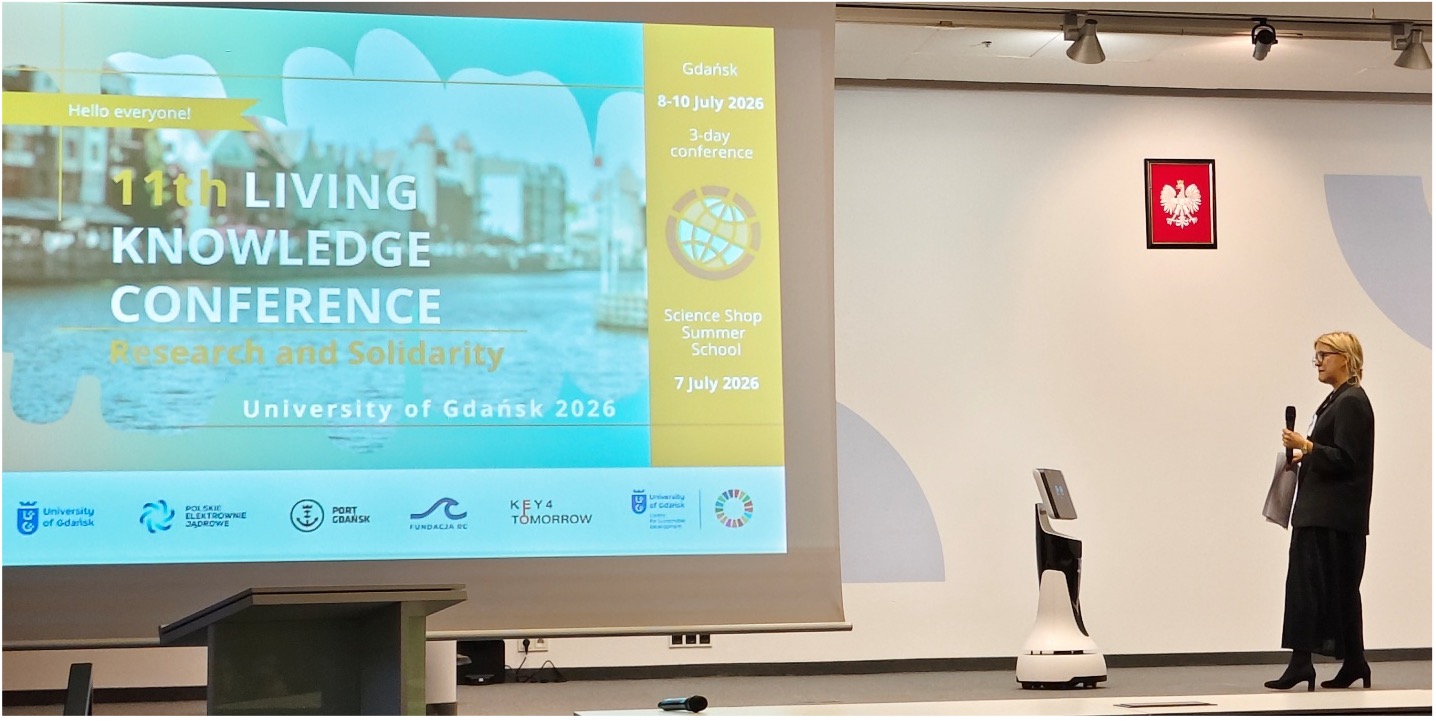
This reality was at the heart of the 11th Living Knowledge Conference – Research & Solidarity, hosted by the University of Gdańsk, Poland. Bringing together over 200 researchers, universities, civil society organisations, science shops and community leaders from 19 countries, the conference showcased a growing international movement committed to transforming the relationship between science and society. Its programme highlighted community-engaged research, global research solidarity, university-community partnerships, citizen science and open science as key pathways for creating more just and sustainable societies. The Living Knowledge Conference is one of the world's leading international forums on community-engaged research. Initiated in 2001 by the Living Knowledge Network, the biennial conference brings together universities, science shops, civil society organisations, policymakers and community leaders to advance research that is socially relevant, participatory and responsive to societal needs. Over the past two decades, it has become a global platform for promoting citizen science, knowledge democracy, public engagement and open science, fostering collaborations that bridge academia and society across continents.
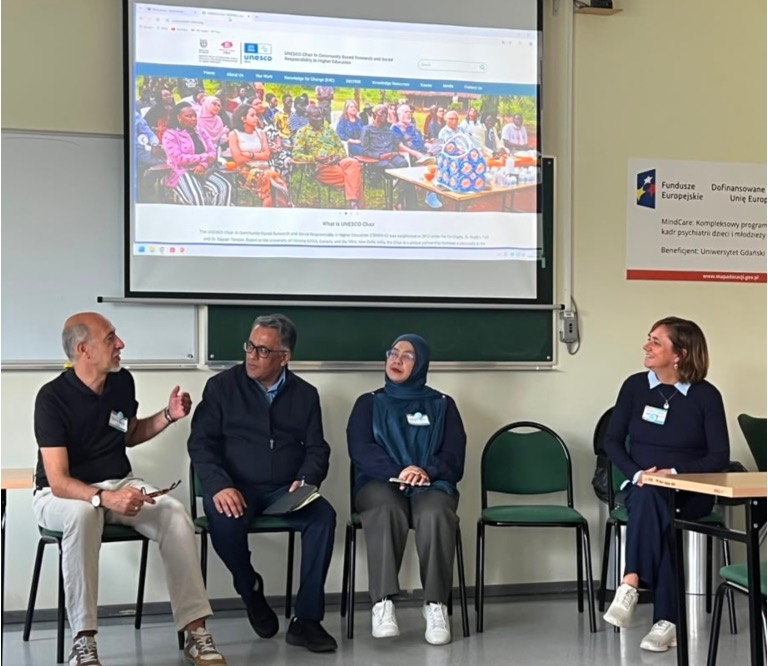
The UNESCO Chair in Community-Based Research and Social Responsibility in Higher Education, established in 2012, co-hosted by Participatory Research in Asia (PRIA) and the University of Victoria, Canada, was created to strengthen the role of higher education in addressing societal challenges through community-engaged research. Over the past fourteen years, the Chair has built an extensive global network of universities and civil society organisations, promoted the UNESCO Recommendation on Open Science, and nurtured the Knowledge for Change (K4C) Consortium, which now spans multiple regions and has trained hundreds of researchers and community practitioners in Community-Based Participatory Research (CBPR).
For those of us working with the UNESCO Chair, these conversations resonated deeply. For nearly fourteen years, the UNESCO Chair has demonstrated that the future of higher education lies not simply in producing knowledge, but in co-creating knowledge with communities through trust, reciprocity and shared responsibility.
Universities Must Move Towards Collaborations
For decades, universities have largely been measured through publications, rankings, citations and research funding. While these indicators remain important, they do not adequately capture how universities contribute to solving real-world problems Today's challenges require universities to become active partners in societal transformation. This means working alongside communities, not merely studying them, to generate knowledge that is socially relevant, ethically grounded and locally meaningful.
Global coalitions of universities provide exactly this opportunity. They create platforms where institutions can learn from one another, exchange innovative methodologies, strengthen community partnerships and collectively shape a new culture of research based on solidarity rather than competition. Throughout the Living Knowledge Conference, examples from Europe, Latin America and North America demonstrated that although local contexts differ, the principles of meaningful engagement remain remarkably consistent: mutual respect, co-learning, shared ownership and long-term relationships.
CBPR has long challenged traditional assumptions about who creates knowledge. Rather than treating communities as respondents or beneficiaries, CBPR recognises them as equal partners throughout the research process, from identifying priorities and designing research to interpreting findings and driving action. Yet genuine participation cannot be achieved through good intentions alone. It requires institutional support, trained facilitators, ethical frameworks, sustained investment and opportunities for continuous learning. This is precisely why global coalitions matter.
The UNESCO Chair's Knowledge for Change (K4C) Consortium has emerged as one of the world's most significant collaborative platforms for strengthening CBPR. Connecting universities and civil society organisations across multiple continents, K4C has developed a vibrant international community of practice that equips researchers, students and practitioners with the knowledge and skills needed to undertake participatory, action-oriented research. Its strength lies not in promoting a single methodology, but in fostering mutual learning across cultures, disciplines and knowledge systems. Each participating institution contributes local innovations while benefiting from global experiences, creating an ecosystem where knowledge continuously evolves through collaboration.
Open Science Must Begin with Open Participation
Open Science is often associated with open-access journals, open data and digital repositories. While these are important, they represent only part of the story. The UNESCO Recommendation on Open Science calls for a more inclusive vision- one that democratises not only access to research outputs but also participation in knowledge creation itself. Communities possess rich experiential knowledge that complements scientific expertise. Indigenous peoples, women, youth, farmers, informal workers and local organisations understand realities that conventional research often overlooks. When these voices are included from the outset, research becomes more relevant, more ethical and ultimately more impactful.
The Living Knowledge Conference offered numerous examples of citizen science initiatives, science shops and collaborative learning networks that illustrated how openness can transform research from an academic exercise into a collective public good. Discussions highlighted the co-design of research infrastructures with citizens, international partnerships that strengthened research solidarity between the Global North and South, and the use of open-source digital platforms to make research more transparent, accessible and accountable. Several examples demonstrated how universities are building long-term alliances with communities, investing in the professional development of both researchers and community partners, and creating global networks that strengthen community-based participatory research through shared learning, mentoring and capacity building. The conference also explored the opportunities and ethical responsibilities associated with generative AI in participatory research, while showcasing how community-led research can influence public policy through trusted intermediary organisations and sustained civic engagement. Our contributions through the Knowledge for Change (K4C) Consortium and the DECODE project under the UNESCO Chair complemented these discussions by demonstrating how global capacity building, co-construction of knowledge and the decolonisation of research can enable communities, researchers and practitioners to work as equal partners in addressing complex societal challenges. Collectively, these examples reinforced the conference's central message that research achieves greater relevance, legitimacy and societal impact when communities are recognised not merely as participants, but as co-creators of knowledge and agents of social change.
Building Capacity Across Borders
One of the greatest contributions of international university coalitions is their ability to strengthen institutional and human capacities.
Building effective community partnerships requires more than technical expertise. Researchers need to develop competencies in facilitation, listening, conflict resolution, ethical engagement, power analysis and intercultural communication.
The UNESCO Chair has consistently invested in developing these capacities through K4C mentor training programmes, collaborative research and South-South as well as North-South exchanges. Importantly, capacity building is reciprocal. Communities also strengthen universities by bringing practical knowledge, lived experience and innovative perspectives that enrich teaching, research and public engagement.

Towards a More Democratic Knowledge Ecosystem
Perhaps the greatest lesson emerging from both the Living Knowledge Conference and the UNESCO Chair's work is that the future of research is relational. Knowledge is strongest when diverse perspectives meet. Innovation flourishes when different disciplines collaborate. Trust grows when communities become equal partners rather than passive recipients. Impact becomes sustainable when research is embedded within long-term relationships instead of short-term projects. Global coalitions create the infrastructure needed for these relationships to thrive. They enable universities to move from isolated excellence towards collective intelligence.
A Call for Collective Leadership
As universities around the world seek to implement the UNESCO Recommendation on Open Science and contribute to the Sustainable Development Goals (SDGs), the importance of international collaboration has never been greater. Networks such as the Knowledge for Change (K4C) Consortium, the Living Knowledge Network, Science Shop movements and other university alliances demonstrate that collaboration across borders is not simply about sharing research; it is about sharing responsibility.
The future of Community-Based Participatory Research will depend on strengthening these global ecosystems of learning, practice and solidarity. At the UNESCO Chair, we believe that universities have a unique opportunity and an equally profound responsibility to lead this transformation. By embracing collaboration over competition, participation over extraction and openness over exclusivity, higher education institutions can help build a more democratic, equitable and sustainable world.
The question before us is no longer whether universities should engage with society. The real question is whether they are ready to become genuine partners in creating knowledge with society. The answer will shape not only the future of higher education, but also the future of our shared world.
A tribute to Comrade Damodar Thankappan, reflecting on over four decades of friendship, solidarity, and shared work with PRIA. From textile workers’ struggles and occupational health to construction workers’ rights and workers’ cooperatives, the blog celebrates his lifelong commitment to workers’ dignity, leadership, and collective action.
In this blog, Dr. Bandyopadhyay reflects on rethinking monitoring and evaluation in development practice. Drawing on his experience with participatory networks, he explores how organisations can move beyond compliance-driven reporting towards listening, collective learning, adaptation, accountability, and cultures that enable honest reflection.
EpiNet: Education, Epistemic Justice and the Knowledge Commons
.png)
.png)