
Author: Rajesh Tandon | 08-Aug-2022
“ It has been a long time since we sat down to just chat, share our recent experiences”
“I have not seen you in person for nearly two decades, even though we live in the same city; what happened?”
“ How come I do not know the history of feminist work in the city, while we are working towards similar issues for more than two decades?”
“It is so nice to be able to just have a conversation, just share our stories, and feel a sense of comraderie’.
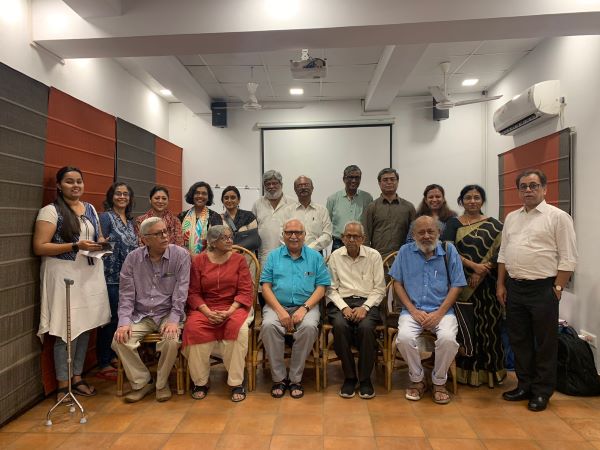
These are the voices of civil society leaders in a recent get-together in Kolkatta. Such voices can also be heard from any other part of the country, or for that matter perhaps, from any other country in the world. Why it is so that spaces for conversations have become rare? Why is it so that there is no time for sharing, and listening to, stories from the past…. stories that connect our worlds, our passions and our commitments?
Amongst 15 of us, gathered for this conversation, nearly 500 years of cumulative experiences of social change was represented. Those practices in transforming the lives of the excluded and exploited communities and households spanned nearly five decades, since mid 1970s. That the practices continue, that such civil society institutions are still relevant and that champions of inclusive and empowering socio-economic development are still active bears testimony to the richness and diversity of such experiences. And if one stops to think about how national and international contexts have changed over these five decades, it is indeed heartening that such commitments have continued to maintain their impactful relevance.
Each of us shared our stories of interactions with each other, and with PRIA (which has completed four decades of its journey). Each story had a thread of inter-connectedness. Each story had a history and voices woven within. Each story brought some emotions amongst us all. Because these were stories of commitment and valour, stories of creativity and survival, stories of continuity and change. And together, the stories gave us all a sense of solidarity and togetherness.
Amazing conversations carried out over three hours one evening in Kolkatta helped expand spaces for further conversations. Expanding circles of conversations create opportunities to deepen the shared understanding and commitment. Diversity is heard, commonalities are explored and differences are accepted. We talked about our dilemmas in this practice over five decades, but also about building our capacities to ‘live’ with them.
It was spontaneously possible because safe space for conversations was created. Conversations of meaning require safe spaces, both in physical and digital worlds. Safe spaces for conversations in physical world have to be nurtured. It is in safe spaces that meaningful conversations happen, where trust is nurtured and practiced. Otherwise competition for resources and awards tend to undermine trust even amongst those of us championing societal values of justice, equality, diversity, inclusion!
My colleagues & I have come back from this conversation in Kolkatta, inspired by fellow practitioners there, to find more proactive ways of creating and nurturing safe spaces for deepening conversations about what we believe in, what we do, and how can we continue to learn and improve ourselves and our practices.
Thank you indeed!
A tribute to Comrade Damodar Thankappan, reflecting on over four decades of friendship, solidarity, and shared work with PRIA. From textile workers’ struggles and occupational health to construction workers’ rights and workers’ cooperatives, the blog celebrates his lifelong commitment to workers’ dignity, leadership, and collective action.
In this blog, Dr. Bandyopadhyay reflects on rethinking monitoring and evaluation in development practice. Drawing on his experience with participatory networks, he explores how organisations can move beyond compliance-driven reporting towards listening, collective learning, adaptation, accountability, and cultures that enable honest reflection.
This blog, by Dr. Anshuman Karol, explores why the future of higher education depends on community-engaged research, global collaboration, and knowledge democracy. It highlights how Community-Based Participatory Research enables universities and communities to co-create solutions for today's interconnected social and environmental challenges.
.png)
.png)