
Author: PRIA | 16-Jul-2026
.png)
Knowledge is a commons—a public good that should nourish all of humanity. It is created and sustained through the diverse experiences, perspectives, and ways of knowing that people bring from different communities and contexts. Different voices represent different forms and expressions of knowledge, and recognising this plurality lies at the heart of knowledge democracy. Ultimately, knowledge democracy is about intentionally linking the values of justice, fairness, and collective action to the ways in which knowledge is created, shared, and used for social transformation.
-Dr Rajesh Tandon, Founder- President, Participatory Research in Asia (PRIA); Co- Chair, UNESCO Chair in Community-Based Research and Social Responsibility in Higher Education
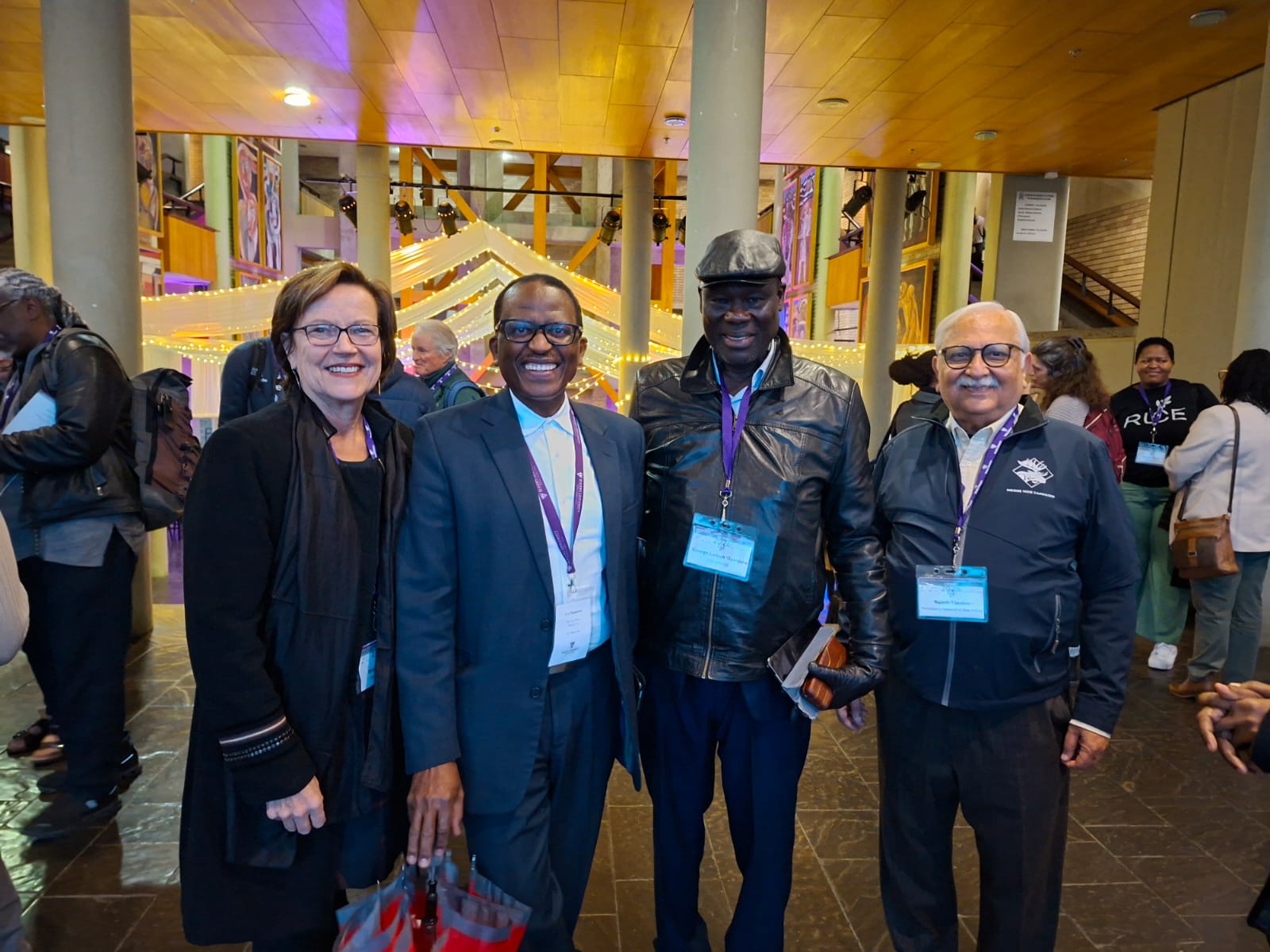
(At the Launch Event at Rhodes University, South Africa)
In collaboration with partners across continents, Participatory Research in Asia (PRIA) launched EpiNet- UNESCO UNITWIN Network on Education, Epistemic Justice and the Knowledge Commons- in May 2026 at Rhodes University, South Africa. As the first dedicated UNESCO UNITWIN network specifically focused on epistemic justice, EpiNet represents a landmark step towards fostering more inclusive, equitable, and democratic approaches to knowledge creation and sharing.
The establishment of EpiNet comes at a critical moment when societies across the world are confronting complex challenges related to inequality, sustainability, democratic participation, technological change, and social cohesion. Addressing these challenges requires drawing upon a plurality of knowledge systems, including Indigenous, local, experiential, and community-based knowledge alongside academic, technical and scientific expertise. The network aligns with UNESCO's commitment to reimagining the futures of education and knowledge through more inclusive and collaborative approaches.
"Knowledge democracy acknowledges the ongoing interplay of diverse epistemologies. Knowledge co-creation offers pathways of mutuality, a foundational value for epistemic justice. EpiNet represents a unique relational space where knowledge systems that have long remained at the margins can engage on equitable terms. It creates opportunities to advance transformative approaches such as data sovereignty in knowledge governance, decolonization, and other emerging methodologies that will help shape more just, inclusive, and future-oriented knowledge systems."
-Dr. Sonajharia Minz, UNESCO Chair in Transforming Indigenous Knowledge Research Governance and Rematriation.
Anchored at Gulu University, Uganda, EpiNet brings together leading universities and knowledge institutions from across the world, including Gulu University, Uganda in Africa; Participatory Research in Asia (PRIA), India, a pioneering civil society research and training organisation, in Asia; the University of Bristol, United Kingdom in Europe; the University of Victoria and the University of Calgary, Canada in North America; and the University of Adelaide, Australia in Oceania. Together, these institutions work to challenge persistent inequalities in global knowledge systems and promote the recognition of diverse ways of knowing, learning, and producing knowledge.
.jpeg)
.jpeg)
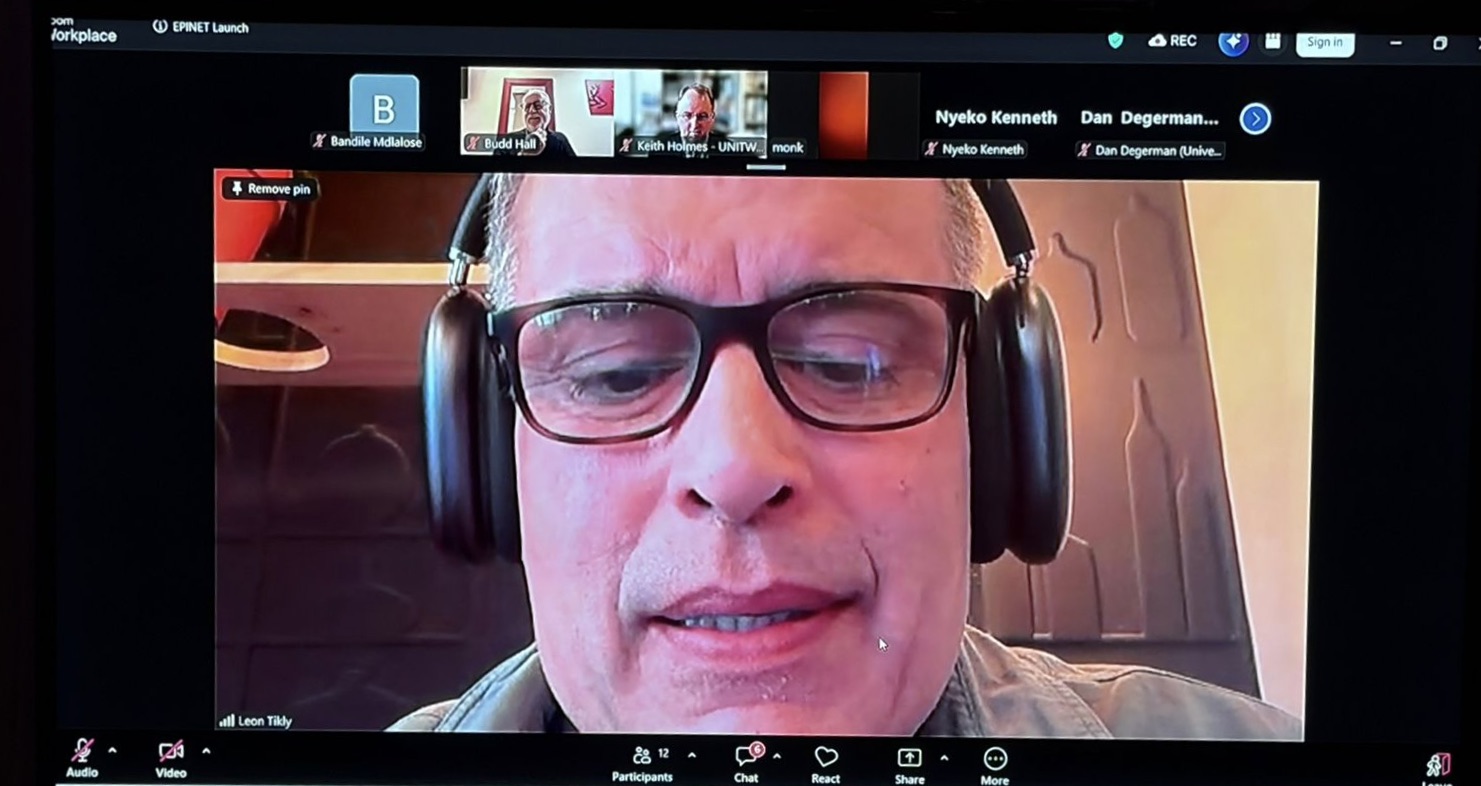
(Mr. Keith Holmes, Dr. Leon Tikly and Prof. Budd Hall at the Launch Event)
"Knowledge is a public good, and this principle has never been more urgent. At a time when the world faces interconnected crises- from climate change and food security to growing inequality and threats to democracy- we cannot afford knowledge systems that restrict access to publicly funded research or privilege only certain forms of expertise. Open Science is not only about making research accessible; it is also about recognising that community, Indigenous, and experiential knowledge are essential to addressing today's complex challenges. EpiNet embodies this vision by advancing more inclusive and equitable knowledge systems.
I welcome the launch of this important UNESCO UNITWIN Network and am proud of PRIA's role as a founding member.
-Dr. Moumita Koley, Research Analyst IISc, Bangalore and Fellow at Research on Research Institute (RORI)
For more than four decades, PRIA has championed participatory research, community-based knowledge generation, and knowledge democracy. Through partnerships with communities, civil society organisations, universities, research funders, government organisations and policymakers, PRIA has consistently worked to ensure that the knowledge and lived experiences of citizens- especially those historically excluded from formal knowledge systems- are recognised as essential to the creation of solutions.
As a founding member of EpiNet, PRIA will contribute its extensive experience in participatory research, decolonised knowledge co-construction, community-university partnerships, adult learning, and knowledge democracy. EpiNet will create opportunities for collaborative research, policy engagement, capacity strengthening, scholar exchanges, and global dialogue on the role of knowledge in building just and sustainable futures.
For PRIA, the creation of EpiNet represents an important milestone in our ongoing struggle for epistemic justice and a reaffirmation that communities everywhere possess valuable knowledge and insights that must be recognised and engaged if societies are to effectively address today's complex challenges.
By joining EpiNet, PRIA reaffirms its long-standing commitment to the creation of spaces where diverse voices, experiences, and forms of knowledge can contribute to shaping an equitable and sustainable future for all.
For more information on EpiNet, how you can participate, contribute or/and become a member, you can reach out to rajesh.tandon@pria.org or saanya.sodhi@pria.org.
A tribute to Comrade Damodar Thankappan, reflecting on over four decades of friendship, solidarity, and shared work with PRIA. From textile workers’ struggles and occupational health to construction workers’ rights and workers’ cooperatives, the blog celebrates his lifelong commitment to workers’ dignity, leadership, and collective action.
In this blog, Dr. Bandyopadhyay reflects on rethinking monitoring and evaluation in development practice. Drawing on his experience with participatory networks, he explores how organisations can move beyond compliance-driven reporting towards listening, collective learning, adaptation, accountability, and cultures that enable honest reflection.
This blog, by Dr. Anshuman Karol, explores why the future of higher education depends on community-engaged research, global collaboration, and knowledge democracy. It highlights how Community-Based Participatory Research enables universities and communities to co-create solutions for today's interconnected social and environmental challenges.
.png)
.png)