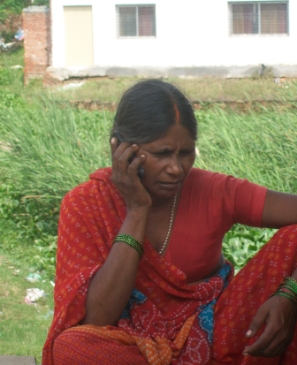
Today is the 50th anniversary of International Literacy Day. On the streets of Jaipur, a self-employed magician is using his mobile to solicit clients. When I chanced to meet him about three months ago, he raised my curiosity by showing a few ‘tricks’ on the pavement itself. As I began to leave him, he asked  me to  enter my mobile number in his mobile for future us. I figured he was unable to read and write the numbers. He has since called me a couple of times to enquire about arranging magic shows. How did he become digital literate then? Last week, a middle-aged woman stopped me in my neighbourhood to show me a piece of paper. It was some sort of informal wage slip given by her employer in one of the households. She had left the job, and this piece of paper showed calculations of her back wages that she received that day. She wanted me to read the rate of daily wage, and number of days she was paid for. As I finished reading that slip, she exclaimed in anguish that she was underpaid. The daily wage rate paid to her was below the legal minimum wage, she commented. She thanked me and rapidly moved on towards that house. How did she become legal literate then? I am reminded of the above stories today as we (only some of us) recall that September 8 is International Literacy Day, and we are celebrating its 50th anniversary. In many countries around the world, more so in India and South Asia, universal right to literacy is only a recent phenomenon. Public policies and programmes for promoting literacy have not had enough public support and funding throughout this period. This is even more true for women’s literacy; in Bihar and Rajasthan states of India, nearly 40% of women are still functionally illiterate. Yet, prevalence of digital technology and use of mobile phones has enabled functionally illiterate men and women to carry on with their lives with a bit more ease. If they can be further supported with intensively functional learning of literacy, it can considerably enhance their lives and livelihoods. Likewise, legal awareness of rights can significantly improve the potential for realising these rights by the hitherto excluded citizens and households. Innovative functional literacy efforts can  meaningfully promote such legal awareness quickly. Literacy in everyday life still matters a great deal to large numbers of men and women in ways illustrated above. Government and civil society, both, have been less than enthusiastic about literacy programmes in the last decade. Its time to refresh #LiteracyInEverydayLife.    

You may be interested to read

Dr. Anshuman Karol

This blog, by Dr. Anshuman Karol, explores why the future of higher education depends on community-engaged research, global collaboration, and knowledge democracy. It highlights how Community-Based Participatory Research enables universities and communities to co-create solutions for today's interconnected social and environmental challenges.

PRIA

EpiNet: Education, Epistemic Justice and the Knowledge Commons

Dr. Rajesh Tandon

Reflecting on conversations at the Silver Jubilee of APMAS, Dr. Rajesh Tandon revisits five decades of collaboration between civil society and government institutions. Drawing on experiences from education policy, participatory planning, Panchayati Raj, and voter awareness initiatives, he highlights how mutual respect and shared expertise have been the foundation of impactful partnerships.