
Author: Kaustuv Chakrabarti
 Democracy is the most favoured and acceptable form of governance, because in a democracy citizens have the right to assemble and show dissent without fear of victimisation — as long as such protests do not lead to inhuman or unconstitutional action. Democratic freedoms provide civic space, which enables organising for the achievement of collective aims and for the engagement of citizens with one another and with government. In its truest spirit, civic space constitutes of loose communes of people coming together for a specific purpose, keeping the best interests of a larger community of citizens at the forefront. The well-being of citizens reflects in the freedoms associated with civic spaces, which provides an enabling political and social environment, and which in turn promotes citizen participation and engagement.
Article 19 of the Indian constitution guarantees the right of citizens to assemble peacefully without arms. India has witnessed some of the most powerful and peaceful people’s movements which brought the entire nation together. Satyagraha in Colonial India, the Chipko movement of the 1970s, Narmada Bachao Andolan in the 1980s, Jan Lokpal bill and Nirbhaya movement, and #NotInMyName are some of the vigils when people came together in large numbers to protest, claiming civic space for common good.
[caption id="attachment_3508" align="alignright" width="396"]
Democracy is the most favoured and acceptable form of governance, because in a democracy citizens have the right to assemble and show dissent without fear of victimisation — as long as such protests do not lead to inhuman or unconstitutional action. Democratic freedoms provide civic space, which enables organising for the achievement of collective aims and for the engagement of citizens with one another and with government. In its truest spirit, civic space constitutes of loose communes of people coming together for a specific purpose, keeping the best interests of a larger community of citizens at the forefront. The well-being of citizens reflects in the freedoms associated with civic spaces, which provides an enabling political and social environment, and which in turn promotes citizen participation and engagement.
Article 19 of the Indian constitution guarantees the right of citizens to assemble peacefully without arms. India has witnessed some of the most powerful and peaceful people’s movements which brought the entire nation together. Satyagraha in Colonial India, the Chipko movement of the 1970s, Narmada Bachao Andolan in the 1980s, Jan Lokpal bill and Nirbhaya movement, and #NotInMyName are some of the vigils when people came together in large numbers to protest, claiming civic space for common good.
[caption id="attachment_3508" align="alignright" width="396"]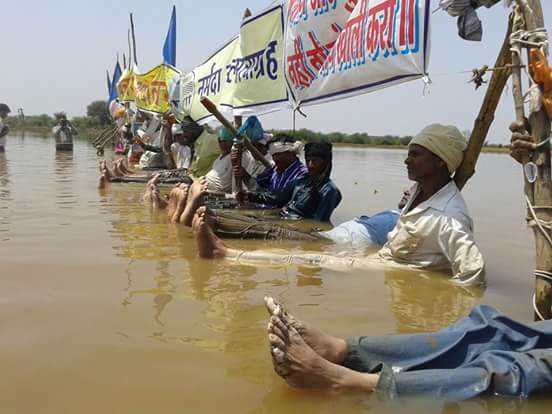 Jal Satyagraha in Khandwa District, Madhya Pradesh (2015). Another major example of people's movements. Image courtesy: Akshay Hunka/Twitter.[/caption]
In July 2017, at Jantar Mantar, New Delhi, forty children from Maharashtra — children of farmers who had committed suicide in recent years — appealed to other farmers to abstain from committing suicide. They were part of the ‘kisan ekta’ movement which saw thousands from Punjab, Haryana, Uttar Pradesh, Madhya Pradesh, Telangana and Tamil Nadu exercising their republican freedoms of assembly, association and expression in their demands for farming to be made remunerative and for the waiver of their debts. In April 2017, farmers from Tamil Nadu peacefully assembled at Jantar Mantar once again, demanding the waiver of farm loans in the wake of the worst drought Tamil Nadu has seen in the last century.
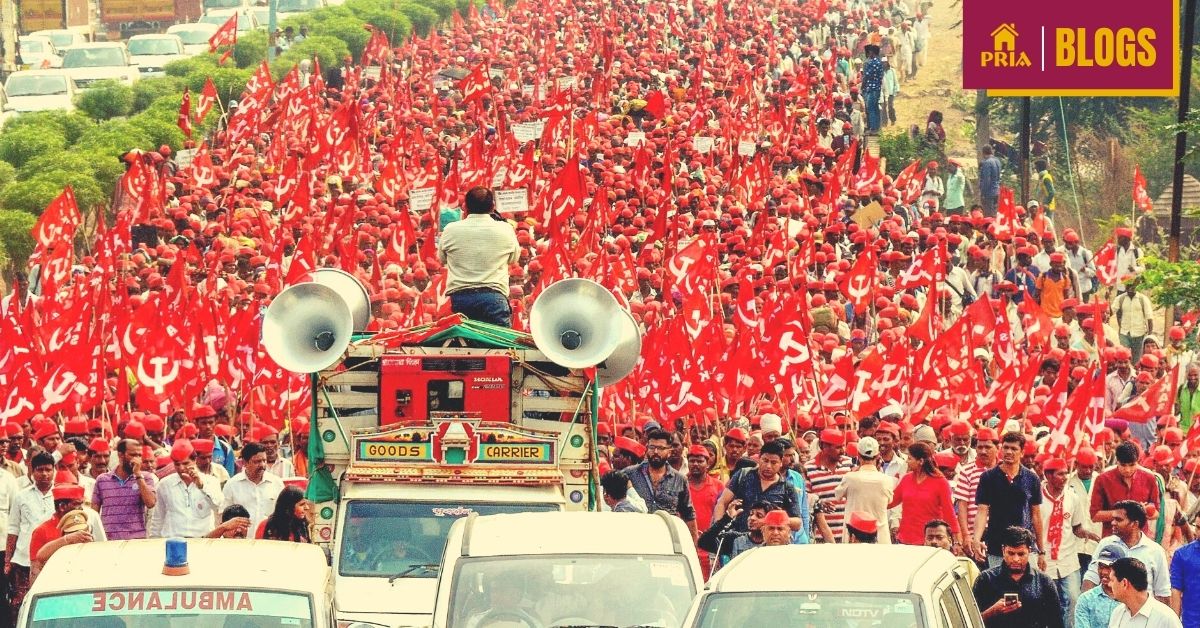
Over the years, Azad Maidan in Mumbai has also witnessed multiple public protests with citizens demanding their rights from the government. Nevertheless, the popular support which greeted the #KisanLongMarch when the farmers reached Azad Maidan in the wee hours of 11th March will be etched in public conscience. Fifty thousand farmers had marched from Nashik on foot over five days to demand for an unconditional waiver of loans as well as electricity bills; implementation of the Swaminathan Commission recommendations, including an announcement of minimum support price for agriculture produce; and a pension scheme for farmers. Their agitation comes on the back of successive droughts, inequitable water management and pricing policies, which have seen a slow impoverishment of the farmer community everywhere in Maharashtra, reports The Indian Express.
These farmers braved the summer heat, walking in broken or temporarily mended footwear and tattered clothes, barely having managed a square meal in their long march from Nashik. As thousands waving red flags strode into Thane that night, residents flocked to the streets to interact with them, and to offer food, water and footwear. The Thane Matadata Jagran Manch provided nearly 500kg of food grains to the farmers who camped at BMC octroi ground.
As a considerate gesture, the farmers abandoned rest and marched to Azad Maidan in the middle of Sunday night to avoid inconveniencing students appearing for the ongoing board examinations and the average officegoer. True to the spirit of the city, Mumbaikars distributed vada pav to the farmers when they arrived at Azad Maidan in the morning. Medical staffers of Thane civil and JJ hospital were seen distributing first aid and medicines. Such was the human outpour and mass support, that the Maharashtra chief minister agreed to almost all the demands of the farmers.
Jal Satyagraha in Khandwa District, Madhya Pradesh (2015). Another major example of people's movements. Image courtesy: Akshay Hunka/Twitter.[/caption]
In July 2017, at Jantar Mantar, New Delhi, forty children from Maharashtra — children of farmers who had committed suicide in recent years — appealed to other farmers to abstain from committing suicide. They were part of the ‘kisan ekta’ movement which saw thousands from Punjab, Haryana, Uttar Pradesh, Madhya Pradesh, Telangana and Tamil Nadu exercising their republican freedoms of assembly, association and expression in their demands for farming to be made remunerative and for the waiver of their debts. In April 2017, farmers from Tamil Nadu peacefully assembled at Jantar Mantar once again, demanding the waiver of farm loans in the wake of the worst drought Tamil Nadu has seen in the last century.
Over the years, Azad Maidan in Mumbai has also witnessed multiple public protests with citizens demanding their rights from the government. Nevertheless, the popular support which greeted the #KisanLongMarch when the farmers reached Azad Maidan in the wee hours of 11th March will be etched in public conscience. Fifty thousand farmers had marched from Nashik on foot over five days to demand for an unconditional waiver of loans as well as electricity bills; implementation of the Swaminathan Commission recommendations, including an announcement of minimum support price for agriculture produce; and a pension scheme for farmers. Their agitation comes on the back of successive droughts, inequitable water management and pricing policies, which have seen a slow impoverishment of the farmer community everywhere in Maharashtra, reports The Indian Express.
These farmers braved the summer heat, walking in broken or temporarily mended footwear and tattered clothes, barely having managed a square meal in their long march from Nashik. As thousands waving red flags strode into Thane that night, residents flocked to the streets to interact with them, and to offer food, water and footwear. The Thane Matadata Jagran Manch provided nearly 500kg of food grains to the farmers who camped at BMC octroi ground.
As a considerate gesture, the farmers abandoned rest and marched to Azad Maidan in the middle of Sunday night to avoid inconveniencing students appearing for the ongoing board examinations and the average officegoer. True to the spirit of the city, Mumbaikars distributed vada pav to the farmers when they arrived at Azad Maidan in the morning. Medical staffers of Thane civil and JJ hospital were seen distributing first aid and medicines. Such was the human outpour and mass support, that the Maharashtra chief minister agreed to almost all the demands of the farmers.
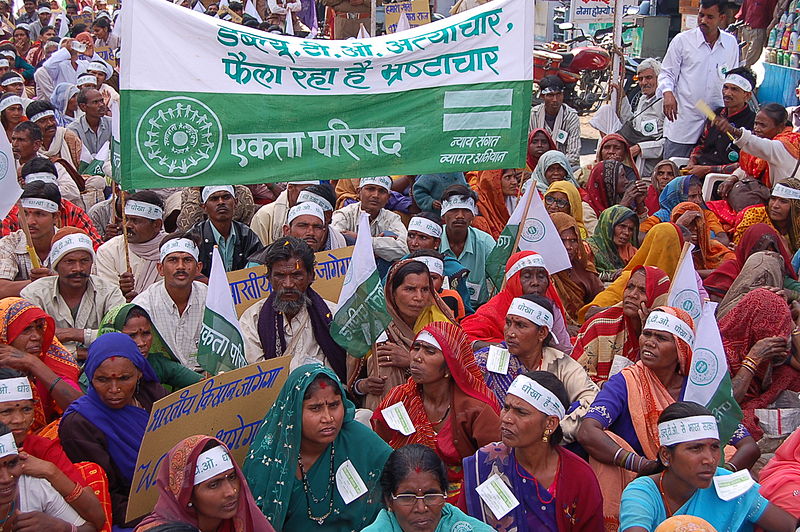 Farmers' rally in Bhopal, 2011. Image source: Wikimedia Commons. For representation only.[/caption]
Photo attribution: By TheInnocentBystander (Own work) [CC BY-SA 4.0 (https://creativecommons.org/licenses/by-sa/4.0)], via Wikimedia Commons
Farmers' rally in Bhopal, 2011. Image source: Wikimedia Commons. For representation only.[/caption]
Photo attribution: By TheInnocentBystander (Own work) [CC BY-SA 4.0 (https://creativecommons.org/licenses/by-sa/4.0)], via Wikimedia Commons
A tribute to Comrade Damodar Thankappan, reflecting on over four decades of friendship, solidarity, and shared work with PRIA. From textile workers’ struggles and occupational health to construction workers’ rights and workers’ cooperatives, the blog celebrates his lifelong commitment to workers’ dignity, leadership, and collective action.
In this blog, Dr. Bandyopadhyay reflects on rethinking monitoring and evaluation in development practice. Drawing on his experience with participatory networks, he explores how organisations can move beyond compliance-driven reporting towards listening, collective learning, adaptation, accountability, and cultures that enable honest reflection.
This blog, by Dr. Anshuman Karol, explores why the future of higher education depends on community-engaged research, global collaboration, and knowledge democracy. It highlights how Community-Based Participatory Research enables universities and communities to co-create solutions for today's interconnected social and environmental challenges.
.png)
.png)