
Author: Meghna Sandhir | 02-Apr-2025
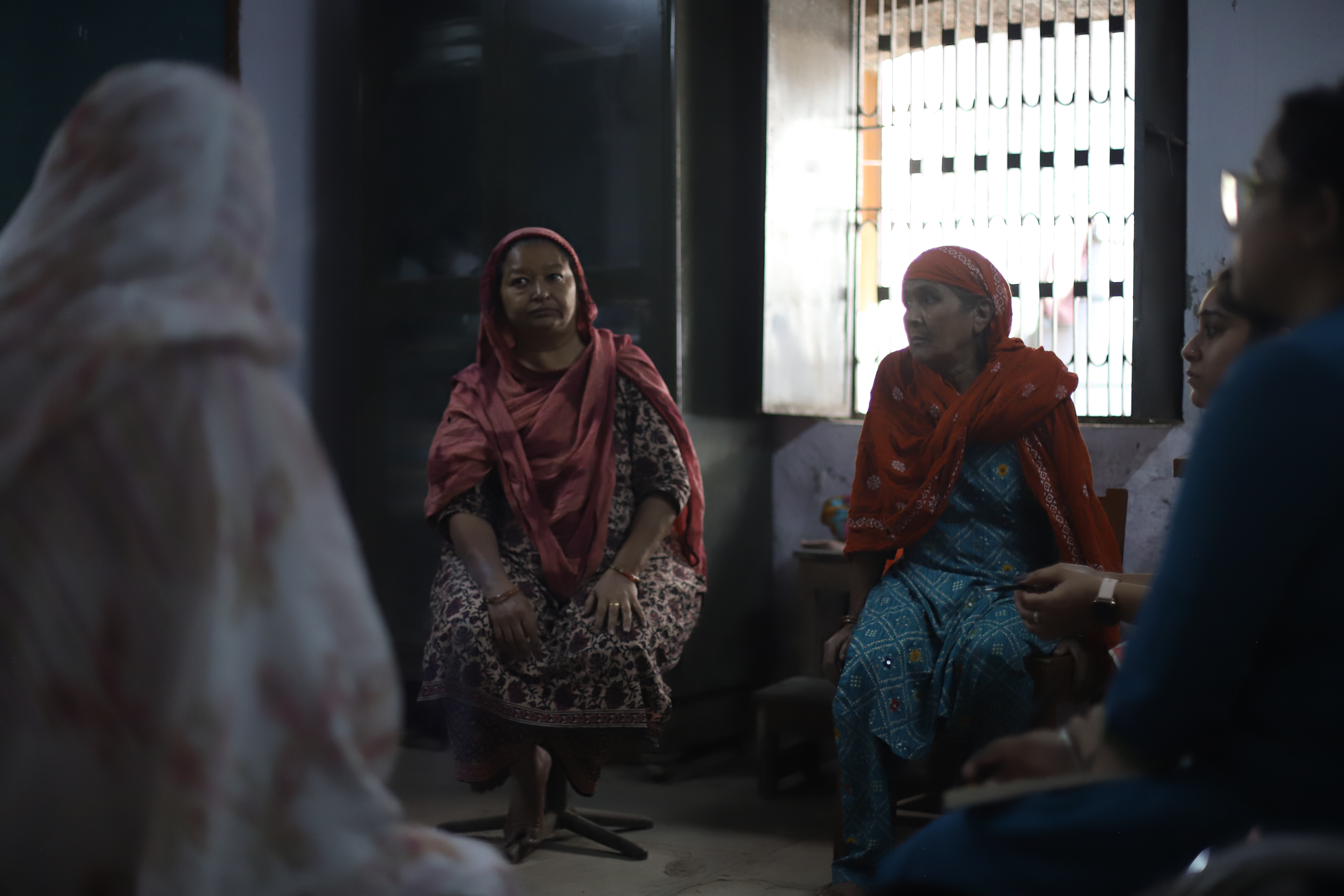
In Ahmedabad, the daily act of commuting is fraught with challenges for women and marginalised communities. Mobility here is not merely about moving from one place to another, it’s about navigating a system designed without consideration for the lived realities of many. From Vasna’s bustling streets to the quiet but poorly connected neighbourhoods of Narol, the intersection of gender, mobility, and social equity comes alive in the struggles and stories of the city’s women.
Daily Journeys: Balancing Affordability, Safety, and Dignity
Mobility is an enabler, but it feels more like an uphill battle for many women in Ahmedabad. In Vasna’s Gupta Colony, women depend heavily on buses and shared autos to travel to work, schools, or marketplaces. While buses are affordable, their unpredictable schedules, overcrowded interiors, and lack of first- and last-mile connectivity force women to rely on shared autos. Yet, this alternative often comes with an unspoken trade-off: safety.
“The auto is faster,” said one woman, “but I always feel uncomfortable because of the way men look at me or make comments.” This unease is not just a feeling, it’s a barrier, reinforcing fear and limiting their access to opportunities.
In Behrampura, the lack of adequate infrastructure compounds these issues. Women working in the informal sector, like those preparing chapatis for hotels, face greater restrictions. Narrow, potholed roads and insufficient public transport options force them to depend on male family members for deliveries, curbing their independence. “Sometimes, even shared autos won’t take us where we need to go,” one woman shared, illustrating how economic and infrastructural constraints intertwine to limit their mobility.
Yet, change is happening. In some areas, improved bus services and designated women’s seating in public transport have provided safer and more reliable commuting options. Initiatives like women-driven auto services and self-help groups encouraging female mobility are slowly shifting the landscape.
Adolescence in Motion: Dreams Restricted by Distance
For adolescent girls in Narol, the challenges of mobility begin early and often continue into adulthood. Poor road conditions, overcrowded buses, and the ever-present threat of harassment create a landscape where movement is a privilege rather than a right. “At night, I’m scared to even go to the bus stop,” admitted one girl. “The streets are dark, and sometimes men misbehave. It’s terrifying.”
This fear is deeply rooted in both the physical environment and social norms that restrict women and girls from occupying public spaces. For many families, the solution is simple: avoid traveling after dark. However, this “solution” perpetuates the cycle of exclusion, denying girls the freedom to pursue extracurricular activities, evening classes, or social engagements, ultimately limiting their aspirations. However, several organisations and community-driven programs are working to make mobility safer for young girls. Efforts like gender-sensitive urban planning, increased street lighting, and campaigns encouraging bystander intervention have started addressing these concerns. Some girls are now learning to cycle and ride a two-wheeler, giving them newfound independence in their daily commute.
The Hidden Costs of Poor Mobility: Time, Money, and Opportunity
Beyond safety, the broader implications of mobility inequities reveal themselves in the lives of women across Ahmedabad. Poor infrastructure and unreliable transportation systems result in what experts call “time poverty.” For women juggling roles as caregivers, homemakers, and earners, time spent waiting for buses or navigating poorly connected routes is time taken away from other responsibilities or opportunities.
“I try to combine errands when I go out,” explained one woman. “With the vegetables, I buy other necessary items because I can’t afford to make multiple trips.” These limited outings, often just two or three times a year for some women, underscore how deeply mobility barriers affect their quality of life.
.JPG )
For women in low-income groups, affordability adds another layer of restriction. High transport fares, compounded by household financial constraints, mean many must make difficult choices between mobility and other essentials like healthcare or education. In some cases, these barriers are insurmountable, perpetuating cycles of poverty and exclusion. Yet, there are promising changes. The expansion of Ahmedabad’s Bus Rapid Transit System (BRTS), fare subsidies for women in certain income brackets, and targeted policy interventions have started to ease the financial burden for many commuters. And the interest that the current authorities show in assessing the needs of the women and solving for it by plying more buses on those routes would give women the encouragement and ease of travel.
Infrastructure Gaps: Transport Deserts and Urban Isolation
Ahmedabad’s transport network, from the Bus Rapid Transit System (BRTS) to shared autos and the emerging metro, paints a picture of progress tempered by inequity. While some areas benefit from well-connected and reliable services, others particularly informal settlements and resettlement colonies remain isolated.
In places like Juhapura, poorly lit streets, unreliable bus services, and a lack of last-mile connectivity create “transport deserts” where movement becomes an ordeal. During monsoons, low-lying neighbourhoods flood, leaving residents stranded for days. For children, this often means missing school; for adults, it means losing workdays and wages. “The water comes up to our waist,” one woman recounted. “We can’t leave during the rains, not even for essentials.”
The challenges don’t end when the water recedes. Neglected infrastructure, such as broken streetlights, keeps many areas shrouded in darkness, making them unsafe after sunset. “We can’t leave our homes after 7 PM,” said a woman from a resettled community, emphasising how safety concerns continue to dominate their lives. However, Ahmedabad’s Smart City initiatives have recognised these challenges. The city’s urban mobility plans now include infrastructure upgrades, improved drainage systems, and better-lit public spaces, all of which aim to create a safer and more accessible environment for everyone.
Beyond Transportation: Mobility as a Social Equaliser
Mobility is more than a mode of transport, it is a social equaliser, a tool that enables access to education, employment, healthcare, and community life. Yet, for many women and marginalised communities in Ahmedabad, mobility remains a barrier rather than a bridge.
The stories of women in Behrampura, Narol, and Vasna highlight the resilience and resourcefulness of those who navigate these barriers daily. Some women, defying cultural norms and financial constraints, learn to ride scooters, gaining a measure of independence. “Riding a scooter has given me freedom,” one woman said, “but for most women, this kind of independence is not possible.”
Others, like the waste pickers and sanitation workers of Dariyapur, adapt by choosing costlier but quicker transport options to save time. These choices, however, often come at a steep personal and financial cost.
Moving Towards Inclusive Mobility
Mobility is more than just transport it is a social equaliser, a tool that enables access to education, employment, healthcare, and community life. For Ahmedabad to become truly inclusive, safety, affordability, and reliability must form the foundation of any future transport strategy.
Policy reforms, infrastructure investments, and community engagement are key to ensuring that mobility becomes an enabler of equity rather than a perpetuator of inequality. Addressing safety concerns through better lighting, surveillance, and secure transport options, reducing affordability barriers by subsidising transport for low-income groups, and improving connectivity to underserved areas are essential steps forward.
Importantly, these changes must be shaped by the voices of those who are most affected. The experiences of women in Behrampura, Narol, and Vasna highlight both the urgency and the potential for transformation. Women learning to ride scooters, communities pushing for better services, and city-led initiatives for gender-sensitive transport planning are all signs that change is not only necessary but possible.
.JPG )
Ahmedabad is a city of contrasts, blending heritage with modernity, tradition with progress. Yet beneath this vibrancy lies a silent narrative of exclusion. Mobility or the lack of it, shapes lives, determining who can access opportunities and who is left behind. By investing in solutions that prioritise the needs of all its citizens, Ahmedabad can transform mobility into a force for empowerment, ensuring that every person, regardless of gender or socioeconomic background, can move forward together.
A tribute to Comrade Damodar Thankappan, reflecting on over four decades of friendship, solidarity, and shared work with PRIA. From textile workers’ struggles and occupational health to construction workers’ rights and workers’ cooperatives, the blog celebrates his lifelong commitment to workers’ dignity, leadership, and collective action.
In this blog, Dr. Bandyopadhyay reflects on rethinking monitoring and evaluation in development practice. Drawing on his experience with participatory networks, he explores how organisations can move beyond compliance-driven reporting towards listening, collective learning, adaptation, accountability, and cultures that enable honest reflection.
This blog, by Dr. Anshuman Karol, explores why the future of higher education depends on community-engaged research, global collaboration, and knowledge democracy. It highlights how Community-Based Participatory Research enables universities and communities to co-create solutions for today's interconnected social and environmental challenges.
.png)
.png)