
Author: Dr. Anshuman Karol | 16-Jan-2025
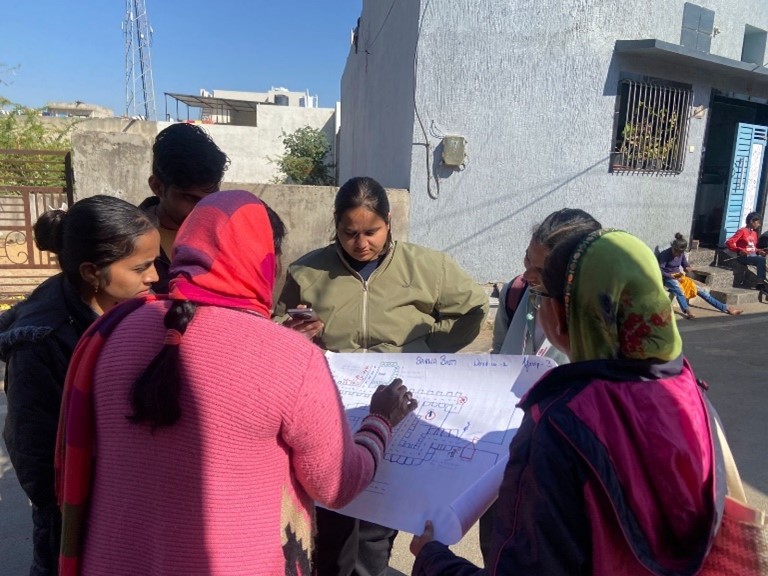
"The issues faced in informal settlements, while often described in books, are challenging to fully understand without firsthand experience. A continuous process of mutual learning is essential, where students and women can learn from each other to further empower the community” (Ms Babita Singh, Assistant Engineer, SBM, AMC)
“While technical expertise provides robust tools for identifying and visualizing problems, community engagement ensures that solutions are grounded in the lived experiences, needs, and priorities of the people directly affected” (Prof Subroto Dutta, Head of the Department of Environmental Science, MDSU, Ajmer)
“Working with SHG women provided me with a new perspective on community challenges and the importance of practical solutions. Over these four days, I also learned from them how to balance personal household duties with a commitment to work. I will carry this lesson with me for life" (Ms Suchitra, MSc Student, Remote Sensing Department, MDSU, Ajmer)
"I haven't studied much and have only seen a university from the outside. I never imagined that one day I would visit a university, let alone work with students. It felt really good. The students made a genuine effort to closely understand our problems" (Ms Kusum Lata, SHG Member)
The insights shared by diverse stakeholders, including (Self Help Group (SHG) members, students, and government officials—highlight the transformative potential of integrating community engagement with academic learning. From the SHG members’ sense of empowerment to students’ newfound appreciation of real-world challenges, and government officials’ recognition of lived experiences as vital to sustainable solutions, these reflections underscore the mutual benefits of participatory approaches. The quotes vividly capture how technical expertise and community knowledge converged to address systemic issues in Ajmer’s informal settlements. This case demonstrates that participatory research is not just a method but a critical tool for fostering social responsibility and impactful community action, with the active involvement of government agencies amplifying its effectiveness.
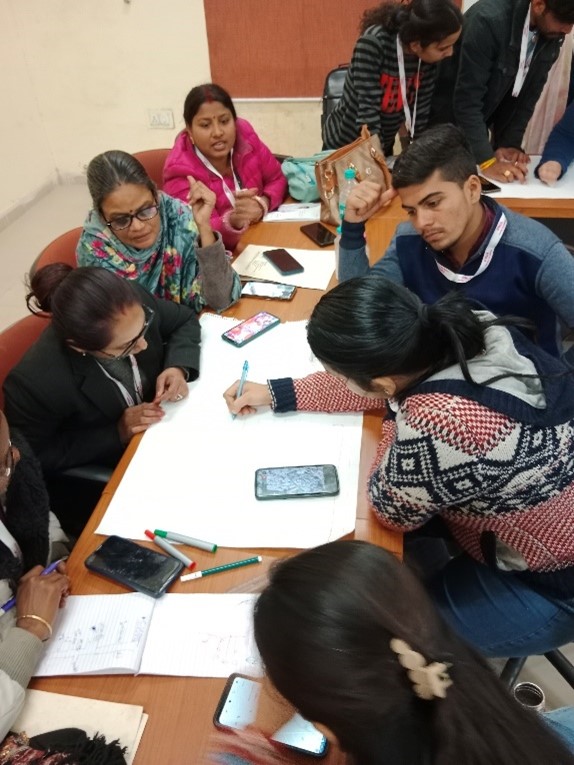 Ajmer, a city steeped in history, faces persistent challenges in water management within its informal settlements. These areas, inhabited by marginalised communities, struggle with irregular water supply, dependence of non-piped water sources in the absence of piped water supply and vulnerability to climate-induced stresses. Women, who shoulder the primary responsibility for household water management, face the greatest burden, further exacerbated by entrenched patriarchal norms. Recognising the need for systemic and sustainable solutions, Maharshi Dayanand Saraswati (MDS) University, in collaboration with Ajmer Municipal Corporation (AMC), Public Health Engineering Department (PHED), and Self-Help Groups (SHGs) constituted under National Urban Livelihood Mission (NULM), embarked on a mission to integrate academic knowledge with community action. This initiative aimed not only to address pressing water service issues but also to foster social responsibility and community engagement among Higher Educational Institutions (HEIs) like MDS University.
At the heart of the initiative was the recognition that higher education institutions (HEIs) have a pivotal role in bridging the gap between academic knowledge and societal needs. This aligns with the ethos of the University Grants Commission (UGC) guidelines on ‘Fostering Social Responsibility and Community Engagement in Higher Educational Institutions (HEIs)’ issued in 2022, which advocate for embedding social responsibility and community engagement in the vision and mission of HEIs. MDS University exemplified this by involving its Environmental Science and Remote Sensing departments in a collaborative project designed to build the capacity of students and SHGs women alike.
The process began with the training workshop to bring together diverse stakeholders. The workshop served as a platform to emphasize the importance of mutual learning and respect, a cornerstone of community engagement. NULM, AMRUT and SBM department of AMC and PHED officials, students, and SHG members collectively identified key challenges in water service delivery and embarked on the journey of finding climate resilient solutions to water services. This participatory approach set the stage for deeper collaboration and established a shared commitment to addressing the issues faced by Ajmer’s informal settlements.
“I could never have imagined that in our city of Ajmer, there are settlements without water taps. I never thought that people in cities could be living without access to water. This training and fieldwork have completely changed my perspective" (Ms Varsha, MSc Student, Environmental Science, MDSU, Ajmer)
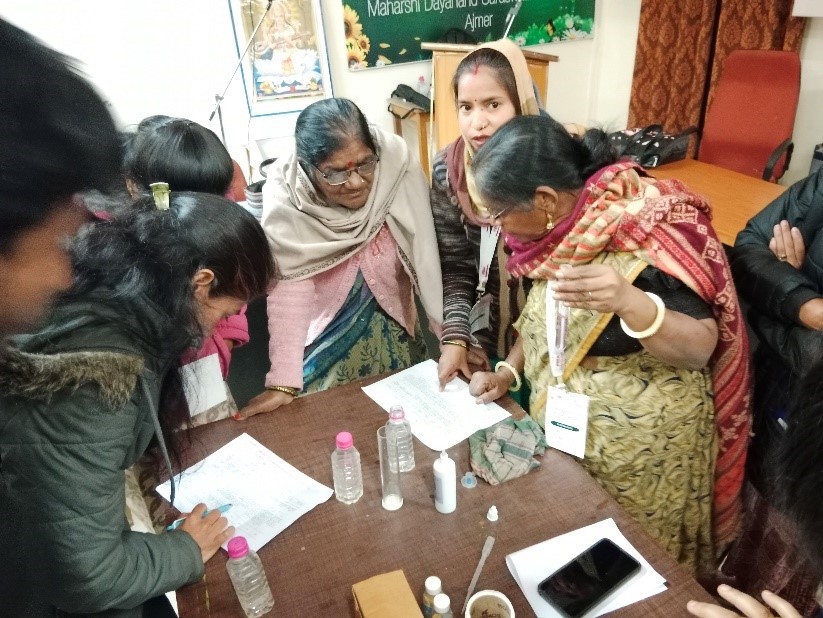
A key focus of the program for the students and SHG women, designed as a blend of classroom learning and fieldwork, the program aimed to instill a sense of social responsibility among students while equipping SHG members with technical skills. Students and SHG women were trained in household surveys, water quality testing, and the use of GIS tools to map water infrastructure. SHG women, meanwhile, were empowered to act as citizen scientists. This integration of academic learning and community participation created a unique model of mutual benefit where students gained practical experience and insights into real-world challenges, while SHG members acquired valuable skills and confidence to advocate for their needs through granular data.
“We feel empowered to test water quality and understand its implications for our families and communities. This knowledge will enable us to advocate for better services" (Ms Sudha Bairwa, SHG Member)
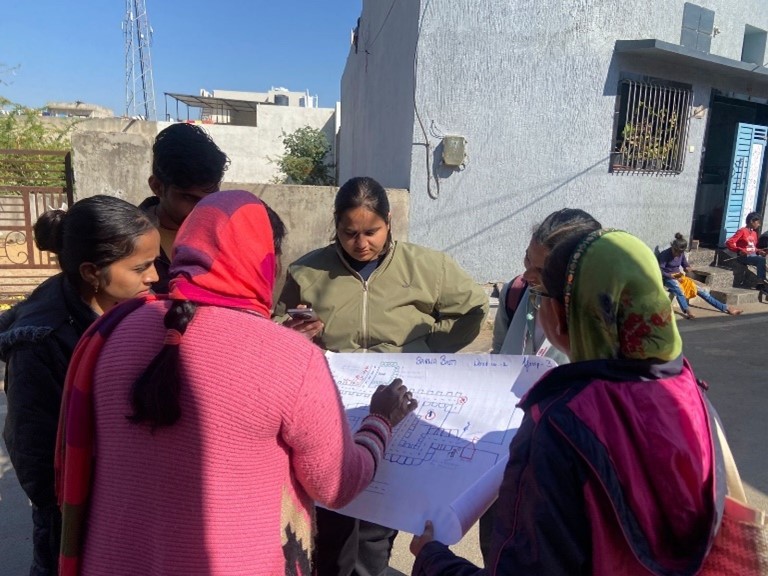 Field visits to various informal settlements adds a hands-on context for applying these skills. Using participatory research methods such as transect walks and social mapping, the teams documented the extent of water shortages, quality issues, and the systemic barriers to service delivery. The insights generated were eye-opening for both students and faculty, who witnessed firsthand the intricate socio-economic and gendered dynamics that shape water management in these settlements. For the SHG women, the experience underscored their potential as change agents, capable of influencing governance and advocating for their communities.
 The collaboration also highlighted the transformative potential of integrating community engagement into HEI curricula. By linking learning with real-world challenges, students are developing a deeper appreciation for the relevance of their studies to societal issues. This approach aligns with the UGC’s emphasis on creating courses that bridge theory and practice, fostering a culture of civic responsibility in future professionals. For faculty, the initiative offered an opportunity to reimagine teaching and research using participatory methodology as tools for societal impact, further strengthening the university’s role as a socially responsible institution.
The outcomes of the initiative extended beyond individual capacity building. The data collected through household surveys and water quality tests will provide evidence for targeted advocacy. SHG members are going to use this data to engage directly with AMC and PHED, presenting clear recommendations to improve service delivery and address jurisdictional conflicts. The participatory approach also fostered stronger relationships among stakeholders, setting a precedent for collaborative governance in urban resilience.
Importance of empowering women with knowledge and skills, recognising that their engagement is crucial to achieving long-term, sustainable solutions to the challenges faced by their communities, particularly in the areas of water, sanitation and hygiene” (Er. Prem Shankar Sharma, Extension Engineer, AMRUT Division, AMC)
This initiative is a testament to the critical role HEIs can play in fostering social responsibility and community engagement. By mobilizing academic resources and aligning them with community needs, MDS University demonstrated how education can be a powerful driver of social change. The project not only going to improve water services in Ajmer’s informal settlements but also created a replicable model for integrating HEIs into the fabric of community development.
Moving forward, the initiative aims to expand its impact by scaling training programs on Community Based Participatory Research, developing platforms for real-time monitoring and collecting granular data, and institutionalizing community’s role in municipal governance. These steps will not only sustain the momentum generated but also reinforce the broader vision of HEIs as catalysts for inclusive and sustainable development.
“I had the opportunity to participate in this kind of training for the first time. It was completely different from any training I have attended before, as we have only experienced trainings conducted through presentations" (Ms Mamta Sahu, SHG Member)
This initiative led by Participatory Research in Asia (PRIA) with the support of International Institute of Environment and Development (IIED) is playing a pivotal role in aligning the strengths of MDS University, the AMC, PHED, SHG members, and other stakeholders. By fostering mutual respect and shared goals, PRIA is enabling the co-creation of actionable solutions to the water challenges in Ajmer's informal settlements. Acting as a linkage builder and trainer, PRIA ensured that academic knowledge is seamlessly integrated with community knowledge and lived experiences, empowering SHG members as citizen scientists and instilling civic responsibility in students. This initiative stands as a testament to PRIA’s expertise in driving inclusive, participatory, and sustainable development, bridging the gap between science and society.
A tribute to Comrade Damodar Thankappan, reflecting on over four decades of friendship, solidarity, and shared work with PRIA. From textile workers’ struggles and occupational health to construction workers’ rights and workers’ cooperatives, the blog celebrates his lifelong commitment to workers’ dignity, leadership, and collective action.
In this blog, Dr. Bandyopadhyay reflects on rethinking monitoring and evaluation in development practice. Drawing on his experience with participatory networks, he explores how organisations can move beyond compliance-driven reporting towards listening, collective learning, adaptation, accountability, and cultures that enable honest reflection.
This blog, by Dr. Anshuman Karol, explores why the future of higher education depends on community-engaged research, global collaboration, and knowledge democracy. It highlights how Community-Based Participatory Research enables universities and communities to co-create solutions for today's interconnected social and environmental challenges.
.png)
.png)