
Author: Dr. Anshuman Karol | 03-Jan-2025
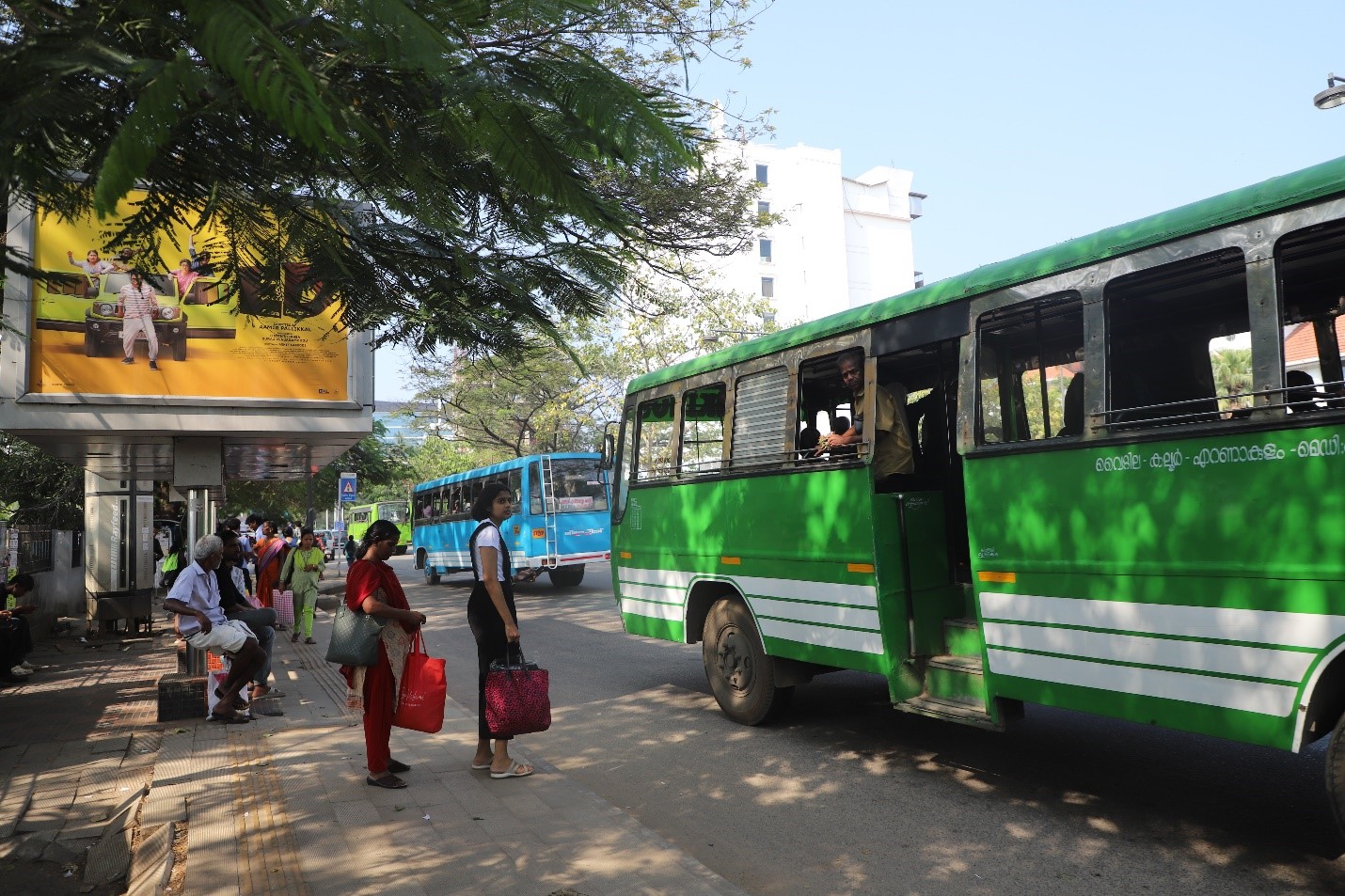
Urban mobility systems are the backbone of cities, shaping how people access work, education, healthcare, and leisure. Yet, these systems often fail to meet the needs of a significant portion of the population—women and gender-diverse groups. Despite women being among the biggest users of public transport across Indian cities and constituting more than 84 percent of public, intermediate public, and non-motorised transport trips, urban planning and mobility infrastructure rarely account for their unique mobility patterns, safety concerns, and accessibility needs (World Bank, 2023)1 .
This blog delves into why gender-responsive mobility is critical for urban cities, the challenges marginalised groups—especially women, gender minority groups, and people with disabilities (PwDs)—face, and strategies to create inclusive urban transportation systems. These challenges are further aggravated if they belong to low-income, urban informal categories.
Inadequate public transport is the greatest challenge to female labor force participation. About 49 percent of women participate in the global workforce, compared with 75 percent of men, with a high degree of variance across regions and countries. Poor public transport is just one reason for this disparity. If women participated in the labor market to the same degree as men, world GDP would jump by 26 percent (World Bank, 2022)2.
Gender-responsive mobility refers to designing transport systems and urban spaces that cater to the distinct needs of all genders, particularly women. Women’s mobility patterns differ significantly from men’s. They are more likely to make shorter, frequent trips within cities—a pattern known as trip-chaining—often traveling during non-peak hours for caregiving and household responsibilities. Moreover, women disproportionately rely on public and non-motorised transport. Unfortunately, most urban mobility systems are designed with male commuters in mind, focusing on peak-hour, long-distance, work-to-home routes, leaving women’s needs inadequately addressed.
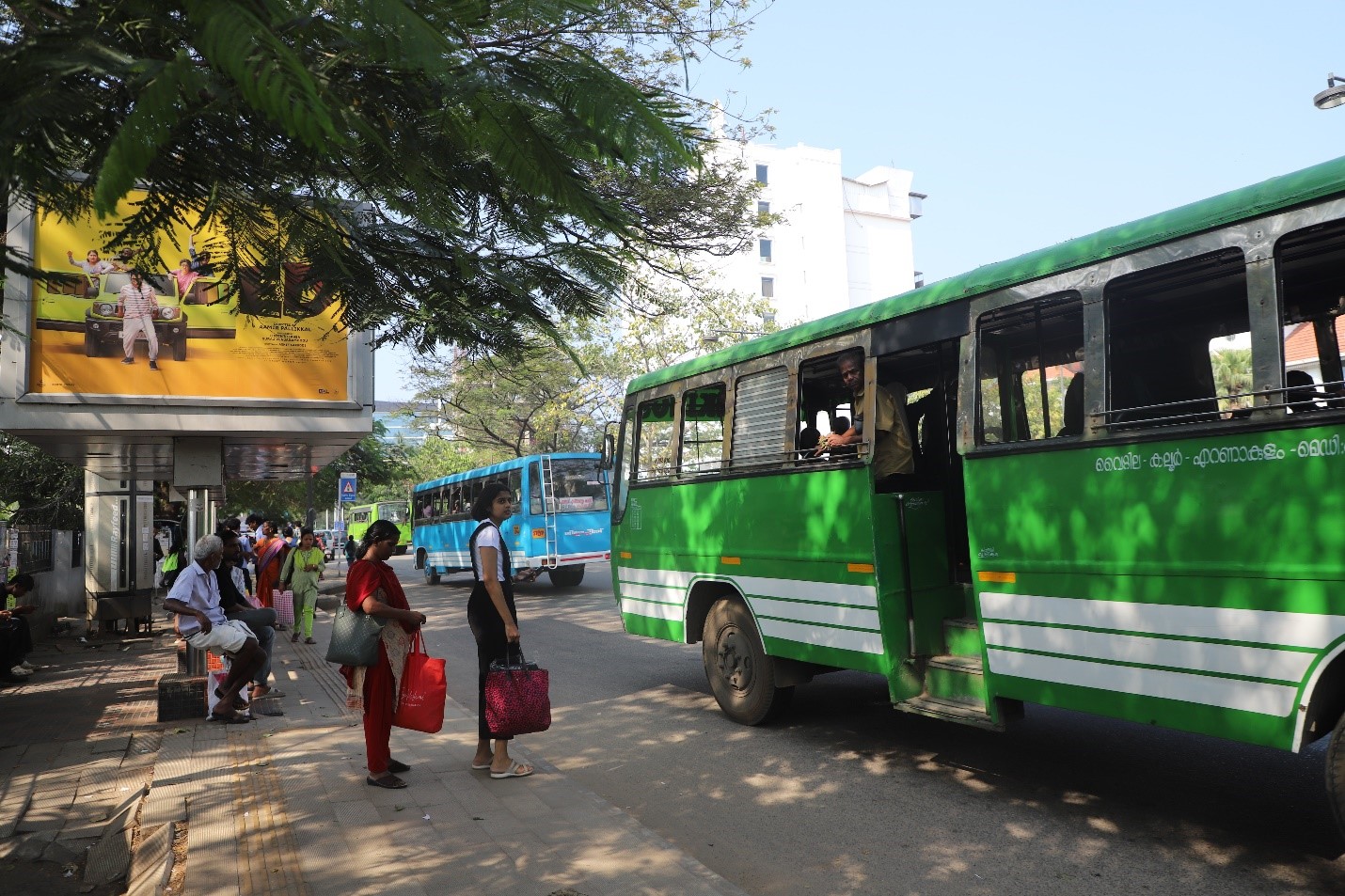
Transport systems designed with a gender lens are crucial for several reasons. First, they promote social equity by ensuring everyone can access the city’s resources, regardless of gender. Second, they enhance economic productivity by enabling women to participate more fully in the workforce and educational opportunities. Third, gender-responsive systems address safety and security concerns, particularly for women and marginalised groups who often face harassment in public spaces. By prioritising these aspects, cities can foster a more inclusive and equitable urban environment.
One of the most significant challenges in achieving gender-responsive mobility is addressing safety concerns. Studies reveal that up to 70 percent of women globally experience harassment in public spaces, making safety a major barrier to using public transport. In Delhi, for instance, a UN Women study3 found that 51 percent of women felt unsafe on public transport. In Latin America, only 22 percent of women reported feeling confident using public buses after dark. These safety concerns discourage women from utilising public transport, limiting their mobility and access to opportunities.
The MobiliseHER initiative aims to catalyse the development of gender-responsive mobility systems in Indian cities through participatory planning approaches and stronger involvement of civil society organisations (CSOs) in urban transport planning and governance systems. PRIA’s engagement in three cities—Ahmedabad, Bengaluru, and Kochi—with CSOs and community groups comprising women, adolescents, and PwD groups revealed that most of these groups use public transportation extensively and have mixed experiences. Mobility challenges for women, girls, persons with disabilities, informal workers, and students reveal significant gaps in public transportation and urban infrastructure. Women and girls face affordability, safety, and cultural barriers, with shared autos posing harassment risks and poor lighting compounding safety concerns. Persons with disabilities struggle with inaccessible public transport, unsafe footpaths, and costly autos. Informal workers and students encounter unreliable buses, congested roads, and overcharging auto drivers, disrupting their routines. Safety issues in poorly lit, crime-prone areas further limit mobility, especially for women and students.
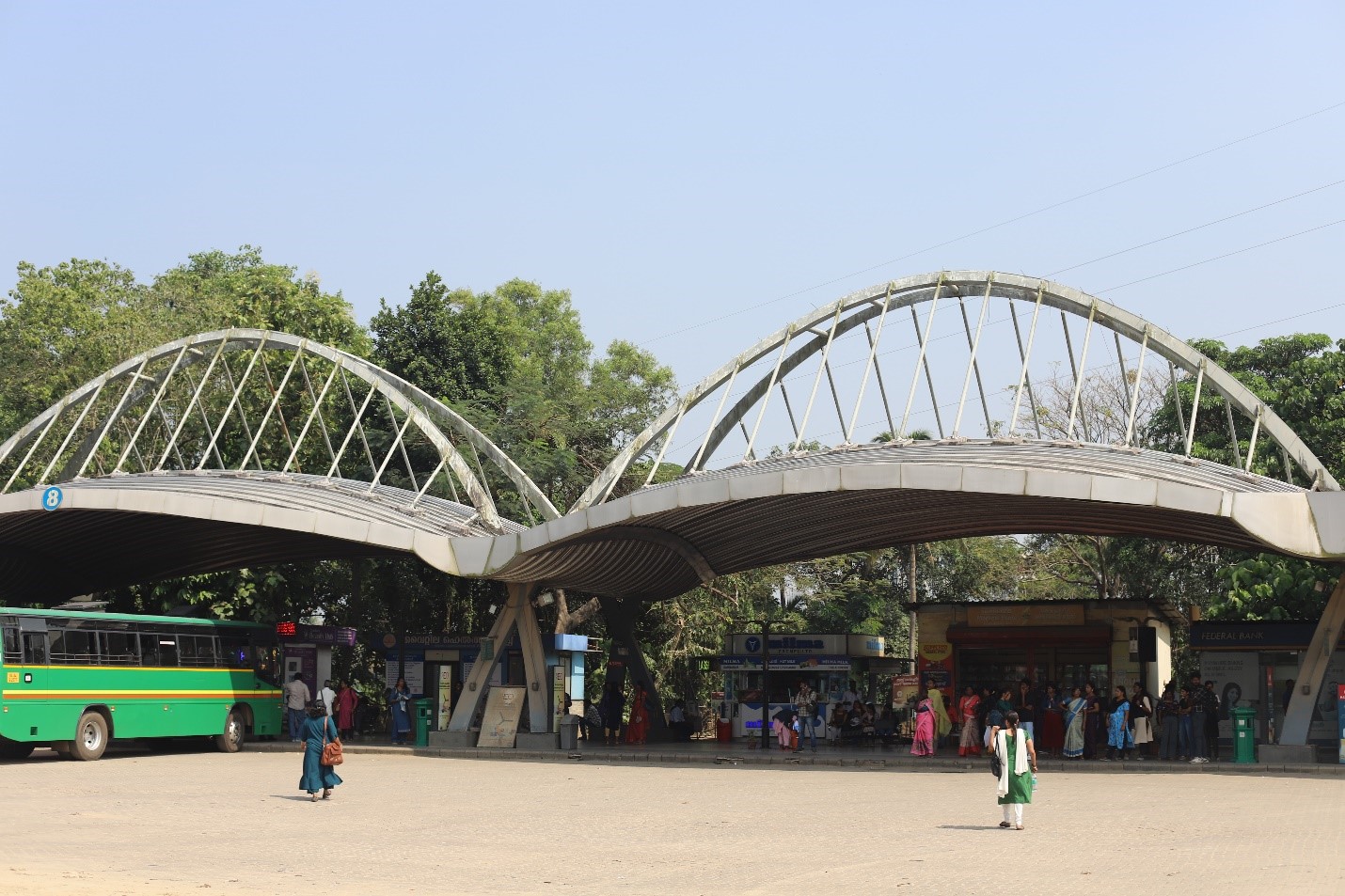
Addressing these issues requires systemic improvements in public transport infrastructure, pedestrian pathways, safety measures, and affordability to make urban mobility inclusive and accessible for all.
Infrastructural inequities also contribute to gender-exclusive mobility. Urban infrastructure often overlooks caregiving responsibilities, which disproportionately fall on women. The absence of ramps, elevators, and stroller-friendly designs creates significant barriers for women traveling with children or elderly family members and people with disabilities. These gaps underscore the need for inclusive design that prioritises accessibility for all.
Economic accessibility poses another challenge. Women, on average, earn less than men, limiting their ability to afford public transport or alternative mobility options. High fares and fragmented transport networks disproportionately impact low-income women, further restricting their mobility. This economic inequity emphasises the importance of subsidised fares and affordable transport systems tailored to women’s needs.
In 2019, the Delhi Government introduced the ‘pink slip program,’ providing free bus rides to all women in the city. Within 20 days after the launch of the scheme, daily female ridership increased from 33 to 44 percent. Punjab and Tamil Nadu have also provided free bus ride schemes for women. From July 2021 to March 2022, the percentage of women commuting by bus in Tamil Nadu increased from 40 to 61 percent. In June 2023, Karnataka introduced the Shakti program, providing free bus passes for women and transgender residents. However, these schemes also face challenges. For example, the Shakti scheme in Karnataka is accessible only to women with a state address on their Aadhaar card, excluding migrant women, who constitute a major share of the informal workforce in the state. Rude behavior by frontline staff toward women has also been reported. Women in Delhi revealed that buses often do not stop for them, and they experience humiliating remarks from male passengers and crew members when boarding for free (Women Mobilise Women, 2024)4.
A critical but often overlooked issue is the lack of gender-disaggregated data in urban mobility planning. Without such data, policies and infrastructure remain male-centric, neglecting the diverse needs of women and other marginalised groups. Additionally, the underrepresentation of women in decision-making roles within transport planning exacerbates the problem, as their perspectives are missing from the design process.
The MobiliseHER initiative aims to create awareness through data and evidence about gendered differences in mobility patterns, identify gender gaps in existing mobility infrastructure and services, and address them through a participatory approach to transport planning and implementation.
Despite these challenges, gender-responsive mobility offers numerous benefits. First, it improves access to opportunities, enabling women to participate more fully in the workforce, education, and civic life. When transport systems are accessible and safe, women can reach job markets, educational institutions, and healthcare facilities more easily. Second, gender-responsive systems contribute to economic growth. According to McKinsey5, advancing gender equality could add $12 trillion to global GDP by 2025. Third, these systems support sustainable urban development by encouraging the use of public and non-motorised transport. Lastly, inclusive transport systems empower women, fostering broader gender equity and social inclusion.
Several cities worldwide are leading the way in gender-responsive urban mobility. Vienna, Austria, stands out for its gender-sensitive urban planning initiatives. Since the 1990s, Vienna has redesigned public spaces based on surveys that highlighted women’s mobility needs. The city widened sidewalks, improved lighting, and restructured public spaces, significantly increasing women’s participation in public life. Similarly, Bogotá, Colombia, launched the "Bogotá Without Fear" initiative to address harassment in public transport. This program introduced women-only buses, awareness campaigns, and enhanced security measures, creating safer travel experiences for women. In India, Delhi’s government implemented free bus rides for women in 2019, increasing their mobility and participation in the labor force. Meanwhile, Barcelona, Spain, has adopted inclusive urban design through its superblocks—pedestrian-friendly zones that accommodate caregiving roles and promote non-motorised transport. These examples demonstrate the transformative impact of gender-responsive mobility on urban life.
Achieving gender-responsive mobility requires a multi-pronged approach. Inclusive policy design is a critical starting point. Policymakers must incorporate gender-disaggregated data into transport studies and include women in decision-making processes and urban planning teams. Gender impact assessments for new transport projects can ensure that proposed initiatives address the needs of all genders.
Safety and security must be prioritised to encourage women’s use of public transport. Zero-tolerance policies against harassment, combined with gender-sensitivity training for transport staff, can create safer environments. Equipping buses and trains with panic buttons and real-time tracking systems provides additional layers of security. Improving street lighting, especially at bus stops and stations, is another essential step.
Economic accessibility is equally important. Governments and transport authorities can provide subsidies for low-income women, design family-friendly spaces in buses and trains, and introduce integrated ticketing systems for seamless travel. Investing in gender-sensitive infrastructure is also key. Wider and barrier-free pavements, accessible toilets, and stroller-friendly designs can significantly enhance mobility for women and families.
Promoting non-motorised transport, such as cycling and walking, can further support gender-responsive mobility. Safe cycling lanes and pedestrian pathways encourage sustainable and inclusive transport options. Initiatives like cycling training programs and subsidies for bicycles can help women adopt these modes of travel. Engaging communities is essential for designing effective solutions. Collaborating with local women’s groups and using participatory approaches ensures that urban mobility systems address real-world needs.
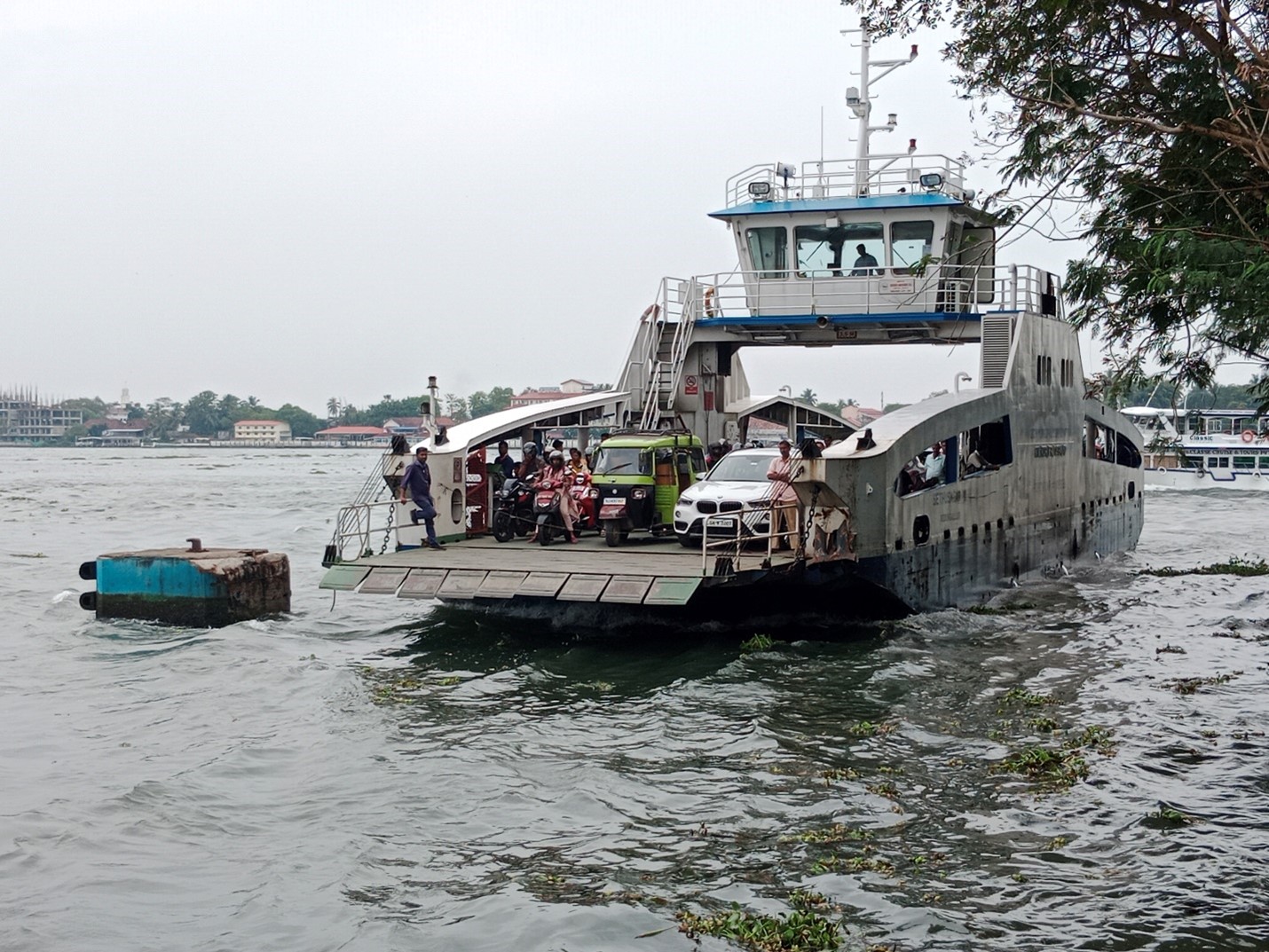
Looking ahead, the transition toward gender-responsive urban transport requires coordinated efforts from governments, urban planners, private companies, and civil society. While challenges persist, the potential for transformation is immense. Inclusive urban mobility systems are not just about addressing women’s needs—they represent a broader commitment to equity, sustainability, and inclusivity. When cities prioritise the mobility of women and marginalised groups, they create environments where everyone can thrive. A city that moves women forward moves society forward.
Gender-responsive mobility is not a luxury but a necessity for modern urban development. By addressing safety, accessibility, and equity challenges, cities can foster more inclusive environments that benefit everyone. As the examples from Vienna, Bogotá, Delhi, and Barcelona illustrate, transformative change is possible with thoughtful planning and community engagement. The time to act is now, because designing urban mobility for everyone means designing cities that work for all.
Designing Public Transport in India That Works for All (2023), Feature Story, World Bank Group (https://www.worldbank.org/en/news/feature/2023/02/09/how-to-help-ensure-safe-and-inclusive-public-spaces-and-public-transport-for-women-in-india#:~:text=Highlights,%2C%20and%20non%2Dmotorised%20transport.)
Integrating gender considerations into public transport policies and operations (2022), The World Bank (https://www.uitp.org/publications/integrating-gender-considerations-into-public-transport-policies-and-operations/)
Safe Cities and Safe Public Spaces for Women and Girls global initiative: Global results report 2017–2020 (2021), UN Women (https://www.unwomen.org/en/digital-library/publications/2021/07/safe-cities-and-safe-public-spaces-global-results-report-2017-2020)
Free Bus Passes For Women – A Tool For Improved Gender Equity in Urban Transportation? (2024), Women Mobilise Women (https://womenmobilize.org/free-bus-passes-for-women/)
The Power of Parity: Advancing Women's Equality in the Economy (2015), McKinsey Global Institute. (https://www.mckinsey.com/featured-insights/employment-and-growth/how-advancing-womens-equality-can-add-12-trillion-to-global-growth)
A tribute to Comrade Damodar Thankappan, reflecting on over four decades of friendship, solidarity, and shared work with PRIA. From textile workers’ struggles and occupational health to construction workers’ rights and workers’ cooperatives, the blog celebrates his lifelong commitment to workers’ dignity, leadership, and collective action.
In this blog, Dr. Bandyopadhyay reflects on rethinking monitoring and evaluation in development practice. Drawing on his experience with participatory networks, he explores how organisations can move beyond compliance-driven reporting towards listening, collective learning, adaptation, accountability, and cultures that enable honest reflection.
This blog, by Dr. Anshuman Karol, explores why the future of higher education depends on community-engaged research, global collaboration, and knowledge democracy. It highlights how Community-Based Participatory Research enables universities and communities to co-create solutions for today's interconnected social and environmental challenges.
.png)

.png)