
Author: Yedukrishnan V. and Nikita Rakhyani | 13-Jan-2025
While urbanisation is reshaping the entire world, South India is no exception. Cities like Bangalore, Chennai, Hyderabad, and Kochi are at the forefront of India's rapid urban expansion, contributing significantly to the nation’s economic growth and the surge in urban population. These cities have increasingly become focal points for development, innovation, and migration. South India, home to a mix of metropolises and rapidly growing secondary cities, embodies India’s urban story — one where challenges and opportunities coexist in intricate patterns.
However, this urban growth brings with it a critical need for sustainable and inclusive planning, particularly in urban mobility. Development processes often risk pushing underprivileged communities to the margins, leading to disproportionate disadvantages for these groups. Cities must grapple with the challenge of providing equitable, efficient, and environmentally sustainable transportation systems that accommodate diverse populations, including women, children, and marginalised groups.
As part of the MobiliseHER project, an initiative to catalyse the development of gender-responsive mobility, we visited Bangalore in Karnataka and Kochi in Kerala. During this visit, we met with various CSOs (Civil Society Organisations) and community groups that are doing extraordinary and exemplary work in promoting gender-responsive mobility. In this blog, we aim to share some of those impactful initiatives and strategies.
Kochi: A Coastal City Embracing Innovation Amid Challenges
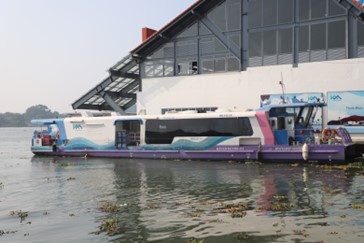
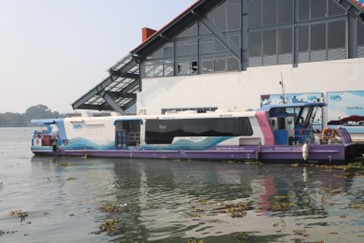
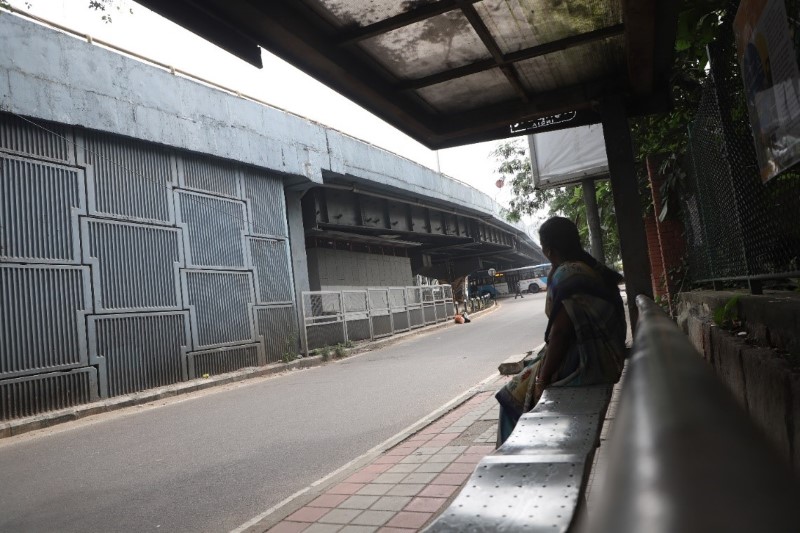
Kochi may be a small city, but it punches above its weight with progressive mobility initiatives like the Kochi Metro and Water Metro. These systems aim to reduce the reliance on road transport by integrating diverse modes of travel, leveraging the city's extensive network of waterways. However, Kochi’s transport infrastructure faces its share of challenges, including the limited reach of the metro network, inconsistent bus services, outdated bus routes, and inadequate pedestrian infrastructure.
While the city is considered safer for women compared to many other Indian cities, accessibility and safety remain barriers for marginalised communities due to deep-rooted socio-cultural and systemic issues.
Sustainable Mobility & Role of Civil Society: Stories from Kochi
As urban mobility systems in the city evolve, CSOs and citizens are playing a pivotal role in advocating for accessible and inclusive transportation. Their work is particularly significant in addressing gender disparities and promoting low-carbon mobility solutions. For instance, the SheCycling team led by Ms. Zeenath MA of BYCS India has trained hundreds of women to cycle. The story of She Cycling is beyond just low carbon non-motorized transport being promoted. Testimonies from the women trainees of She Cycling show how attaining mobility makes women feel empowered by breaking the shackles of societal barriers. One of the women who learned cycling shared her story by stating how she started cycling and how it later helped her explore further walks of life going beyond the walls of her home. Many are still tied up with domestic and care responsibilities traditionally assigned to women, even though Kerala is portrayed as a much more progressive society.
A woman from Fort Kochi, in her 50s, talked about how she had to hide from her son and family that she was learning to bicycle as she didn’t expect support from anyone at home. Later, after learning to cycle, she sent a video of herself cycling thus having had to prove herself first in her private sphere. One could then imagine the condition of women in the public sphere which is even worse. Hence, women faced with a dual burden and time poverty, have to find some time to spend on themselves. Similar has been the case with most of the women who got trained in cycling from SheCycling. She Cycling as a civil society group tries to address the aforementioned issues at its roots while providing extensive support to middle-aged and elderly women who are mostly homemakers or informal workers to break out of the gender stereotypes.
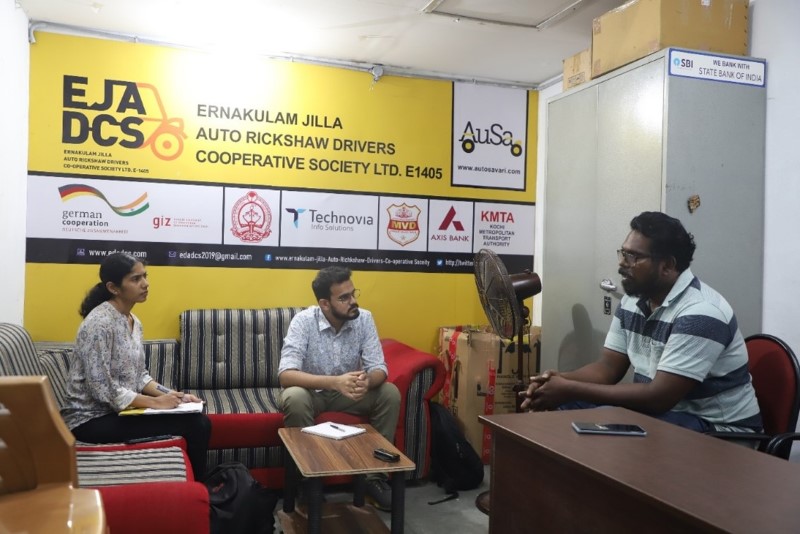
Ernakulam Jilla Autorickshaw Drivers Cooperative Society (EJADCS) is reportedly playing an active role in ensuring that women are represented in the new e-feeder auto system that came up in Kochi metro stations. EJADCS, a mix of 6 individual trade unions, has been training women from different parts of the city in driving. These women are provided with a salary, incentives, uniforms, and convenient job timings. Talking to a few of these drivers who run e-autos from Vytilla metro station unveiled stories of grit and resilience. One of them said ‘I never used to think that I would be able to drive an auto-rickshaw as it is usually a man’s job. However, once I came into this space, I realised my potential, and this is a happy workspace for me. My father, husband and I are all auto drivers now.’ This was a remarkable step by the Kochi Metro Rail Limited collaborating with EJADCS and other civil society representatives in Kochi.
The role of civil society organisations in advocating for sustainable development is multi-fold. In the context of urban mobility, civil society has a significant stake in sensitising both the state and citizens to the importance of low-carbon modes of transportation. CSOs in South India champion low-carbon mobility options by working with governments and local communities to encourage cycling, walking, and the use of electric vehicles. Programs like Kochi’s cycle-sharing schemes and Bangalore’s focus on electric buses underscore this shift. Soles of Cochin is one such organisation in Kochi which works specifically on promoting non-motorised transport, primarily running. Men and women coming in vast numbers to join the Fort Kochi runners group highlight the aspirations of Kochites for a pedestrian-friendly city. Discussions with men who run every day in the morning threw light on the needs of such communities on and off roads. Whether Kochi is pedestrian-friendly, it has enough cycle tracks and whether the state is taking adequate measures to promote non-motorised cycling are all questions put forth by the CSO.
Bangalore: A City Where the Power of Citizen Engagement, Activism, and Mobilisation Is Palpable
Bangalore, a rapidly growing city, is home not only to the native Kannada population but also to a diverse community of migrants from across India seeking education and employment opportunities. For a city like Bangalore, it is crucial to provide transportation and mobility services that are both responsive and inclusive.
During our visit to Bangalore, we were amazed to see how deeply social responsibility and citizenship are valued by its residents. Mobility issues were being viewed from various perspectives, not just by CSOs but also by community groups, citizen initiatives, and even Higher Education Institutions at the grassroots level. We witnessed several interesting initiatives and programs led by CSOs and community groups focused on improving mobility and accessibility.
Let us now take you through some of the inspiring stories we heard from civil society leaders in Bangalore.
Sustainable Mobility & Role of Civil Society: Stories from Bangalore
The first organisation we encountered was Bengaluru Bus Prayanikara Vedike (BBPV), a coalition of various organisations working to address urban mobility issues affecting working-class and marginalised communities in Bangalore. The coalition focuses on advocating for commuter rights and promoting gender-responsive public transport. BBPV raises awareness among transport staff about issues such as harassment faced by women passengers through training programs aimed at creating a safer, more inclusive commuting experience. They have also conducted audits of bus stops to assess safety and accessibility, highlighting infrastructure gaps that impact women’s mobility.
A key success of BBPV’s advocacy is the formation of internal committees within the Bangalore Metropolitan Transport Corporation (BMTC) to address sexual harassment complaints, ensuring that women commuters have access to a formal grievance redressal system. By promoting safe, accessible, and equitable public transport, BBPV is catalysing gender-responsive mobility and pushing for a more inclusive urban transport system in Bangalore.
Next, we spoke with the Founder of Durga India, a community-based civil society organisation that has been a driving force in enhancing women’s safety and mobility in Bangalore since its inception in 2011. Addressing sexual harassment in public transport, Durga India focuses on empowering women through life skills and agency-building while working with men, transport authorities, and local governments to create safer public spaces. The organisation has introduced innovative measures like panic buttons in buses and low-tech safety alarms, making safety solutions more accessible. Through long-term partnerships with BMTC and other stakeholders, they train bus drivers and conductors to act as custodians of safety and advocate for systemic changes to address the root causes of harassment. By combining technology, policy advocacy, and community engagement, Durga India is creating a gender-responsive mobility framework, fostering a culture of accountability, and paving the way for safer, more inclusive public spaces in Bangalore.
Now, let us take you through another inspiring story—the story of the Malleswaram Swabhimana Initiative (MSI), a community collective of Malleswaram. Founded in 1999 by a group of citizens aiming to clear garbage from the streets, MSI gradually evolved to address other civic issues, including footpaths, transport, and infrastructure.
MSI works closely with the city’s civic bodies to tackle neighborhood issues. It was inspiring to learn how this residents' welfare group, deeply concerned about local issues, has been working toward improving mobility and has successfully gained traction from external stakeholders. They have implemented programs and events to promote walkability, cycling, and last-mile connectivity in the neighborhood, in collaboration with organisations such as DULT (Department of Urban Land Transport), GIZ, and SuMA (Sustainable Urban Mobility Accord).
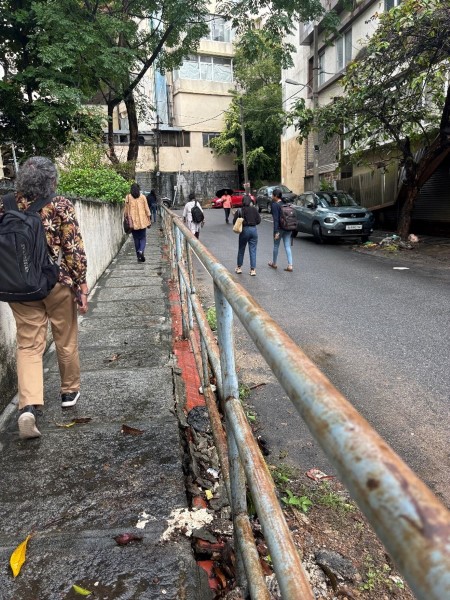
While mobility plays a significant role in a woman’s social empowerment, it goes beyond simply addressing travel needs; it creates opportunities to exercise freedom and experience a sense of empowerment. Given the strategic importance of cities and the numerous emerging avenues for transport development, the voices of civil society representatives are essential to ensure gender-responsive and participatory transport planning. Additionally, the examples above highlight how citizen-led approaches and initiatives contribute to a broader culture of empowerment and equity in urban spaces. Initiatives such as women riding bicycles and women drivers breaking societal barriers show how women can take ownership of public spaces, fostering economic empowerment and reshaping gender norms. On the other hand, initiatives by organisations in Bangalore are creating a safe and secure environment for women and other minority groups to access public transport by addressing sexual harassment and advocating for commuter rights. CSOs in these areas have been playing a critical role in moving towards gender-responsive, inclusive, and sustainable urban mobility systems, which can also be replicated.
A tribute to Comrade Damodar Thankappan, reflecting on over four decades of friendship, solidarity, and shared work with PRIA. From textile workers’ struggles and occupational health to construction workers’ rights and workers’ cooperatives, the blog celebrates his lifelong commitment to workers’ dignity, leadership, and collective action.
In this blog, Dr. Bandyopadhyay reflects on rethinking monitoring and evaluation in development practice. Drawing on his experience with participatory networks, he explores how organisations can move beyond compliance-driven reporting towards listening, collective learning, adaptation, accountability, and cultures that enable honest reflection.
This blog, by Dr. Anshuman Karol, explores why the future of higher education depends on community-engaged research, global collaboration, and knowledge democracy. It highlights how Community-Based Participatory Research enables universities and communities to co-create solutions for today's interconnected social and environmental challenges.
.png)
.png)