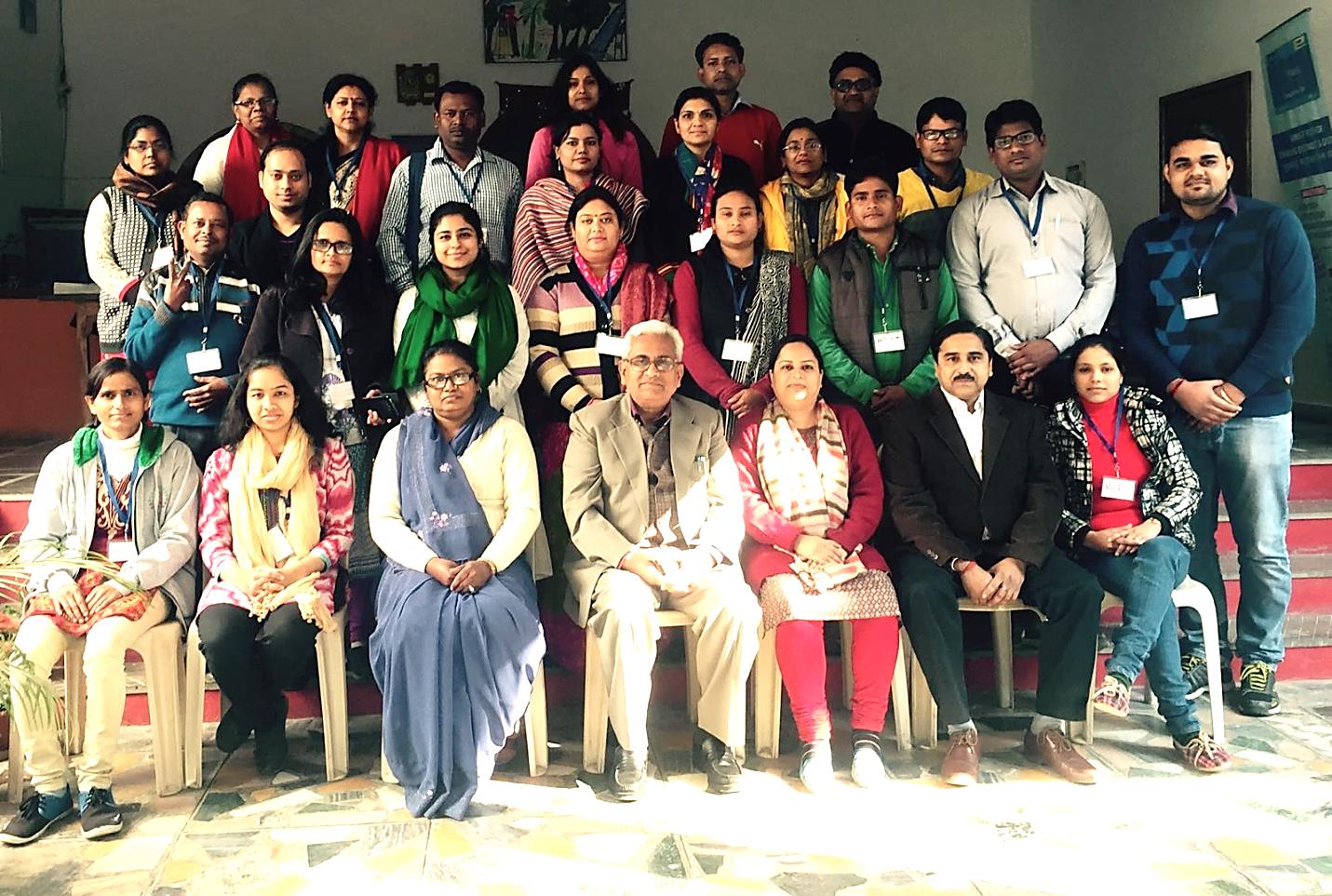
The Training of Trainers (ToT) organized by Sahbhagi Shikshan Kendra (SSK) and PRIA is a much-anticipated event. Every new recruit at PRIA wants to be nominated to attend this ToT. All year I had heard many of my colleagues -- close colleagues, my best colleagues, my peer colleagues -- share stories, pictures, experiences about the ToT they had attended. It is a once-in-a-lifetime opportunity, I was told. Finally in 2016 it was my turn to be nominated . I was surprised, and excited. The period of the training -- from 28 January 2016 to 3 February 2016 -- was going to be life-changing I knew.
I had a certain idea of what to expect from the course -- the continuous assessment of our ongoing training, challenging experiences faced, deepening understanding of the ideas and principles of participatory training, developing skills to pass the message gained effectively to future target groups; these were a few goals. The ToT made me realise that besides the basic responsibility as trainers, we also have to understand the training needs of the target groups to be trained, design the training programme, conduct the training programme, make arrangements for organising the same and evaluate the effect of the training. In addition to these responsibilities as trainers, it is also important to play other roles as facilitators and ‘friend, philosopher and guide’ to the target group. However, the most important role among all of the above would always be that of change agents in society.
In the whole training, I was so motivated to learn that I was active throughout the sessions. We were encouraged to stick to our own methods of interpretation and learning in the training process. While working in various small groups for activities, discussions, role plays and exercises, I realised that people are not easy to deal with. The biggest and the most complicated being are Human Beings. Some groups I could easily gel with; in other groups there was such difference of opinion that we could not complete the assigned task. The idea of perfectionism is something which broke within me in the whole process. I did not hesitate to make mistakes, ask questions and give feedback to everyone, did not hesitate in putting my opinions across. There was freedom and space for personal growth.
The most important learnings were in the last two days of the workshop. We were given various participatory tools and asked to make presentations. My team had 4 people, including me. This was a tough team to be in. Our team was given the "Lecture Method". I saw that people can really be hard in putting their foot down. When we stand as a team, we should reflect the team. In any team it is very easy to identify what is going wrong between the members. I realized that it is not only important to be the main facilitator in explaining the sessions but it is equally important to be a support for the whole team. Providing a sense of unity within the team, a sense of belongingness, a sense of authority and ownership. Providing support means to provide support in taking photographs, words of appreciation and encouragement, support in sticking charts, support in writing things on the blackboard, support in distributing copies, etc.
When I sit back and reflect I see that planning, down to the smallest detail, is so important. This self-reflection was made easy through the process of feedback from various trainees, trainers and team members. This ToT has made me not only accept the imperfection in myself but also imperfection in others. In accepting imperfection in others, there was dignity and respect for fellow trainees.
I have also realized that my habit of willingly sacrificing my own set of goals at the personal and professional level is both a ‘compromising and accommodative’ style of functioning that has become second nature. I want to work to change this into an ‘assertive style’.
I am filled with a new energy and feel a vast change in my perspective and a special need for courage to confront my imperfections.

.png)
.png)