
Author: Shruti Priya | 20-Jun-2024
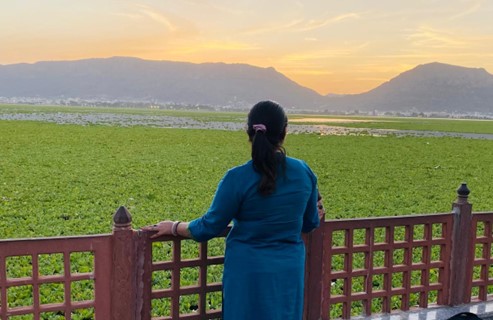
Working at PRIA, often leads us to various cities across the country. Each trip is an opportunity to witness firsthand the challenges and triumphs of different communities. Our recent journey took us to Ajmer to explore how climate change is impacting the residents of informal settlements. In the evening with some time on our hands, we decided to explore the city soaked in history and culture and ended up at the famous Ana Sagar Lake . The lake is an artificial marvel built by Arnoraja (alias Ana), the grandfather of the legendary Prithviraj Chauhan.
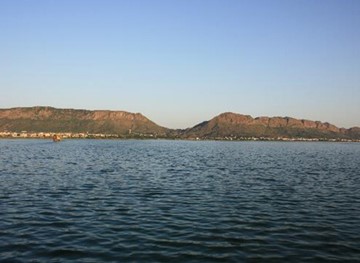
Ana Sagar Lake, Source: tourmyindia.com
As we approached the lake, we were welcomed by the sight of a beautifully constructed pathway encircling it. The scenic walkway, bustling vendors, inviting benches, and a vibrant atmosphere immediately reminded us of Mumbai's Juhu Choupati. The pathway was designed to enhance the city's infrastructure and offer residents a place for recreation and relaxation.
However, as we drew closer, a foul smell engulfed us and soon the scene took a disheartening turn. The lake, surrounded by the majestic Aravalli, was covered by a green blanket of water hyacinth , locally known as “Jalkumbhi”. Water hyacinths are notorious weeds that negatively impact aquatic life, cause flooding, and serve as breeding grounds for mosquitos. Their extraction is a labour-intensive and costly project. The weed had aggressively taken over the lake, choking the life beneath it. In one corner of the lake, we noticed stranded boats and a group of boatmen hanging out.
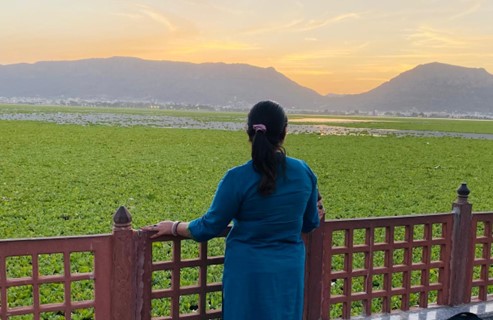
Growth of water hyacinths in Ana Sagar
Curious, we approached them to understand the situation. One of them, with a weary expression, shared, "Humara kaam 3-4 mahine se band hai ye JalKumbhi ke karan." (, Our work has been stopped for 3-4 months due to water hyacinth.) Their work had been stalled for the past three to four months due to the invasive hyacinth. Water hyacinths make boating, fishing and all other water activities completely impossible so this problem was not just a minor inconvenience; it was a significant hindrance to the local economy, affecting everyone from small business owners to boat operators, who were grappling with the consequences of this environmental plight.
Environmentalists we spoke to explained that the pathway, built over what used to be a wetland, had disrupted the natural ecosystem. Wetlands play a crucial role in absorbing carbon dioxide and maintaining water quality. By constructing the pathway, an ideal environment for the hyacinth to flourish was unknowingly created. The plant, thriving in the altered conditions, spread aggressively, turning the lake from a tourist attraction into an economic and ecological problem.
This situation serves as a strong reminder of the crucial importance of finding a delicate balance between development and environmental sustainability. Achieving this balance requires the collaboration of environmentalists, development experts, city planners, and local communities. Local communities can engage with local authorities and policymakers to advocate for environment-friendly development plans.
It’s not enough for cities just to be large and beautiful, they must also be functional, sustainable and capable of withstanding the environmental challenges, making them resilient. By fostering a harmonious relationship between development and nature, we can construct resilient cities for the benefit of future generations. It is evident that effective collaboration is the key to achieving this goal.
A tribute to Comrade Damodar Thankappan, reflecting on over four decades of friendship, solidarity, and shared work with PRIA. From textile workers’ struggles and occupational health to construction workers’ rights and workers’ cooperatives, the blog celebrates his lifelong commitment to workers’ dignity, leadership, and collective action.
In this blog, Dr. Bandyopadhyay reflects on rethinking monitoring and evaluation in development practice. Drawing on his experience with participatory networks, he explores how organisations can move beyond compliance-driven reporting towards listening, collective learning, adaptation, accountability, and cultures that enable honest reflection.
This blog, by Dr. Anshuman Karol, explores why the future of higher education depends on community-engaged research, global collaboration, and knowledge democracy. It highlights how Community-Based Participatory Research enables universities and communities to co-create solutions for today's interconnected social and environmental challenges.
.png)
.png)