
Author: Kaustuv Kanti Bandyopadhyay
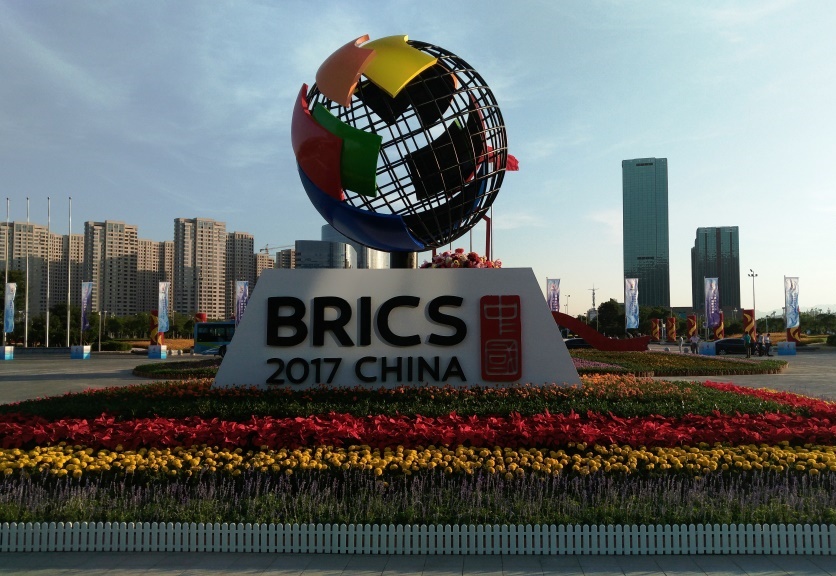
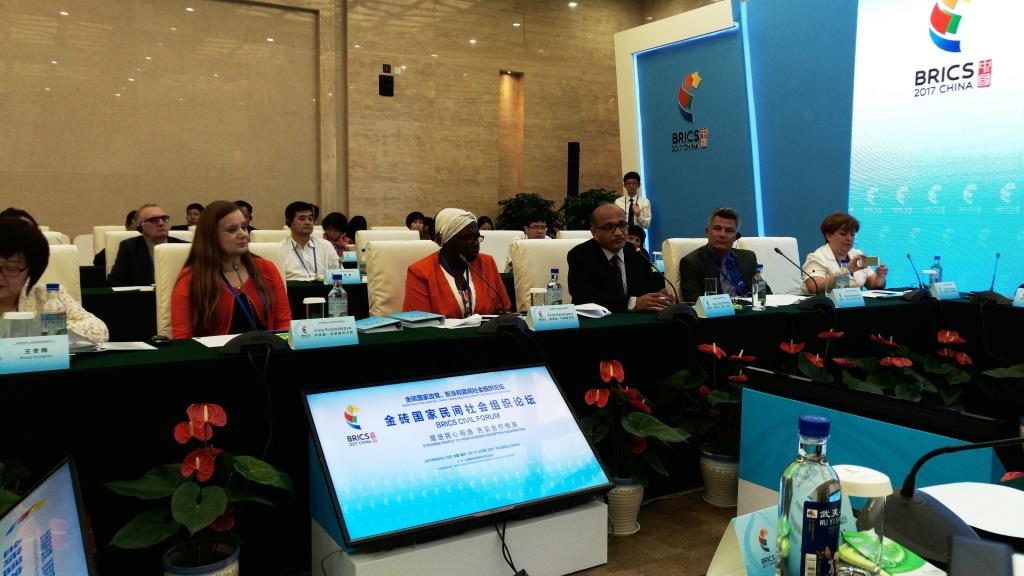 Civil BRICS Forum in Fuzhou, China, June 2017[/caption]
Unlike BRICS Academic Forum and BRICS Think Tanks Cooperation Council, which are reasonably institutionalised and well supported by all BRICS governments, formal inclusion of civil society organisations in BRICS processes received recognition only in 2015. The recognition and support from the Chinese leadership this year is undoubtedly a step further in inclusion of civil society organisations in BRICS dialogue and engagement. However, in reality, what does such inclusion mean and how meaningful is it?
The Civil BRICS Forum this year was unique in two ways: it was the first time political parties across BRICS and other partner developing countries participated; and, for political parties, think-tanks, and civil society organisations to come together on the same platform.
There are interesting differences in the way Civil BRICS Forum was organised in 2016 in New Delhi and how the Forum was organised this year. The New Delhi Forum deliberated considerably on effective implementation of SDGs and the need to develop a robust monitoring and evaluation framework as well as follow-up and review. It called for deepening and widening of South-South cooperation in achieving these global goals. Issues such as global governance and development finance; inclusive multilateralism; quality of economic growth; health and malnutrition; youth livelihood, skills and education; human security, peace and justice; sustainable urbanisation; and climate change and vulnerability were deliberated. The Forum strongly advocated for institutionalising mechanisms for civil society engagement. The breadth and depth of discussion on various agenda and themes in New Delhi was far more intensive than what transpired this time. In Fuzhou, the participation and discussion among civil society organisations (from five BRICS and other partner developing countries) was conducted in an apparently “controlled” environment, so much so the draft declaration was ready two weeks before the Forum!
As preparation for Civil BRICS Forum in New Delhi, a number of civil society consultations were held in various Indian states. We didn’t hear of any such preparatory consultations before the Fuzhou Forum.
Although the theme of this year’s Civil BRICS Forum was stronger people-to-people bonds for better coordination, there was lack of coordination among participating civil society organisations. Participants presented their views in various sessions, but constructive dialogue to arrive at a consensus or for a specific ask from the BRICS leaders was missing. As a matter of fact, civil society organisations had no dialogue or exchange within China, or between countries before meeting in Fuzhou. Understandably, in the absence such dialogues before, during and after the Forum, it is unrealistic to expect that civil society organisations will come up with any specific policy ask from their leaders when they meet in September.
Nevertheless, the Forum declaration recognised that while improving the existing mechanism of BRICS Think Tanks Cooperation Council, BRICS leader should also explore new platforms for dialogue and cooperation for political parties, civil society organisations and other actors. As a concrete mechanism, the declaration suggested that civil society organisations should intensify contact and communication and make full use of new technologies to build a network for interaction, communication, dialogue and cooperation.
To institutionalise civil society engagement in BRICS and to make these engagements more meaningful, it’s imperative that civil society organisations in each BRICS country initiate dialogues, first within their own country and then between countries to prioritise issues and articulate their strategic positions vis-à-vis identified issues. Regular interaction with BRICS Sherpas and Sous Sherpas could be a way forward. Engaging and providing support to South African civil society organisations well in advance before the next BRICS Summit in South Africa may be worth considering.
Civil BRICS Forum in Fuzhou, China, June 2017[/caption]
Unlike BRICS Academic Forum and BRICS Think Tanks Cooperation Council, which are reasonably institutionalised and well supported by all BRICS governments, formal inclusion of civil society organisations in BRICS processes received recognition only in 2015. The recognition and support from the Chinese leadership this year is undoubtedly a step further in inclusion of civil society organisations in BRICS dialogue and engagement. However, in reality, what does such inclusion mean and how meaningful is it?
The Civil BRICS Forum this year was unique in two ways: it was the first time political parties across BRICS and other partner developing countries participated; and, for political parties, think-tanks, and civil society organisations to come together on the same platform.
There are interesting differences in the way Civil BRICS Forum was organised in 2016 in New Delhi and how the Forum was organised this year. The New Delhi Forum deliberated considerably on effective implementation of SDGs and the need to develop a robust monitoring and evaluation framework as well as follow-up and review. It called for deepening and widening of South-South cooperation in achieving these global goals. Issues such as global governance and development finance; inclusive multilateralism; quality of economic growth; health and malnutrition; youth livelihood, skills and education; human security, peace and justice; sustainable urbanisation; and climate change and vulnerability were deliberated. The Forum strongly advocated for institutionalising mechanisms for civil society engagement. The breadth and depth of discussion on various agenda and themes in New Delhi was far more intensive than what transpired this time. In Fuzhou, the participation and discussion among civil society organisations (from five BRICS and other partner developing countries) was conducted in an apparently “controlled” environment, so much so the draft declaration was ready two weeks before the Forum!
As preparation for Civil BRICS Forum in New Delhi, a number of civil society consultations were held in various Indian states. We didn’t hear of any such preparatory consultations before the Fuzhou Forum.
Although the theme of this year’s Civil BRICS Forum was stronger people-to-people bonds for better coordination, there was lack of coordination among participating civil society organisations. Participants presented their views in various sessions, but constructive dialogue to arrive at a consensus or for a specific ask from the BRICS leaders was missing. As a matter of fact, civil society organisations had no dialogue or exchange within China, or between countries before meeting in Fuzhou. Understandably, in the absence such dialogues before, during and after the Forum, it is unrealistic to expect that civil society organisations will come up with any specific policy ask from their leaders when they meet in September.
Nevertheless, the Forum declaration recognised that while improving the existing mechanism of BRICS Think Tanks Cooperation Council, BRICS leader should also explore new platforms for dialogue and cooperation for political parties, civil society organisations and other actors. As a concrete mechanism, the declaration suggested that civil society organisations should intensify contact and communication and make full use of new technologies to build a network for interaction, communication, dialogue and cooperation.
To institutionalise civil society engagement in BRICS and to make these engagements more meaningful, it’s imperative that civil society organisations in each BRICS country initiate dialogues, first within their own country and then between countries to prioritise issues and articulate their strategic positions vis-à-vis identified issues. Regular interaction with BRICS Sherpas and Sous Sherpas could be a way forward. Engaging and providing support to South African civil society organisations well in advance before the next BRICS Summit in South Africa may be worth considering.
A tribute to Comrade Damodar Thankappan, reflecting on over four decades of friendship, solidarity, and shared work with PRIA. From textile workers’ struggles and occupational health to construction workers’ rights and workers’ cooperatives, the blog celebrates his lifelong commitment to workers’ dignity, leadership, and collective action.
In this blog, Dr. Bandyopadhyay reflects on rethinking monitoring and evaluation in development practice. Drawing on his experience with participatory networks, he explores how organisations can move beyond compliance-driven reporting towards listening, collective learning, adaptation, accountability, and cultures that enable honest reflection.
This blog, by Dr. Anshuman Karol, explores why the future of higher education depends on community-engaged research, global collaboration, and knowledge democracy. It highlights how Community-Based Participatory Research enables universities and communities to co-create solutions for today's interconnected social and environmental challenges.
.png)
.png)