
BACKGROUND
The launch of Swachh Bharat Mission - Urban (SBM-U) in 2014 ushered a tectonic shift in urban sanitation in India. It departed from the past strategies in several ways: first, it targeted all 4,041 Statutory Towns; second, it provides subsidies to the construction of individual household latrines (IHHL).
The objectives of the SBM-U included: (i) Elimination of open defecation; (ii) Eradication of manual scavenging; (iii) Modern and scientific Municipal Solid Waste Management (SWM); (iv) To effect behavioural change regarding healthy sanitation practices; (v) Generate awareness about sanitation and its linkage with public health; and (vi) Capacity augmentation for ULBs to create an enabling environment for private sector participation.
The Atal Mission for Rejuvenation and Urban Transformation (AMRUT) was launched in 2015 covering 500 cities across the country with over 100,000 populations. The AMRUT consist of components such as capacity building, reform implementation, water supply, sewerage and septage management, storm water drainage, urban transport and development of green spaces and parks. Cities under AMRUT have also been encouraged to set up Faecal Sludge Treatment Plants (FSTPs) under the component of sewerage facility and septage management. Currently, 47% (Census 2011) of the urban households depends on onsite sanitation system, which is expected to increase with the construction of toilets under SBM-U. To address this gap, National Policy on Faecal Sludge and Septage Management (FSSM) was launched in February 2017. The policy aims to provide and strengthen safe faecal sludge treatment and septage management. SBM, AMRUT and FSSM together seek to provide sustainable sanitation services to the urban population.
Despite significant political support and visibility, several systemic gaps exist in the implementation of sanitation programmes. One such concern is the gap between access to and usage of toilets where construction of latrines (IHHL, public and community toilets) has outpaced behaviour change. There have been concerns with context specificity of technology, quality of constructions, and sustainability of the movement. The ULBs at times adhered to a mechanical approach to target completions and did not pay much attention to behaviour change efforts. Concerns have also been raised about the deviation from norms essential to facilitate and sustain community participation. The capacity of ULBs and other city authorities to implement and sustain sanitation movement with scale and pace is still limited. A systemic policy and concerted effort to develop institutional and individual capacity has been missing. The demand for capacity building is limited, sporadic and event based. Lack of credible supply side institutions that provide capacity building support is also a critical issue. Apart from the governments, a number of civil society organisations, international donors, corporate social responsibility programmes, private sectors, and academic institutions have joined the effort towards finding comprehensive and sustainable solution of India’s urban sanitation problems.
However, more often than not, many such actors work in isolation missing out possible synergy in approach, target, and results. Over the decades and more so in the recent years, plethora of innovations have been tried out by various actors. These relate to technology, financing, and community based solutions. Nevertheless, innovations can be of limited use and even be wasted, if these cannot be scaled up and made accessible to a greater number of communities. Many such innovations could not be replicated because of limited efforts towards dissemination, financing, and institutionalisation. A comprehensive, yet flexible framework is required to scale up innovations for better sanitation services.
THE CONFERENCE
Keeping this as background, a state level Conference on ‘Partnership to Scale up Innovative Solutions for Urban Sanitation in Uttar Pradesh’ was organised in Lucknow, Uttar Pradesh (UP). It was organised by Participatory Research in Asia (PRIA) in collaboration with National Institute of Urban Affairs (NIUA), Regional Centre for Urban and Environmental Studies (RCUES) of the Ministry of Housing and Urban Affairs, Government of India; Water Aid and Sahbhagi Sikshan Kendra (SSK). Apart from an inaugural session, the conference was organised into four technical sessions. The first session discussed the implementation challenges of achieving ODF+ and ODF++ and tried to identify innovative solutions. The second session focussed on highlighting the changing realities of sanitation workers and discussed the interventions required in the public policy to ensure work-life dignity of sanitation workers. The third session deliberated upon emerging practices related to building resilience of the cities by focussing on improving environmental sanitation with special reference to waste management. The fourth and final session explored the effectiveness of institutional mechanisms and efforts by ULBs and other stakeholders to foster citizen and civil society engagement (Annex.1: Programme Agenda).
The objectives of the conference were:
Since innovation, partnership, and capacity are intrinsically linked to ensure inclusive sanitation services, the conference was an attempt to bring together policy makers, researchers and practitioners across governments, Urban Local Bodies (ULBs), parastatals, civil society organisations (CSOs), academia, media, corporate social responsibility (CSR) programmes and representatives from the communities to gain insights on how a partnership approach can scale up innovations and capacity development in the sphere of urban sanitation. The representation was from within the state of Uttar Pradesh and across the country.
HIGHLIGHTS OF DISCUSSION
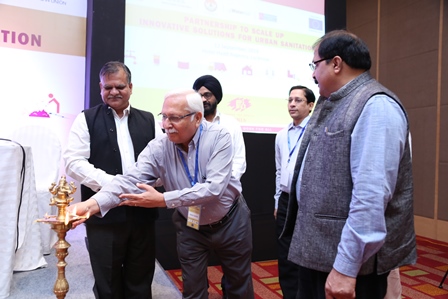
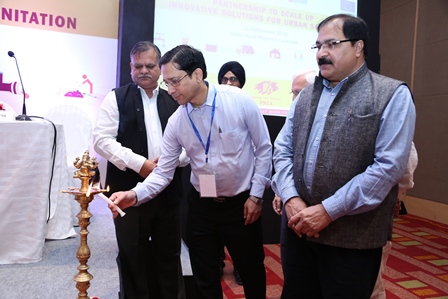
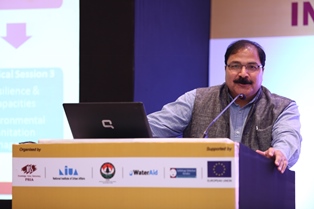
Mr. Depinder S Kapur, Team Lead, Sanitation Capacity Building Programme, National Institute of Urban Affairs (NIUA) welcomed the guests and participants at the conference with a hope of finding some useful insights as well as a list of action agenda by the end of the workshop. He urged the representatives from the government departments of Uttar Pradesh and CSO representatives to take the suggestions emerging from the conference as priorities to be implemented in the state of Uttar Pradesh (UP).
 |
 |
|
Dr Kaustuv Kanti Bandyopadhyay, Director, Participatory Research In Asia (PRIA) extended a warm welcome to the participants on behalf of PRIA, NIUA, RCUES, Water Aid, and SSK. Setting the context of the conference, he presented an overview on the state of urbanisation and urban sanitation in UP.
In UP, there are 915 towns and cities. Of these, 267 are census towns and 648 are statutory towns. Of the total statutory towns, there are 17 Nagar Palikas, 198 Nagar Palika Parishads and 438 Nagar Panchayats. According to the Census of 2011, 22.2% or slightly more than one-fifth of the total population of UP resides in cities, a proportion much smaller in comparison to other Indian states. This was cited as an opportunity for the state to plan its urbanisation for the future. Programmes such as SBM-U have gained focus in the past four years to construct IHHL, PT and CTs across the nation. In UP, AMRUT is being implemented in 60 cities. 13 cities have been selected as SMART cities. 130 cities are under State Urban Livelihood Mission (SULM) and Prime Minister Awas Yojana (PMAY) is being implemented across the state. According to the 2011 Census, 293 cities in Uttar Pradesh have informal settlements housing 14% of the urban poor. Making services available to this category through various programmes is crucial. Talking about the status of urban sanitation in UP, 29.5 lakh applications for IHHLs were received, of which 4.5 lakh were completed and 1.5 lakh is under construction as per the SBM dash board. At present, 633 wards in the state have been declared as Open Defecation Free (ODF). He assured that currently this figure would have further improved, considering that all over India about 1 crore applications have been received. In 7,000 wards out of a total of 12,000 wards in the state, door to door collection of waste is taking place. However, processing of waste is happening at only 20%, which is far below the national average of 34.07 %. Hence, this is a challenge as well as an opportunity for deeper engagement by the state and all other organisations on the issues of urban sanitation. He informed that the workshop will attempt to talk in detail about this gap and possible solutions.
Giving a background of PRIA’s work on enhancing participation, he shared that 74th Constitutional Amendment Act (74th CAA) came to force to bring effective devolution to ULBs. For long, planning in the context of urban development was expert driven. However, there is an imperative to shift to participatory planning for city wide sectoral planning especially in sanitation services. He further stressed that strengthening citizen voices is crucial for enabling participatory urban planning. In order to make urban governance and development policies participatory and integrate the voices of urban poor in such policies, it is essential to enact it through multi stakeholder capacity building with a focus on building organisation and awareness among the urban poor.
 |
 |
Sharing PRIA’s intervention on citizen engagement through the project ‘Engaged Citizens, Responsive Cities,’ he spelled out the theory of change on which the project is premised, which is to organise and build capacities of the urban poor so that they can participate in the process of urban planning. He emphasised that the workshop is an opportunity to share the learning from project’s intervention in Jhansi, Ajmer, and Muzaffarpur. To carry out city-wide informal settlement planning, the ULBs currently do not have actual granular level data. Within the project, granular level data from each settlement in the three cities were collected. This data was then used for participatory planning with the ULBs in each city. However, the challenge in context of Service Level Benchmarks (SLB) is to figure out how this data can be taken forward to create either new benchmarks or integrate them with the existing benchmarks.
The project has also looked at the issues of sanitation workers through their lived experiences. The workers are usually invisible in the continuum of urban sanitation value chain. Hence, specific policy recommendations would be put forward in the conference based on study findings. Yet another aspect of the project was to assess IHHL as well as CT and PT across the three cities to see whether or not there is a link between planning norms and people’s needs and to further ascertain that how we can integrate people in urban planning.
He remarked that the ECRC project has been an innovative experimentation on citizen engagement and this model could be taken to other cities. He also congratulated Mr. Manoj Singh, Principal Secretary, Govt. of Uttar Pradesh, for formally engaging with the CSOs at the state level and urged him to share how this was conceptualised and the possible ways to take it to other states. Finally, he hoped that this conference would talk about the action plans that emerge from the discussions and pave ways for effective implementation of urban sanitation planning in the state of UP.
Professor Nishith Rai, Director, RCUES, affirmed that policies are usually designed with specific goals but often do not get executed effectively; therefore, it is critical to think of ways to ensure the implementation of policies. He stressed that citizen participation is crucial to achieve the goal of ODF and ODF ++. Hence, large scale public awareness using IEC is the most important component of the programme which needs to be utilised. Talking of the need for innovations, he shared that in the village people empty their septic tanks in the farm fields without treating it. This is a huge challenge for 23 crore people in UP and needs to be addressed urgently through innovative low cost technology. He further flagged that usually the achievements are measured by the data on paper, but there is a need to focus on achieving the goals in reality. Addressing the leaders from the state government in the audience, he urged them to break the barriers to implementing urban sanitation programmes despite the difficulties of taking decisions right away. He expressed confidence that the Principal Secretary of the state, with his experiences of working in both rural and urban development, will act upon the suggestions that emerge from the conference.
 |
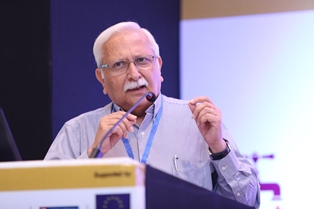 |
Dr Rajesh Tandon, President, Participatory Research in Asia (PRIA) highlighted that Uttar Pradesh is an intriguing geographical space. Recently, while Sitapur was rewarded for rural development, Kanpur ranked amongst one of the lowest, in recently held Swachh Survekshan in India. Uttar Pradesh has a long history of urbanisation. It is in this state that KAVAL towns have existed. However, in current times the rate of urbanisation in this state is one of the lowest in the country. He hoped that if the sanitation and health parameters could be improved in the state, it would be of personal and professional significance to him.
Talking about the governance in urban local bodies, he shared that on 2 June, 2018, 74th CAA, through which urban local bodies had gained constitutional rights, completed 25 years of its existence. However, this wasn’t celebrated in the country. While many people have worked in the area of rural development, Panchayati Raj and 73rd Constitutional Amendment, not much has been done within the 74th CAA. Sharing his experience of working on Panchayati Raj, he remembered that about 10-15 years ago, he and his colleagues would sit with the Planning Commission and recommend stopping creation of any parallel bodies to panchayats. This was crucial to connect the panchayats with national scheme and practice local self-governance in letter and spirit. On the other hand, in case of ULBs, there are many schemes such as SBM, AMRUT, SCM, PMAY and NULM but ascertaining the role of ULBs in this is still a challenge.
Stressing the need to recognise local solutions to the urban sanitation challenges, he cited an example, that about 30-35 years ago when national literacy mission was launched, it was based on the models of Kottayam in Kerala which had the literacy rate of 89 %. However, when the same was tried in Fatehabad in UP which had 9 % literacy, it failed. Hence, solutions cannot be imposed or adopted, rather they have to be local and adapted.
In urban context, accelerated growth has taken place post 2014. However, it is important to acknowledge that effectiveness of urban planning can’t be achieved by only strengthening the supply side. In absence of capable demand side, the gaps in urban services will remain. All the cities that have been models of sanitation and urban development such as Pune, Indore, Tiruchirappalli, etc. have showcased active engagement of mayor, elected representatives, CSOs and ULBs where they have all come together to make the city as models in urban sanitation management. Hence, it is essential to acknowledge that technical innovations without a humane perspective can’t be successful.
He suggested that CSOs should work on the side of demands. For instance, even though the toilet is in the house of an individual, the waste becomes a social/public responsibility. Therefore, unless there is collectivisation of people, this problem will not find an effective solution.
He remarked that SDG 17 clearly talks of multi stakeholder partnership and the conference itself is an evidence of the same, where representatives from academia, CSOs, ULBs and donor agencies have partnered together to hold an event to discuss the urban sanitation challenge in the state of UP. Finally, he requested the audience to not to restrict this partnership to this conference but take it back into their practice such that it is visible across UP.
In his inaugural address, Mr. Manoj Kumar Singh(IAS), Principal Secretary, Urban Development Department, Govt. of Uttar Pradesh applauded the theme of the conference and said that the emphasis on sanitation has gained momentum in the country like never before. The ways in which septage is looked at currently has emerged within the concept of urban development and requires further deliberation. Under SBM, first step is construction of toilets followed by septage and water connection. Till now, maximum focus has been on number of toilets constructed, which is usually contractor driven. In context of STP, the focus is usually on the data such as number of STPs constructed, amount of payment released etc. However, monitoring of operations of STP, its maintenance and functional status are being completely overlooked.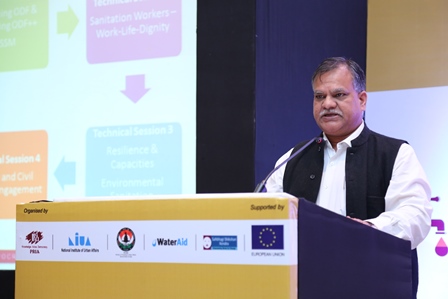
Giving a history of development of sewerage system, he shared that it could be traced back to the battle of 1857, when the first mutiny against the British Raj was waged. After the mutiny was suppressed, it was found that maximum men died post the battle due to infection. An inquiry was held to find out the reason. At that time, Florence Nightingale had become a champion of public health and sanitation. In 1859, when the inquiry report was brought out, she recommended that there should be sewerage system to mitigate the effects of infection and outbreak of diseases. Hence, sewer lines got created wherever the British lived. The sewer lines were laid out parallel to the river in those towns/cities. Outlets of these were opened in sewerage farms which was either a big cultivable land or a river. At present, with the compulsions of urbanisation, landscapes of the cities have changed and employing similar systems in upcoming cities is a huge challenge.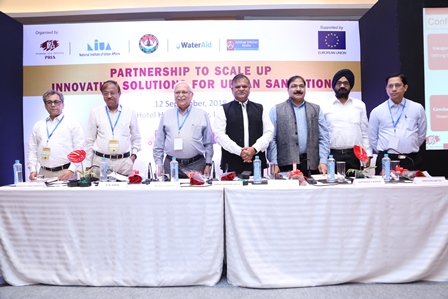
Density of population in UP is unparalleled in the country and urban development is happening aggressively. Currently, no city in India is 100% covered with sewer. Even in the national capital of Delhi, only 30 % of the city is covered by the sewerage. At the same time, the abominable condition of Yamuna River is because only 30 % of the sewer waste is being treated. In this regard, it is better to acknowledge that FSTP and on site sanitation is much more useful than STP and promote local solutions appropriate to each city. STPs require long term management as well as they are cost intensive both in operations and maintenance. Therefore, ULBs do not feel competent to take over STP from the water departments and remain underutilised. Till now, STPs were operating at the expense of ponds and rivers, but making land available for sewerage treatment has become essential in the present times and has its own challenges. Waste and sewerage are being generated every day. The only way forward to manage it, is to hold every individual responsible for their own waste. For this, the state is trying to build on the CSO engagement, create a model and find local solutions.
Quoting excerpts from the book, ‘Where India Goes: Abandoned Toilets, Stunted Development and the Costs of Caste’ by authors Diane Coffey and Dean Spears, he asserted that children in UP are malnourished because of OD, which is the cause of their malnutrition and stunting. He further reflected that in UP, construction of toilets will not necessarily lead to ODF. For instance, in the villages, people do not spend their personal money to construct twin pits. They construct septic tanks of the size of their rooms so that in their life time it never overflows. Even if the septic tanks fill and start overflowing, people call vacuum truck operators from Lucknow to get it cleaned which costs them about 20,000 rupees. As a result, people are still not ready to construct toilets within their homes. Hence, there is a need to find localised solutions to problems like these.
He pointed out that all the initiatives under SBM are contractor driven. Regional SWM plans have been made. However, the waste dumping yards and the waste treatment plants are being set up on lands acquired in faraway districts. This poses challenge of acceptance of the waste treatment site by the local people. For instance, if the waste of Pilibhit is transported and deposited in Bareilly, the people may not allow this. Thus, it is essential that people accept these infrastructures on their own land. Hence, there is a need to figure out an effective system for SWM.
He hoped that this workshop will bring out concrete solutions on SWM, pave a way on engaging citizen and chart out ways to increase participation of elected representatives to enable implementation of SBM in the state. He assured that concrete solutions emerging from the conference would be taken forward at both policy and intervention levels.
TECHNICAL SESSION 1
Scaling Up Innovative Solutions for Achieving ODF+ and ODF ++ with Special Emphasis on Faecal Sludge and Septage Management (FSSM)
Mr. Rajiv Narayan, Deputy Director, RCUES, was the co-chair for the session, who set the tone for the session by highlighting that unless the urban poor are involved and engaged, the goals to achieve ODF, ODF + or ODF ++ will remain unmet. For this there is a need to derive learnings from states such as Odisha, Madhya Pradesh, Chhattisgarh, and Telangana where sustainable solid waste management has been practiced through community engagement. Urban poor are important stakeholders and active engagement with them is indispensable for building effective partnership amongst various institutions in the state and sustaining the SBM goals.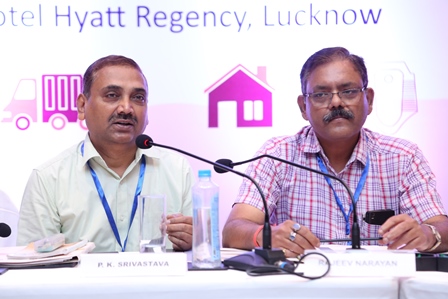
Mr. P. K. Srivastav, Secretary and Director, AMRUT, Urban Development Department, Govt. of Uttar Pradesh co-chairing the session, highlighted that the most critical challenge of living in the city is solid waste and sewerage management, especially because it is produced every day and yet not managed on a daily basis. Multiple experiments have been done in this regard since Ganga Action Plan was launched in 1980. The waste management systems have evolved since then, but systems have not worked effectively. Primarily because these systems are infeasible and there is no budget with the ULBs for their maintenance.
Hence, there is a need to ponder upon some questions such as whether ULBs are financially capable for doing this work. How is devolution happening at the ULB level especially in the areas of 18 functions in the twelfth schedule, of which many things were adopted but others were still left to the discretion of the state. Construction of STPs is expensive and there are behavioural problems in its effective operations as household connections to sewerage are not easily accepted by people. Apart from that, huge land is required for it, which is usually unavailable. For instance, if a FSTP has to be constructed for population of 15 lakhs, then 10 spots have to be identified and at least 500 square metres of land is required. No project allows for the land cost. Additionally, for operating STPs, the cost of electricity bill is huge and ULBs do not have the budget for financing it. Hence, what are the other alternatives to deal with this problem? Could FSSM be an alternative, as its operation as well as maintenance is easy and low cost?
Currently, there are many cities which have been declared as ODF; however, the connection of toilets in these cities is not to sewerage but in open or closed drains. This is bound to pose a huge challenge for achieving ODF + and ODF ++ in future and needs to be thought of.
In Lucknow there are two drains, Haider canal and Kukrail Nalla. While people have settled down in these drain beds, it is not possible to construct toilets in them. Similarly, a number of Assamese and Bangladeshi migrants are living next to the railway lines. There too, toilets cannot be constructed. So, either that land should be under the ULB jurisdiction or the railways should be given the mandate to construct toilets in those localities and incorporate it in the Railways Act. The problems of land ownership and tenure rights must be looked at with seriousness to implement the SBM.
 |
 |
Mr. Sanjay Singh, Director Programmes (Sanitation), PSI, discussed the importance of formalising the service providers for waste treatment in the continuum of urban sanitation. He informed that limited number of households in a city is connected to the sewer systems. Even in the near future, this difficulty will remain. In the FSSM value chain, there are many services that market makes available, such as onsite sanitation and septic tank cleaning services. This availability is despite the connection of households to the sewerage because on an average only 30 % of the sludge reaches the treatment plant. Apart from that service gaps exists due to the size of tanks and open disposal of faecal sludge. ULBs on their own are inadequately equipped to provide services at individual household level for septic tank cleaning and safe septage disposal. Even though, many tanker operators work they are neither organised nor integrated with the ULB for providing these services. Additionally, these service providers do not ensure the quality of desludging or disposing. That aside, even the existing waste treatment facilities do not operate to maximum capacity. The data suggests that only 60-65 % of waste treatment facilities are being utilised, remaining 30-35 % remains unutilised. Hence, 35% of untreated sludge needs to be tackled by the market. This requires integrating service providers to increase septage treatment by establishing a mechanism for service providers of FSSM.
Yet another challenge that needs attention is whether the service charges are borne by the ULB or the customer. The market size available for this service gap is estimated to be 75% urban households that are not connected to sewerage. This means that 3000-4000 tanks will be required for cleaning on an everyday basis. One time cleaning fetches about 700-900 rupees which in turn comes to the business size of 1 lakh 50 crores yearly. According to these estimates, 3000-4000 service providers could be employed.
Further, there is a need to develop this market as well as the service providers. Many enterprises require technological and financing support. The capacities of the service providers can be enhanced through training in the domains of operation management along with safety measures, financial management and customer acquisition. The market could be developed by making the community aware on quality services and listing out skilled service providers. Yellow pages could be created to list the service providers for customers at the city level.
Moreover, it would be necessary to establish forms of engagement between service providers and the ULBs to make available technology for quality services and to train the service providers on their responsibilities such as timing, the routes to be taken for disposing faecal sludge and responsibilities after desludging. He finally urged the audience to visualise how service providers can engage effectively with market size of 30-35 % of untreated sludge.
Mr. Amresh Sinha, Programme Manager, Consortium for DEWATS Dissemination Society, began by highlighting the basic difference between ODF + and ODF ++. He clarified that ODF focusses on provision of IHHL and CT/PT, along with their operation and maintenance. The latter, that is ODF ++, takes into account the complete sanitation value chain, which includes transportation of the waste, its treatment and safe disposal.
Domestic waste water can be categorised as black water and grey water. Contamination level increases if grey and black water mixes with each other. Usually, practices of disposing faecal sludge is such that either it is directly disposed in a water body or deposited on a farm. However, there is a difference in faecal sludge and waste water in terms of their source, contamination levels and the ways of treatment. COD and BOD, which are indicators of contamination level, is the highest in faecal sludge. Hence, in case of limited budget ULBs may have to prioritise the treatment of waste depending upon levels of contamination.
Sanitation is a state subject and requires the state to contribute finances in the budget towards various national level schemes for the cities. Since, the operation and maintenance of treatment plant is an enormous challenge, effective waste treatment should be low cost such that ULBs can take user charges and afford to operate and maintain it. Citing the example of Unnao town, he explained the innovative waste treatment strategy that does not require electricity and recycles sewage and wet waste to generate NPK rich manure. On decentralisation of waste treatment, he suggested adopting an integrated approach, such that the treatment plant could be owned by the community and solves the issue of land. He concluded that to eliminate manual scavenging, technologically standard FSTP should be promoted on entrepreneurship model.
Summarising the session, the chairs highlighted that market has the potential to shape up the waste treatment facilities. This requires engagement with service providers through systematic, contractual agreement in a robust framework that addresses financial concerns. Successful low cost models for sanitation should be adopted to promote sustainability. This is crucial because SBM was preceded by many other sanitation programmes. Numerous schemes in the past have failed in absence of low cost waste management facilities. Therefore, quality of construction of toilets should be ensured such that people are able to use the facility for longer periods of time and will sustain the objectives of the programme.
Lack of convergence is yet another issue in the state of UP. We do not understand its meaning and even if we do, we don’t know how to go about it. In late 1980s, UNICEF brought in the concept of convergence to urban bodies. There is a need to look at programme implementation, keeping in focus that the informal settlements have high density of population. For instance, smaller vehicles should be sanctioned for collecting waste in these settlements. This can be implemented with support from NULM through convergence. Similarly, there is a need to formalise service providers for FSSM. Under NULM, alternative employment through capacity building could be facilitated to turn scavengers into entrepreneurs, through a process of convergence.
There is a need to develop conceptual clarity on FSSM. Making its DPR is a technical side to it, but its implementation requires participation from the officials of the municipality as well as the elected representatives. Community development is an essential component in effective implementation of the sanitation programme. Indore has been a successful model because of immense community involvement at all levels, including at the level of engineers and planners. In the city more than 50 community resource persons got elected and became ward councillors and mayor. Contrary to this, in UP, community development is the most neglected part and must be given priority attention in implementation off urban sanitation programmes.
Questions and comments from the open discussion:
In response to this it was shared that it is possible to acquire land from the nearby gram panchayat. However, STPs for the purpose of pumping requires high power which is not possible through solar energy. Apart from that to build a full-fledged solar plant will take some more time. But the positive outcome in UP is that more than 300 ULBs have already identified the land for sewage treatment.
In response to this it was shared that policies exist at the national and state level. However, policies only provide with a basic framework. Solutions have to be localised. Based on 74th CAA, the ULBs need to create options. State government is working on waste water treatment policy. While every state should mandatorily formulate a policy, the responsibility of creating a SOP for the entire chain of faecal sludge management should be in the hands of the ULBs. We still need to ascertain the ways in which CSOs can support the ULBs and the state government in defining SOPs so as to ensure community engagement in the whole process.
TECHNICAL SESSION 2
Changing the Realities of Sanitation Workers
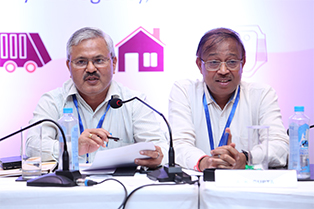
Mr. A. K. Gupta, Additional Director, (RCUES) and Mr. Ravindra Bohra, Chief Engineer, Uttar Pradesh Jal Nigam were the co-chairs for this session.
Mr. Gupta, opening the session, pointed out that the discussions on multiple facets of urban sanitation are happening in a fragmented manner. For instance, we look at septage, dry and wet waste management separately. Similarly, discussions on sanitation workers also tend to take place in isolation. It is important for us to recognise that the sanitation workers are an important part of the sanitation chain and policy on sanitation impacts the sanitation workers too.
 |
 |
He further said that there is a need to change the mind-sets of people about the stigma attached to waste. There must be strict protocols to enable working conditions of sanitation workers. There are inspiring examples from across the world in this regard. For instance, in Malaysia, a manhole can’t be opened in absence of at least 3 people on site and safety gears are mandatory for the workers. On the other hand, in India, the sanitation staff gets safety gears only twice in a year while they should be receiving them on a rolling basis. Their capacity building and health check-ups must be done regularly. Ensuring these will not only make their working environment better but will also ensure their overall well-being. Hence, there is a need to look at waste management in an integrated manner based on localities, decentralised waste treatment plant and standard protocols for sanitation work.
Mr. Bohra said that caste implication of sanitation workers should be removed and the focus should be on the sanitation work and the environment of work as we discuss the issues related to sanitation workers.
Ms Nilanjana Bhattacharjee, Programme Officer, PRIA, began the presentation by submitting that howsoever we may desire to delineate caste from sanitation work, the reality is that majority of the sanitation workers belong to the Valmiki community. She emphasised on the close linkage between caste and sanitation work, which cannot be overlooked as it has been a caste based occupation.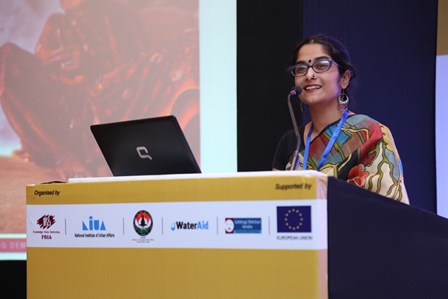
Presenting the research findings from the study ‘Bodies of Accumulation’ with women sanitation workers in Jhansi under the project ‘Engaged Citizens, Responsive City’, she shared that the objective of the study was to explore and understand the lives of women sanitation workers and the associated problematics of dignity in their everyday lives. She brought to everyone’s knowledge the crude reality and deplorable conditions faced by the sanitation workers every day. While the permanent workers are relatively better off in terms of security and work entitlements, contractual and outsourced workers have the most exploitative work conditions. Though the nature and type of work is same for all three categories of sanitation workers, pay scale for each category is different. In spite of the nature of their work where they deal with toxic waste, faecal waste, glass and other dangerous substances on a daily basis, none of the workers receive any medical insurance.
While many entitlements are available for permanent workers on paper, the study showed contradictory situations. These discrepancies highlight inconsistent employer ethics as well as law infringements. One important reason for this continuous exploitation is because of their unawareness and lack of knowledge. Most of the respondents were illiterate and had limited abilities to articulate their problems. This prevented them from challenging the concerned authorities in case of exploitation, law infringement or misguided information.
Recommendations were provided to improve the living as well as working conditions of these women sanitation workers. Gear and equipment should be provided at regular intervals, which are long lasting and practical to use. Payslips are not provided to many workers without a bribe. The municipal leadership should urgently look into the matter. Havaldars should be provided with first aid kits and basic medical insurance for all workers, irrespective of the type of employment. Increasing efforts should be made for the dissemination of knowledge regarding duties, laws and schemes to the sanitation workers and on the importance for short term and professional trainings like enrolment in schemes under National Safai Karamcharis Finance and Development Corporation (NSKFDC) to tackle waste as well to provide for alternate and dignified livelihoods. This can be done though Institutional Linkages Programme (ILP) and Skill up-gradation Training Program (STP). Civil society organisations like PRIA can also facilitate the identification, enrolment, and follow-up of such short term processes.
She concluded with a reminder that no changes will take place until mind-sets of the people change and that sanitation needs to immediately stop being just a state issue and start being a people’s issue.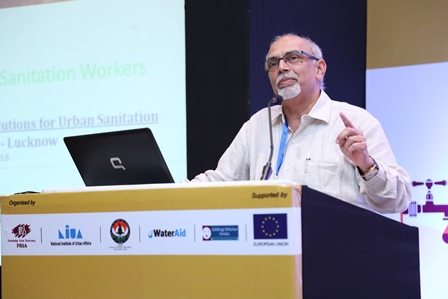
Dr Ravikant Joshi, Team Leader, Technical Support Unit, National Urban Livelihood Mission, Ministry of Housing and Urban Affairs, Govt. of India shared that although the reality of sanitation workers is changing yet there is a need to understand what and how these realities are changing. Every other day there is news that sanitation workers are dying. This is because faecal sludge management is not adequate even in big complexes in the cities. Sanitation workers are invisible and caste continues to remain a strong barrier. This structure is iron casted to an extent that it neither allows these workers to come out of sanitation work, nor does it allow others to enter it. One of the possible reasons is because, in our country, unlike in western world, this work has not been mechanised. The reason cited for poor mechanisation is lack of adequate funds. However, he emphasised that the real problem lies in the lack of prioritisation by the state as well as by people.
Secondly, sanitation workers are treated as unskilled workers while the fact is that sanitation work is a skilled job. Hence, some skilled courses have been defined by NSDC such as STP helper, e-waste collector, septic tank technician, FSTP operator and desludging operator. These skill trainings have been developed on an entrepreneurship model. SBM has triggered the need for skilling sanitation workers. While the mission has placed a huge focus on building infrastructure, there is a risk that when the mission ends this infrastructure might remain unused. It is therefore essential to build capable workforce to manage these infrastructures to ensure sustainability. This could be done through convergence with NULM since SBM is also generating livelihood opportunities.
He further shared that in order to create a skilled workforce in sanitation, the course structure and the curriculum has been designed so as to incorporate recognition of prior learning.
In changing the reality of the sanitation workers, the first step has been the creation of infrastructure. He estimated that this will lead to creation of 20 lakh new jobs in the following segments:
- Door to door collection
- Septic tank management for four crore septic tanks that have been constructed from next year onwards
- Septage management
Building upon the previous session, he shared that it would be worthwhile to accept that construction of centralised sewerage systems is not possible in every city. What is needed, therefore, is that containment of waste happens in a proper manner. Hence, FSSM seems to be a probable solution. From next year onwards, five crores of septic tanks need to be maintained. These are opportunities to create right kind of workforce for the same. It is usually heard that people will not pay to manage and maintain the septic tanks but this mind-set needs to be changed and this cost requires to be borne.
Understanding sanitation ecosystem with respect to policy framework as well as regulation is important. To enable convergence, training programmes of government officials should be held on various schemes. Cases from Pune, Tiruchirappalli etc. suggest that women SHGs can also contribute in the sanitation scene. SHGs for men could also be created to promote entrepreneurship with support from NCSK and Dalit Corporation that offer loan at 3%. There are some models to be learnt from, such as, Ambikapur model on dry waste, Siliguri model on accessing loans from NSKFDC and Warangal city level federation where people are earning up to Rs.10,000 by segregating dry waste.
For skilling of sanitation workers and promoting entrepreneurship, ULBs need not worry about the funds but show willingness as the funds are being generated for this programme from NSDC, NSKFDC and NULM. Citing the initiative taken by NSDC, he informed that a list of 453 manual scavengers was created with whom training was done, assessment was carried out and a certificate was given on completion of the training. However, it will still take about a year to formally launch this course.
Concluding the presentation, he reaffirmed that the faecal sludge disposing industry in India is estimated at a staggering Rs.20 crores. Despite that, the lives of the people engaged in door to door collection of waste has not changed and this money is not reaching the urban poor. Hence, there is a need to re-look at the ways in which the policies and programmes are being implemented.
Mr. Prashant Katiyar,State Engagement, (Uttar Pradesh) National Skill Development Corporation started his presentation by stating the vision of the National Skill Development Corporation (NSDC), which is to fulfil the growing need in India for skilled manpower across sectors and narrow the existing gap between the demand and supply of skills. The aim of NSDC is to skill around 150 million people by 2022. This is to be achieved through realisation of several objectives including enhancing coordination of private sector initiatives for skill development, upgrading skills to international standards and developing employability skills. Over the last 10 years, NSDC has done transformative work in the area of skill development.
He informed that so far, training capacity under NSDC is available in 29 states and 4 union territories. 40 Sector Skill Councils have been formed, with over 450 representatives from industry associations, government and academia. Actions are being taken for international engagement with multilateral organisations and for making skills transnational so as to enable overseas labour movement. The 40 Sector Skill Councils take into account industries and jobs from primary, secondary and tertiary/service sector.
Further, he laid down the three training models under the NSDC. Short Term Training (STT) is conducted by Training Partners across 221 job roles with each role varying from 200 to 550 hours. Major steps in this training include target allocation, mobilisation, training, assessment and finally placement. Recognition of Prior Learning (RPL) aims to assess and certify individuals with prior learning experience and align the abilities of the unregulated workforce to the National Skills Qualification Framework (NSQF). The third training component is of Special Projects, for job roles not defined under the available Qualification Packs which are to be implemented in special areas of government bodies, corporates or industries.
He then went on to talk about the Pradhan Mantri Kaushal Kendras which are being established across the country in all districts. Branding and infrastructural guidelines have been set up to ensure quality of training and the courses to be taught in each centre are determined to cater to the local youth’s aspirations.
The last component presented by Mr. Katiyar was on Swabhiman, a project for making a Municipal Corporation mechanised, resulting in dignified and secured livelihood for its sanitation workers. The objective of the project is to provide trainings and impart advanced skills to the existing sanitation workers so as to meet the desired state of mechanisation, and to provide skill training for alternative dignified and secured livelihood to the surplus sanitation workers. He suggested that 1000 informal workers in Jhansi Municipal Corporation could be assessed for RPL. Convergence of SBM, NULM and NSDC can be taken forward for skilling sanitation workers to draw the benefits of relevant schemes.
The chair appreciated the study on women sanitation workers in Jhansi. It was affirmed that working environment of sanitation workers need to be improved and their jobs are to be looked with dignity by extending respect to the sanitation workers. It was also recognised that these problems can’t be addressed by giving out money or by assigning caste neutral names. The gravity of the problem is much deeper and it must be recognised.
The issue of transfer of salary into the sanitation workers’ bank accounts and giving out pay slips and receipts to each sanitation worker needs to be further investigated and concurrent laws are required to be enforced by the ULBs. The internal politics of the Valmiki community needs to be engaged at the policy level, in absence of which none of the programmes or schemes would be effective.
Mechanisation of sanitation work is crucial to enable the working environment of sanitation workers. It was asserted that ULB officials must enforce the provisions such as EPF, minimum wages, regular health care and safety gears. Sanitation workers must be made aware of their rights under the labour laws. IEC funds under SBM should be used to carry out sensitisation programmes in this regard.
It was finally reflected upon that although laws have multiple regulatory provisions yet when it comes to implementation it becomes a problem. Hence, there is a need to rethink whether the problem is in the formulation of the policies or in their implementation.
TECHNICAL SESSION 3
Building Resilience and Capacities in Cities through Improved Environmental Sanitation Management
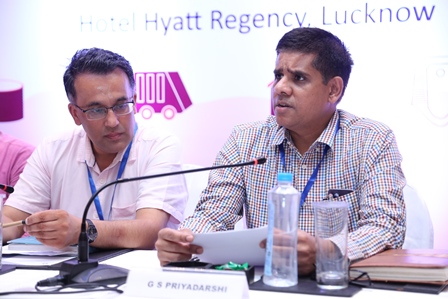
Mr. G S Priyadarshi (IAS), Secretary, Urban Development Department, Govt. of Uttar Pradesh and Dr Shiraz A Wajih, President, Gorakhapur Environmental Action Group were the co-chairs for this session.
Mr. Puneet Srivastava, Manager, Policy, Water Aid India, began the session by introducing Water Aid’s work with the excluded and the marginalised on WASH facilities. He pointed out that in all the discussions around sanitation, issue related to climate change is neglected at the policy level. Climate change is a threat to development and needs to be more widely discussed. Recently, the occurrence of floods has increased in the cities such as Kerala, Mumbai and Chennai. It’s a signal, telling us to do things differently. MDG fell short in integrating social-economical-cultural and political aspects to the development indicators. It is important to recognise that these are closely linked and has been now addressed through SDGs. SDG 13 articulates the need to take urgent action on climate change. Whenever disaster strikes, the most vulnerable in the community are impacted the most. Hence, it becomes important to develop resilience in the communities. WaterAid works towards building resilience in these communities with respect to WASH.
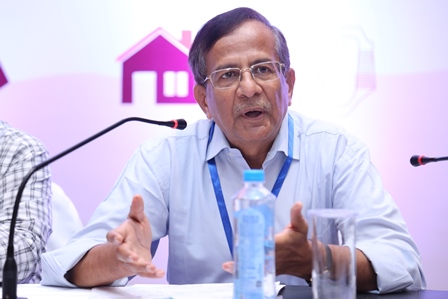
There is a need to highlight some key pointers in the policy. Cleanliness has to be linked with water and viewed accordingly. Water comes to the communities from outside. At the same time, waste is expelled outside. While water taps are preferred to be placed right in front of houses, the dustbins are pushed towards the doors of the neighbours.
It is important to assess water source and its requirements before creating the sanitation system in any place. This will enable in taking concrete decisions on the ways of adapting, so that disasters such as floods and earthquakes could be responded to. Use of technology should not be limited to studying the feasibility at the time of purchasing or installing the infrastructure, it should also be able to assess the complete product cycle which includes its operation and maintenance.
For managing solid waste, the focus should be to get it segregated at the source itself, through behavioural changes at the individual level. Learnings can be derived from states such as Kerala, which has implemented composting at the household level. The mantra of waste management is to reduce, reuse, and recycle. Reducing waste can happen through behavioural change, and for recycling, partnering with private enterprises would benefit. For all of this, policy level changes are required. In fact, many provisions are already spelled out in the existing policies and yet attention is not payed to them. For example, while burning of waste and use of plastics is prohibited, it still is not prevented. There is a provision for rainwater harvesting in the law, but it is not being enforced by the ULBs. Similarly, while ensuring good drainage is a critical requirement in urban sanitation, many slum settlements continue to get created near the drain beds which could be a disaster. There are certain critical issues with respect to availability of the land, tenure rights of the land and existence of informal settlements on unauthorised land and they are going to be so in the future too. Flailing one system affects the other and therefore, we need to come up with alternative solutions.
 |
 |
He further shared that resilience of the communities is usually accidental; these are not planned. Within the programmes of SBM, AMRUT and SCM, there is recognition on building resilience. Hence, there is a need to tap on these provisions which already exist in the programmes and get them implemented effectively. This will require an investment in designing communication strategy and capacity building for behavioural change in the context of urban sanitation.
In the end, he reiterated that we have to develop a forward looking thought process, to deal with the issue of climate change. This could be done through strengthening decentralised systems as well as by building resilience in the communities.
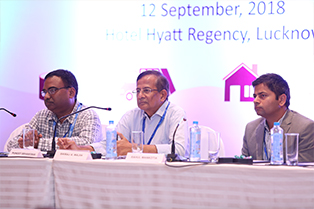
Mr. Depinder S Kapur of NIUA informed that National Institute of Urban Affairs conducts capacity building of ULBs on the issues of governance, administration and implementation of national programmes. He tried to demystify the debate between centralised sanitation system such as STP and decentralised sanitation systems. There is usually a conflict on whether decentralised sanitation systems are technology neutral and are low cost. The understanding is to be built on whether FSTP could be modelled as DEWAT. He further stated that the confusion on septage policy which doesn’t clearly differentiate sludge from septage. While sludge is a settled part of faecal matter, septage is the dirt of pit latrines but many times, these terms tend to be used interchangeably.
He further informed that in order to build clarity and capacity of implementing agencies on these concepts, NIUA has created 5 modules which are as follows:
1- TOT for implementing agencies
2- FSM-basic orientation in 3 parts
3- Integrated waste water and sanitation management (septage and water)
4- Advanced training
5- Preparing detailed Project Report
He asked the participant’s views on the kind of modules that should be created to build an understanding on urban sanitation. Whether these modules be designed as basic, advanced or capsules. In response, it was shared that this depends upon the state and national policies, and the direction in which the country is moving forward, especially with respect to SMART Cities Mission. However, this needs to be communicated to the CSOs effectively so they can also change their strategy and work through an integrated approach.
He further affirmed that institutional strengthening of ULBs is extremely important. The good functioning of cities such as Surat, Ahmedabad and Pune clearly reflect that the structures of ULBs in these cities are strong and capacitated. While existing staff of ULBs could be trained, it needs to be considered that they are already overloaded.
Another concern was raised by the audience that, while the usage of technology needs to be enhanced in urban sanitation, it should be available at the ground level. Policy guidelines should also define standards of manpower, area requirements, and geographical locations within ULBs for effective implementation.
As a response to this, it was re-iterated that although SOPs could be defined at the level of guidelines, the real implementation happens in a local context through specific SOPs. The real challenge is to build an understanding on sustainability. In any city, when the population density increases exponentially, it consumes resources and generates large amounts of waste. One can see the technology trade off and accordingly go for the localised solutions rather than specific solutions. To do this successfully, strengthening of urban local bodies need to be given importance.
 |
 |
Mr. Rahul Mankotia, Programme Manager, Centre for Science and Environment, began his presentation with a brief introduction of CSE and the broad themes it is currently working on, that include programmes related to communication and awareness, research and advocacy, education and training, knowledge portal and pollution monitoring in the thematic of sanitation services.
One of its current interventions is in Ganga Basin, currently in its first phase. Under this initiative, CSE has undertaken mapping of 10 cities through SFDs in the Ganga Basin, out of which 4 are located in Uttar Pradesh. He also presented the findings of a technical support initiative of the CSE for effective faecal sludge management, which is in its second phase of implementation. Both these initiatives entail preparation of City Sanitation Plans (CSPs) and conducting trainings for officials to prepare effective sanitation plans. This capacity building is done through seven different types of trainings and four exposure visits, including international visits to Malaysia and the Philippines.
The findings of the Ganga Basin initiative have shown that the authorities have failed to manage faecal sludge, which is only going to increase in volume with the implementation of on-site sanitation under the Swachh Bharat Mission. Citing the case study of Bijnor, he gave the audience an insight into the action plan for the city’s effective FSSM, highlighting various actions with regard to safe containment, transfer and treatment of human waste. While mapping of routes for transfer, building database and construction of a plant have been taken as some of the short term actions, few of the long term actions proposed include effective regulation and designing a framework to monitor transfer and treatment effectively.
CSE has also set up a Programme Support Unit office in Lucknow and developed a draft FSSM guideline with a focus on improved urban sanitation programme. City level interventions include development of a model city sanitation plan, building bye laws and other enforcement mechanisms, provide technical support in setting up pilot FSTP and establish processes for resource recovery. He concluded after presenting the upcoming plans of the CSE, which includes a field based study on need assessment of FSSM in all AMRUT towns in Uttar Pradesh.
The chair concluded the session by highlighting the significance of strengthening the implementing agencies through building capacities of individuals, organisations, and creating an enabling environment through policy and guidelines.
Every city must have a water grid map which will help in assessing disaster prone areas in the cities. This could then be addressed in the policies of the government and the state should further elaborate upon them. It was suggested to initiate a pilot on centralised and decentralised waste treatment in specific locations in UP, and glean the learnings through it.
There is a need to understand that many provisions already exist in the national policy. Reuse of waste water has been insisted by the government. The life-cycle approach as well as cost of the technology needs to be kept in focus. Focus also should be given on reducing the cost of services by initiating waste management at individual household level.
It is also important to acknowledge that if service providers for OSSM are converted from informal to formal; the cost of the services will increase and will impact the end user. People who are outside the centralised systems in the city cannot really afford to pay these charges. Hence, every policy is to be viewed in a way that last mile person can be a part of the system.
Engaging Citizens and Civil Society for Making Sanitation Services Inclusive
This session was chaired by Mr. Sandeep Khare, Secretary, Vigyan Foundation. He opened the conversation on citizen engagement by suggesting that the behaviour pattern of people with respect to sewerage system and their relationship to the technology needs to be researched. He emphasised that the role of elected representatives within the ULB structure is essential in implementation of such technological innovations in the communities. Since they come to the ULB through public participation and community mobilisation, they have a huge role to play in community engagement. Participation of public in the urban sanitation is crucial and it needs to be ensured by energising elected representatives. At present, a number of parastatal bodies are functioning at the state and the city levels. The elected representatives need to be made aware of these schemes.
Additionally, citizen engagement shall remain ineffective by excluding urban poor as citizens. Yet another critical aspect is to assess whether correct and real data on the urban poor in a city is available. Usually, urban poor are looked at as encroachers. As a result, they are either uprooted and/or rehabilitated. While it is crucial to include urban poor in participatory planning and governance, it will be difficult in absence of adequate grievance redressal mechanisms.
Therefore, to enable citizen participation policy enforcements are required. For this an assessment of provisions for public participation in the 74th CAA is essential to seek clarity on methods and modes of public participation in the processes of urban governance.
Dr Anshuman Karol, Senior Programme Manager, Participatory Research in Asia (PRIA) thanked Mr. Khare for bringing the focus of the session to the urban poor. He re-affirmed that there is a need to look at existing provisions on citizen engagement in the 74th CAA. Apart from that, there is a need to re-look whether the factual and relevant data on the urban poor population in the cities is available. Finally, there is a need to critically reflect whether they are treated as citizens. He further shared that, the ECRC project is an attempt to address all these concerns.
Before sharing the details of the project, he invited Mahadevi, member of SIC (Settlement Improvement Committee), to talk about her experience of engaging in the project in the city of Jhansi. She shared that SIC members in the community come together to hold meetings in their settlements every month. By coming together into the SICs, people in the informal settlements have been able to file applications for IHHLs and have become aware and responsible for cleaning their localities.
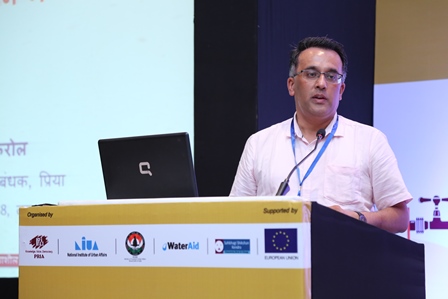
Dr Karol further informed that in 74th CAA, there is a provision of Ward Committees, which is yet to take off. However, through SICs, people in the settlements are coming together to discuss their issues and also take collective action on the same. In 43 settlements of Jhansi, SICs were constituted and currently 530 members are members of these committees. Of these, 61% are women and 50% are less than 35 years. Youth are actively engaged as citizen leaders through the SICs.
While it is widely acknowledged that people’s participation is essential, it is not very clear that how we can go about doing this. Within the ECRC project, ULBs were sensitised on the issues of urban poor through workshops. Media and academic engagements were fostered. People belonging to the middle class and the TMPA were also sensitised on the issues of urban poor. Hence, the project took a multi-pronged, multi-stakeholder approach. This is because, it is not just enough to build the capacity of the urban poor, but also to conduct their sensitisation, in order to increase their participation in the cities. It is a paradox that while we need services from the urban poor, we are hesitant when it comes to giving them access to basic services.
He further pointed out that, there is a guideline for citizen engagement in each component of SBM. Hence, this is an opportunity to enhance this component and demand that 74th CAA be achieved in the cities. For this, the demand has to be generated from the bottom. When we are talking about SWM or STP, it should have long term use. So, unless the citizens accept it, demand it and are capacitated to manage it, it won’t work.
Focussing on PRIA’s work in Jhansi, he highlighted that according to 2011 Census, no slums have been identified in the city but the municipality has its own list. In Jhansi, 43 pockets have been identified as slums. However, they are so developed now that they have to be de-notified. Through SICs, PRIA has conducted Participatory Settlement Enumerations (PSE) and Sanitation for All surveys to collate data on the urban poor in the city with respect to basic sanitation services. Additionally, TMPA was also sensitised to foster linkage on issues of urban poor. At present, city level federation of urban poor have been formed in Jhansi, Muzaffarpur, and Ajmer. In Ajmer they have been included in CLAF under SCM. In recently held Swachh Survekshan, SIC members were accepted as Swacchagrahis.
He concluded by suggesting that the ECRC project should be treated as a pilot on citizen engagement in the three cities of Jhansi, Ajmer and Muzaffarpur and can be launched in other cities too.
Ms Roshni Nugehalli of YUVA invoked the contribution of Dalit brothers and labourers who have shouldered the entire system of sanitation and cleanliness on the ground. She presented bottlenecks in the implementation of SBM in the nation by giving out specific examples. Citing examples of Ambujwadi locality in Malad, that is situated on Khari and houses a population of 13,000 migrant families, 50 Community Toilets have been constructed in this locality in the past two years. However, none of them are functional.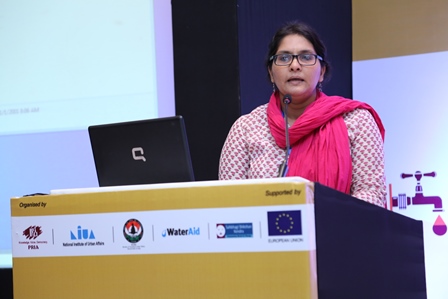
Giving another example, she pointed out that a number of informal settlements have mushroomed near the railway lines in Guwahati. However, even under SBM, no toilets can be constructed on these lands because the land ownership is centrally contested between the state and the railway department. Hence, the people have to continue using pit latrines or defecating in the open.
Yet another example was quoted of Sukhniwas Road of Indore. People from this settlement spent Rs.1300 each to file IHHL applications. A number of toilets, as a result got constructed in the locality. Despite that, within a month of their construction, the settlement was evicted and dismantled. At present, this settlement does not exist. Another settlement, Bhuri Kari, also suffered the same fate. This uprooting happened in the months of January-February 2017, the year Indore was declared the top city under Swachh Survekshan. She urged therefore, that the model cities need to be looked at with a pinch of salt.
Further, she complimented the SBM programme for its immense political will but also pointed out that a policy on citizen engagement and guidelines exists in 74th CAA and Community Participation Law, which define holding of area sabha, mohalla sabha, ward sabha that are forms of public participation; but despite these, there are gaps in the implementation and the reality is usually masked by the statistical data.
She suggested that, to achieve the goals of effective behavioural change, citizen engagement processes should be citizen driven and have to be thought beyond inclusion, and move towards enabling participation. At present, the platforms suggested for facilitating citizen engagement in the urban areas such as Mohalla Sabhas and Ward Committees are weak and hence, they should be strengthened.
In the context of urban sanitation, there is a need to address all types of typology. By leaving out homeless and beggars we limit participation to accessible population. Hence, urban sanitation as a continuum should be able to address the issues of these groups as well. She finally suggested that, innovation should be brought in addressing the structural changes. Citing an example of the same she shared YUVA’s experience of working in Bhubaneshwar on creating demand for IHHL. However, she also remarked that this requires a lot of facilitation support from end to end. She reiterated that advocacy with the railway department is very important, especially in cities like Guwahati and Mumbai to construct toilets in the informal settlements near the railway lines.
For homeless people, using Sulabh toilets is expensive and therefore usage of Public Toilets should be made available to them. One good example of this is MCGM, which has issued passes of Rs.50 for a month for ‘homeless’ and beggars which could be used to avail the services of any public toilets. This is an important area of action for the ULBs in smaller towns and CSOs need to support them in implementing this.
Planning of land usage has to be deeply understood to check eviction. It is the time when city plans are being revised once again. It is imperative that cases of uprooting settlements that happened in Indore do not repeat themselves. For this, CSOs need to play an important role in understanding land usage for people engagement. Apart from these, Right to Pee campaign, which has been conducted with MCGM, on making public toilets available for women, has reported many successes which could be taken forward.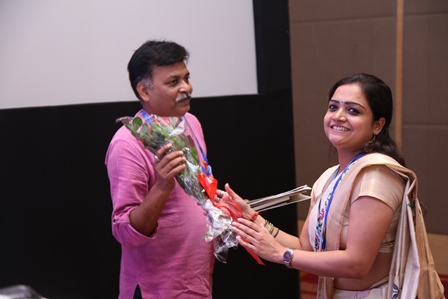
Mr. Sandeep Majhi of PROACT shared their experience of working as State Support Unit in Uttar Pradesh. Rapid urbanisation in Uttar Pradesh has led to urbanisation of poverty too. The urban poor of Lucknow do not depict the picture of Lucknow city. To develop a better understanding of urban poverty the criteria for numbering the wards in the city is useful. The wards which have maximum SC population are numbered as one and henceforth. These settlements are usually big, dense and dirty. Hence, it was decided in collaboration with the state that on 24th September in 2017, government officials would participate in a cleanliness drive in parts of Lucknow along with the Valmiki community. The principal secretary also participated in this initiative and inter-dined with the women from 140 households. This brought in a lot of understanding of the urban poor amongst the government officials. It was also realised that some relevant steps are required to enable the participation of urban poor in the city planning. Before this, it was beyond people’s imagination that a toilet could be constructed within the houses which are built on a land of 120 ft. However, direct engagement with the urban poor has been enabled the convergence between Smart City mission and the Municipal Corporation to achieve these outcomes.
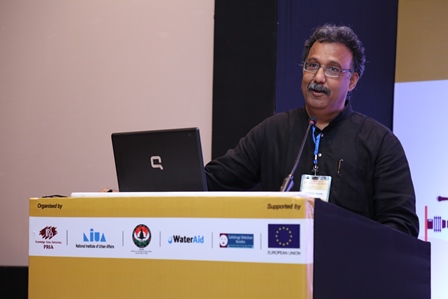
He pointed out that mere participation of people is not sufficient for effective decision making. Understanding of emerging challenges in urban context is critical to change perspective towards the city. Mr. Majhi, further informed that in the one year of working with the state government, citizen participation has increased in terms of rapid increase in demand of services from slum settlements. This was enabled by making the citizen aware of the services through leaflets and providing them with a helpline number.
He further shared that there is not a single face of citizen participation. There are structures such as ward samitis and RWAs and their participation could be expected. However, expecting participation and self-help from the urban poor who live a life of helplessness and hopelessness, is not relevant. Therefore, CSOs need to challenge their own beliefs and upgrade themselves of the issues in the context of urban.
Additionally, there are different colours of participation amongst urban poor, middle class and elites. In the name of citizen engagement under SBM, we fall into preaching, shaming or coercing. Hence there is a need to change the pedagogy of community participation.
CSOs need to increase their competence in technology with respect to community participation. We need to ask more questions. As the demand will increase, the gaps will also exist but we must still prioritise participation.
In response to the presentation, the chair highlighted that one of the important stakeholders with whom these discussions should be shared is the SBM Directorate and directorate of local body. Additionally, if Gram Sabha is a mandatory activity for gram panchayat, then mohalla sabha should also be made mandatory in the cities. Hence, policy level legal changes are required to enforce these mechanisms.
The session was concluded by highlighting that sanitation is a basic human right and must be made independent of tenure rights for construction of toilets. Issues related to women and the ‘homeless’ need to feature in the national sanitation policy. Urgent action should be taken on constructing public toilets and community toilets for women in the areas with dense population. IEC/BCC budgets should be utilised for community engagement processes.
The key takeaways of the daylong session was summarised by the noted dignitaries.
Mr. Shouvik Datta, Senior Programme Manager, Delegation of the European Union to India, Cooperation Section highlighted the following: with increasing urban migration, there is rising disparity and inequality. While urbanisation promises development, it also excludes certain sections of people. Population of urban poor is posing enormous challenge to urban planning as there is no segregated data available. Therefore, it becomes important for the ULBs to make an effort to assess factual data on urban poor in the cities.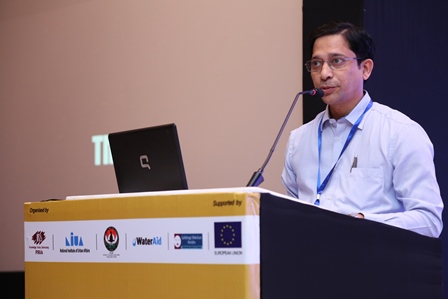
Sustainability of infrastructure is crucial. While infrastructure is being created, the sustenance of behavioural change is important. Hence, CLTS needs to be integrated in policy implementation; else we will have ruins of toilets in another decade. Convergence of programmes, schemes as well as the government departments and other agencies is the need of the hour and should be taken with utmost sincerity.
There is a need to build the capacities of service providers and build their readiness to cater to the business of septic tank cleaning. The issues of sanitation workers are important. Only a very small number of them are formally recognised. There are estimated 5 million women workers including domestic workers. News on the deaths of sanitation workers is disturbing. Absence of recognition for these workers prevents them from policy impact. Healthy working conditions and dignity of these workers need to be restored.
CSOs and local champions can play a pivotal role in building innovative networks to enable policy decision at the national, state and the city level. ULBs need to be inclusive and responsive to citizens. The development dialogue needs to be broadened to include views of the urban poor. Engaging citizens can improve services and maintain social inclusion. Strengthening of public consensus is crucial for any urban sanitation solution to succeed and sustain.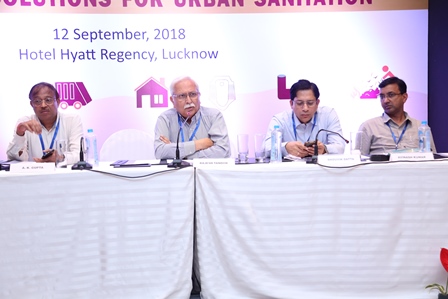
Mr. Avinash Kumar, Director Programme and Policy, WaterAid, India shared the following: sanitation cannot be looked in isolation but broadly in typology of cities such as large cities, towns and peri-urban structures that impact the sanitation scene of a place. Hence, it is an opportunity to begin the work in UP. Within a city, people are inadvertently categorised as formal and informal citizens. The struggle to ensure urban poor their right to live and work is an ongoing process. The 14th Finance Commission does not clearly define its contribution in the urban sphere. Hence, utilities and its role need to be studied in depth such as how they are financed and governed for their output and accountability.
Mr. A K Gupta complimented PRIA for organising this workshop and their intervention in Jhansi. He further affirmed that the suggestions emerging from the workshop will not only help in formulation of policies for the state, but also assist the state to design its action agenda. He suggested that there is a need to legalise community participation. Urban planning needs to work on septage management with vigour.
Dr Rajesh Tandonconcluded the day long workshop by highlighting that the goal of urban sanitation will remain unachieved without citizen participation. He reiterated that planning should be context specific. Duties and responsibilities of ward councillors need to be acknowledged within ULBs because their partnership with the community can act as a catalyst for change. The mind set of people with respect to treating their own waste needs to be changed. In the end, he urged the audience to change mind-sets with respect to sanitation at individual level before venturing out to tackle the problems of the cities.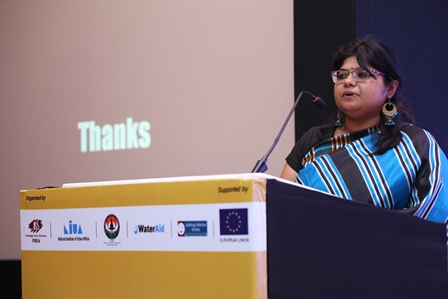
Finally, Ms. Shashi Shikha, Senior Programme Officer, PRIA formally closed the day long workshop by highlighting that the conference was successful in bringing out concrete action agenda on various issues related to urban sanitation services in the state of Uttar Pradesh particularly in the areas of 74th CAA, citizen engagement with inclusion of urban poor, building of networks and partnerships through convergence and scaling up innovative solutions to achieve the overall goal of SBM with sustainability. She thanked the dignitaries from the government departments and elected representatives and all other participants for meaningfully contributing in the discussions.