Piloting Proposed Decision Support Framework with Emphasis on GESI in the Indian Context

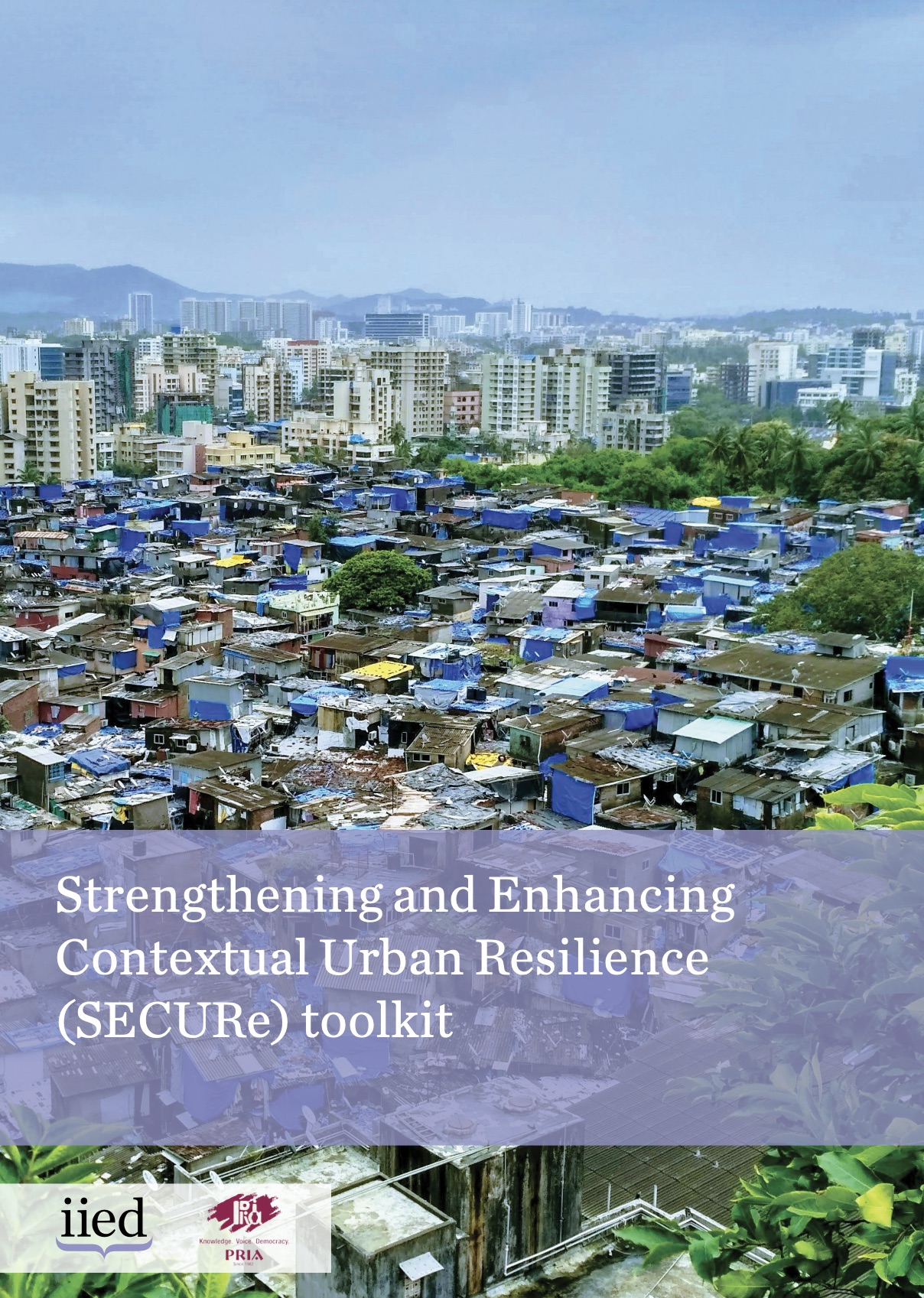
This initiative piloted the SECURe Framework (Strengthening and Enhancing Contextual Urban Resilience) in Ajmer’s informal settlements with a strong focus on Gender Equality and Social Inclusion (GESI). Anchored in participatory action research, the project aimed to strengthen community-led water governance, co-produce evidence with residents and local institutions, and develop actionable, context-specific solutions to address water insecurity and climate vulnerabilities in urban informal settlements.
Through a multi-stakeholder approach involving the Ajmer Municipal Corporation (AMC), Public Health & Engineering Department (PHED), Self-Help Groups (SHGs), and MDS University, the project generated granular data on access, usage, quality, infrastructure gaps, and governance challenges in water service delivery. Participatory tools such as transect walks, spatial mapping, and water quality testing were used to ensure the inclusion of lived experiences, especially those of marginalised women.
Importantly, the project aligns with key national and urban policy frameworks, including the AMRUT 2.0 mission, National Urban Livelihoods Mission (NULM), Swachh Bharat Mission (SBM-U), and the State Water Policy, by:
The findings and methods developed under the project have the potential to inform urban resilience planning and municipal service delivery models in other small and medium towns. With the growing emphasis on localised climate adaptation under India’s State Action Plans on Climate Change (SAPCCs) and commitments under the Sustainable Development Goals (SDGs), this initiative offers replicable pathways for embedding community voices into urban policy and planning processes.
Key Activities & Outputs -
- Community Engagement: Conducted 25+ FGDs, transect walks, and participatory tools (social/resource mapping, Venn diagrams) across 7 informal settlements in 5 wards, engaging over 500 residents.
- Capacity Building & Training: A 4-day joint training workshop (19–22 December 2024) was conducted in collaboration with AMC, PHED, and MDS University. The workshop trained 25 women from Self-Help Groups (SHGs) and 15 students from MDS University in participatory research methods, household surveying, water quality testing, digital data collection using KoBo Toolbox, and GIS-based mapping of water sources & infrastructure in informal settlements.
- Water Infrastructure Mapping & Water Quality Testing:
- Household Survey: Surveyed 554 households using stratified and systematic sampling to assess water access, usage patterns, quality, billing practices, and health impacts.
- Collaborative Governance & Partnerships:
- Knowledge Products and Capacity Building Tools:
Key Outcomes -