| Date 13-Oct-2025 to 13-Oct-2025 |
Location New Zealand |
Format International |
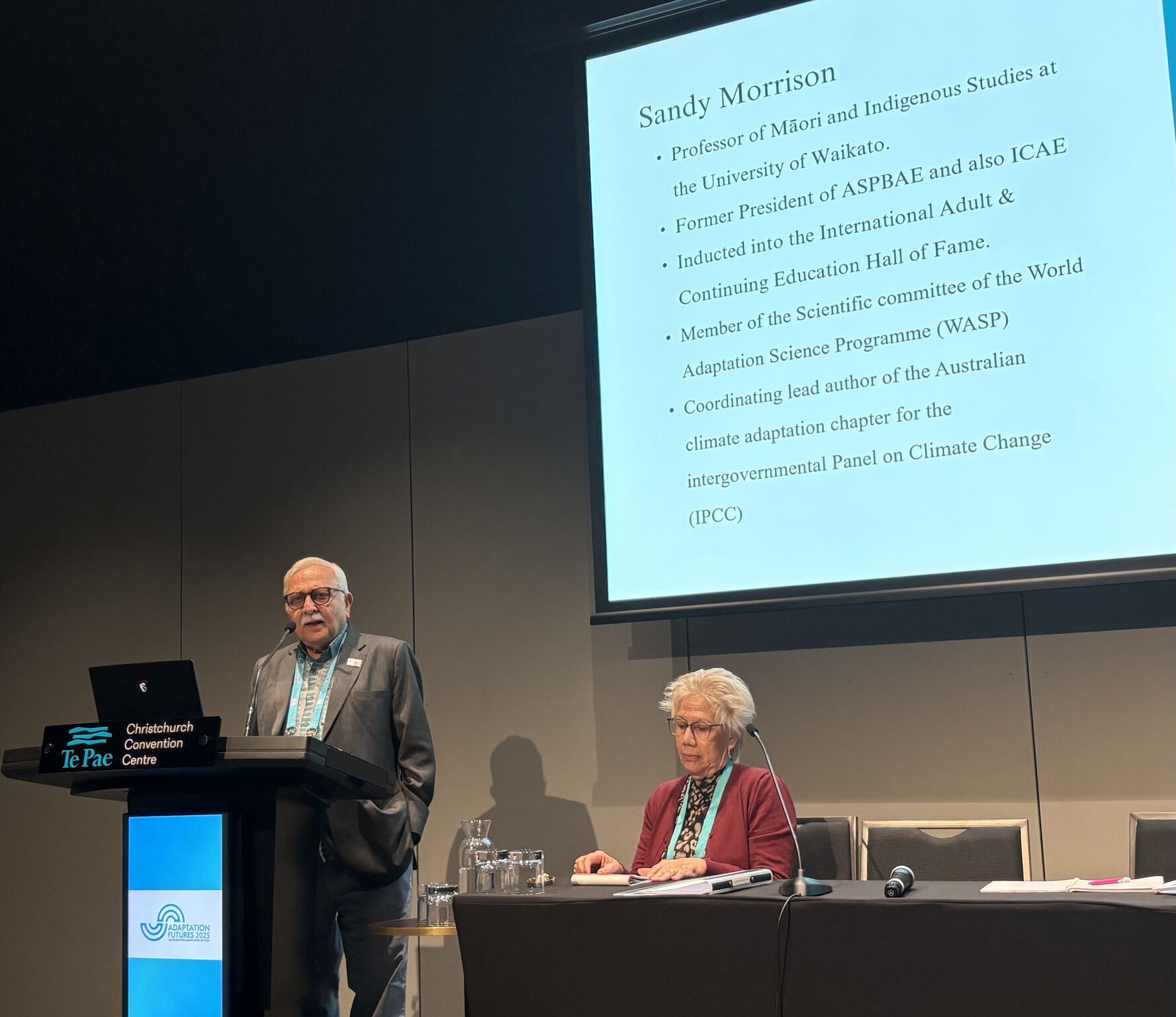
On October 13, 2025, at the Adaptation Futures Conference (AF2025) in Ōtautahi Christchurch, New Zealand, Dr. Rajesh Tandon and Professor Sandy Morrison (University of Waikato, New Zealand) co-led a landmark session titled “Dialogue on Knowledge Democracy: Fifty Years of Participatory Research in the Global South and in Māori and Pacific Communities — Lessons and Challenges.”
The dialogue traced the evolution of the Participatory Research (PR) movement over the past five decades — beginning with the establishment of the International Participatory Research Network in 1978 and the pioneering scholarship of Dr. Budd Hall, whose early work redefined the ethics, purpose, and ownership of knowledge creation.
Dr. Tandon and Prof. Morrison reflected on how PR has evolved beyond a research methodology to become a philosophy and praxis of justice — one that democratizes knowledge by centering the voices, experiences, and worldviews of communities historically excluded from dominant systems of knowledge production.
They emphasized that Knowledge Democracy—the recognition and validation of multiple ways of knowing rooted in people’s lived realities, cultures, and relationships with the land—has emerged directly from the participatory research movement. This approach challenges hierarchies of conventional science and affirms the value of Indigenous, local, and community knowledge systems alongside academic inquiry.
Framing PR as essential not only to climate resilience but also to climate justice, the speakers underscored the ethical imperative of participation in addressing global crises. Dr. Tandon also shared emerging insights from the DECODE Project, illustrating how bridging the divide between “scientific” and “Indigenous” knowledge systems opens new possibilities for community-led resilience and sustainability.
The session concluded with a reaffirmation of Participatory Research as a transformative force for justice, inclusion, and collective well-being — a reminder that the future of climate adaptation lies in embracing diverse ecologies of knowledge and the ethics of participation. Click here for the ppt.